Introduction
The history of computer input devices reveals how humans gradually learned to communicate with machines more efficiently. Early computers were massive, complex machines that required mechanical methods to enter data. Over time, innovations transformed these rigid systems into intuitive tools that respond instantly to human actions. From punch cards with physical holes to modern touchscreens and gesture controls, input devices have played a crucial role in shaping modern computing.
As computing technology advanced, the way humans interacted with machines also evolved. The shift from physical input systems to digital interfaces reflects the broader development of Human-Computer Interaction (HCI). Understanding the history of computer input devices helps explain how computers became accessible to everyday users rather than remaining tools exclusively for scientists and engineers.
These innovations also connect closely with the history of computers and advancements in computer hardware, as each generation of machines required better ways to communicate with users.
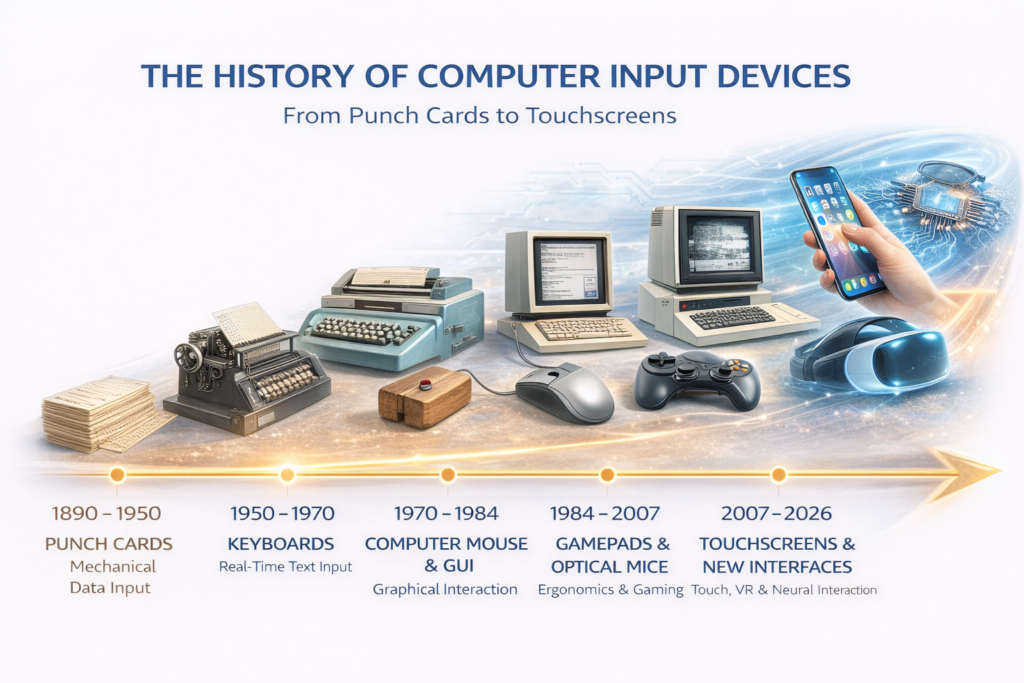
A. The Era of Mechanical Punch Cards (1890 – 1950)
Hollerith’s Tabulating Machine and the Birth of Data Input
The earliest chapter in the history of computer input devices begins with mechanical punch cards. In 1890, engineer Herman Hollerith created a tabulating machine that used punched cards to process census data in the United States. Each card contained holes representing specific pieces of information, which machines could read electrically.
This system drastically reduced the time required to process census results—from years to months. Hollerith’s invention later led to the creation of IBM, a company that would become a giant in computing technology.
Punch cards quickly became a standard method for entering data into early computers. They allowed large volumes of information to be encoded and processed mechanically, marking the beginning of structured data input systems.
Why Early Computing Relied on Physical Holes in Paper
Early computers relied heavily on physical storage and mechanical processes. The punched holes in cards represented binary data—essentially the earliest form of digital input.
Programmers had to prepare stacks of cards containing instructions and feed them into machines sequentially. Any mistake meant creating an entirely new card. While inefficient by modern standards, punch cards played a critical role in the history of computer input devices and helped establish fundamental principles of data processing.
These early systems also supported computing developments that later influenced technologies explored in the how much storage did the first computer have discussion.
B. The Keyboard and Teletype Revolution (1950 – 1970)
Moving from Physical Cards to Real-Time Text Input
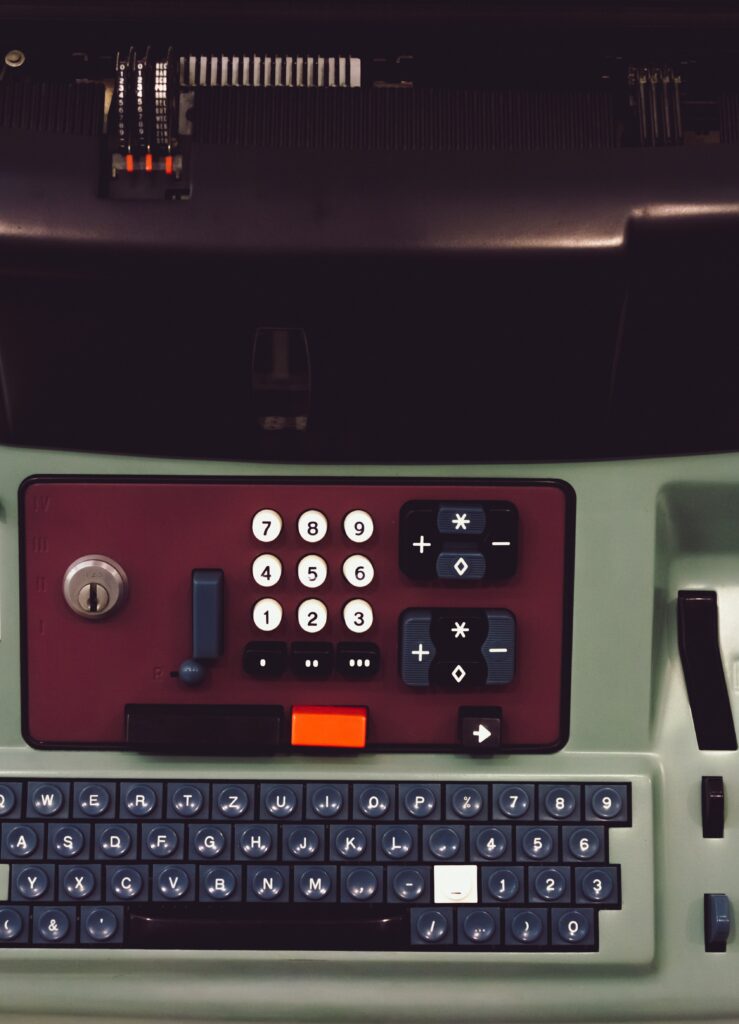
During the mid-20th century, punch cards gradually gave way to keyboards and teletypes. These devices allowed users to type commands directly into computers rather than preparing punch cards beforehand.
This shift represented a major milestone in the history of computer input devices, as it enabled real-time interaction with machines. Instead of waiting hours or days for batch processing, users could immediately see responses on terminals.
Teletype machines printed outputs on paper and served as early terminals connecting humans to computers. These devices were particularly common in research labs and universities.
The Influence of the Typewriter on Computer Layouts
The design of modern keyboards owes much to the traditional typewriter. The QWERTY keyboard layout, originally created in the 19th century, became the standard arrangement for computer keyboards as well.
This layout ensured familiarity for users transitioning from typewriters to computers. The keyboard eventually became the most important Human Interface Device (HID), enabling programming, writing, and data entry.
The keyboard revolution significantly advanced the history of computer input devices, making computers more practical for everyday use and contributing to innovations described in the history of programming languages.
C. The Birth of the Mouse and GUI (1970 – 1984)
Douglas Engelbart and the “Mother of All Demos”
In 1968, computer scientist Douglas Engelbart demonstrated a groundbreaking invention: the computer mouse. During a famous presentation known as the “Mother of All Demos,” Engelbart showcased a graphical interface that allowed users to interact with computers using a pointing device.
The mouse transformed the history of computer input devices by introducing intuitive navigation within graphical environments. Instead of typing commands, users could click icons and move windows on a screen.
This innovation was crucial for the evolution of modern operating systems and graphical interfaces.
The Xerox PARC Legacy and the Apple Macintosh Mouse
The Xerox PARC research center played a pivotal role in developing graphical user interfaces (GUIs) and refining mouse technology. Their innovations later inspired companies like Apple and Microsoft.
In 1984, Apple released the Macintosh computer with an integrated mouse, making graphical interaction accessible to everyday users. This event marked a turning point in the history of computer input devices, as visual interaction replaced complex command-line interfaces.
The graphical environment also accelerated development in areas such as computer graphics and digital design.
D. The Powerful History of Computer Input Devices and Ergonomics (1984 – 2007)
Optical Mice and the Demise of the Mechanical Trackball
During the 1990s and early 2000s, input devices continued evolving to improve usability and ergonomics. Mechanical mice using rubber balls were gradually replaced by optical mice that relied on optical sensors to detect movement.
Optical technology increased precision while reducing maintenance requirements. This development marked another step forward in the history of computer input devices, as accuracy and comfort became key priorities in device design.
Trackballs and stylus devices also emerged, offering alternative interaction methods for specialized applications such as graphic design and engineering.
These advancements were closely connected with improvements in hardware performance enabled by the evolution of transistors.
Joysticks and Gamepads: Input Devices for Digital Play
Gaming introduced a new category of input devices. Joysticks, gamepads, and motion controllers allowed players to interact with virtual environments in dynamic ways.
These devices expanded the history of computer input devices beyond productivity tools and into entertainment. Gaming input systems also drove innovations in motion detection, haptic feedback, and immersive technologies.
This development contributed to broader computing advancements, including systems discussed in the rise of storage technology and multimedia computing platforms.
E. The Touchscreen and Gesture Era (2007 – 2026)
Capacitive vs. Resistive: The Smartphone Input Breakthrough
The release of modern smartphones revolutionized the history of computer input devices. Touchscreens replaced physical keyboards and mice, allowing users to interact directly with digital content.
Two major touchscreen technologies emerged:
- Resistive screens, which respond to pressure
- Capacitive screens, which detect electrical signals from human fingers
Capacitive screens enabled multi-touch gestures such as pinch-to-zoom and swipe navigation. These gestures dramatically improved usability and became the standard interface for mobile devices.
Touchscreens also accelerated growth in the history of mobile technology, shaping the way billions of people interact with digital information.
Haptic Feedback and the Future of Neural Interfaces
Today’s input technologies extend far beyond simple touch. Modern devices incorporate haptic feedback systems that simulate physical sensations when interacting with virtual objects.
Researchers are also exploring biometric input, voice recognition, and neural interfaces. Companies are experimenting with brain-computer interfaces such as Neuralink, which may allow users to control computers using neural signals.
These innovations represent the latest stage in the history of computer input devices, moving toward seamless integration between humans and machines.
Frequently Asked Questions (FAQs)
What are computer input devices?
Computer input devices are hardware components that allow users to send data and commands to a computer system. Examples include keyboards, mice, touchscreens, and stylus devices.
What was the first computer input method?
The earliest widely used input method was the punch card system developed in the late 19th century.
Why is the keyboard still widely used?
Despite new technologies, keyboards remain essential for typing, programming, and productivity tasks.
What is Human-Computer Interaction (HCI)?
Human-Computer Interaction studies how people interact with computers and how technology can improve usability and accessibility.
What could replace traditional input devices in the future?
Future technologies may include gesture recognition, biometric sensors, voice control, and brain-computer interfaces.
Conclusion
The history of computer input devices illustrates the remarkable transformation of human-computer interaction. Beginning with mechanical punch cards in the late 19th century, input technologies evolved through keyboards, mice, and graphical interfaces to modern touchscreens and gesture controls.
Each generation of innovation brought computers closer to everyday users by making interaction faster, simpler, and more intuitive. The transition from physical holes in paper to multi-touch displays demonstrates how far computing has progressed.
Today, researchers are exploring new frontiers such as neural interfaces, voice control, and immersive virtual environments. These developments suggest that the next chapter in the history of computer input devices will blur the boundaries between humans and machines even further, creating more natural and powerful ways to interact with technology.