Introduction to Big Data and Artificial Intelligence
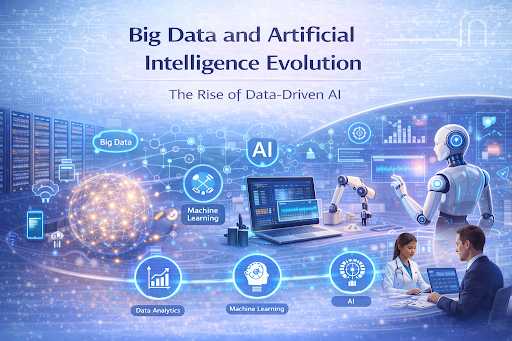
The big data and artificial intelligence evolution has fundamentally transformed the global digital landscape, acting as the primary catalyst for modern technological innovation. As we observe the modern tech era, the history of big data and artificial intelligence reveals a massive shift from simple, rule-based algorithms to complex, self-learning systems. This big data and artificial intelligence evolution is not merely a passing technological trend; it represents a foundational change in how machines process information, learn from environments, and execute decisions.
When we examine big data AI development over the past few decades, it becomes overwhelmingly clear that without massive datasets, modern AI capabilities would simply not exist. Welcome to the artificial intelligence data revolution, a paradigm where raw information acts as the lifeblood of computational intelligence. In this comprehensive guide, we will explore the historical timeline, key technological breakthroughs, and the future trajectory of these intertwined disciplines, uncovering the profound growth of big data in AI.
Early Data Processing and Artificial Intelligence (1960s–1980s)
The roots of big data and artificial intelligence evolution stretch back to the mid-20th century. During the famous Dartmouth Conference in 1956, the term “Artificial Intelligence” was officially coined, sparking decades of ambitious research. Early pioneers and researchers began writing the First AI Programs to solve complex algebra word problems and attempt to prove mathematical and logical theorems. However, these rudimentary systems severely lacked the sophisticated AI data processing capabilities we rely on today.
They depended almost entirely on hand-coded rules and logic structures rather than expansive big data technologies. Throughout the 1970s and 1980s, developers shifted their focus toward Expert Systems in Artificial Intelligence, which utilized complex “if-then” rule bases to mimic human decision-making in highly specific domains like medical diagnosis and chemical analysis. Unfortunately, limited data storage capacities and insufficient computational power led to prolonged periods of stagnation and funding cuts, widely known as the AI Winters. The evolution of big data and AI was temporarily paused until computing hardware and storage solutions could adequately catch up to the theoretical ambitions of early computer scientists.
Rise of Data Mining and Machine Learning (1990s)
The 1990s marked a pivotal turning point in big data and artificial intelligence evolution. This crucial decade witnessed the Revival of Artificial Intelligence in the 1990s, primarily driven by the fundamental transition from rigid, knowledge-driven expert systems to flexible, data-driven approaches. The organic growth of big data in AI began as the early internet emerged and expanded, creating unprecedented volumes of digital information and user-generated content.
Data mining quickly became a highly popular and essential technique utilized by enterprises to discover hidden patterns and valuable insights within sprawling corporate databases. Consequently, the research focus shifted heavily toward early machine learning algorithms capable of learning directly from data rather than relying strictly on pre-programmed human logic. This fascinating period was absolutely crucial for big data machine learning evolution, setting the solid groundwork for probabilistic models, support vector machines, and more advanced predictive analytics. By leveraging larger datasets, researchers proved that machines could improve their accuracy autonomously over time.
The Big Data Revolution (2000s)
In the 2000s, the big data and artificial intelligence evolution accelerated at an unprecedented, exponential rate. The sudden explosion of Web 2.0, widespread social media adoption, and the proliferation of mobile devices generated massive exabytes of unstructured information on a daily basis. To properly handle this overwhelming influx of digital content, foundational big data technologies like Apache Hadoop, NoSQL databases, and distributed storage systems were aggressively invented and deployed.
Suddenly, big data in artificial intelligence transitioned from a theoretical concept to a highly critical, tangible resource. Cloud computing concurrently emerged as a dominant force, offering globally scalable infrastructure that effortlessly allowed researchers and corporations to store, manage, and analyze massive datasets with remarkable efficiency. This defining era proved a vital industry hypothesis: more data frequently beats better algorithms. Big data powered AI systems started to drastically outperform traditional, hand-crafted models simply because they had exponentially more AI training data to learn from, marking a definitive, irreversible shift in the global artificial intelligence data revolution.
Deep Learning and the Big Data and Artificial Intelligence Evolution (2010s)
The 2010s introduced the most transformative and highly publicized phase of the big data and artificial intelligence evolution. With the sudden, widespread availability of powerful Graphics Processing Units (GPUs) and practically infinite massive datasets, The Rise of Neural Networks became completely inevitable. Deep learning models, which inherently require immense computational power and practically boundless AI training data to function accurately, finally became practical for commercial and academic applications.
The powerful synergy driving the big data and artificial intelligence evolution led to unprecedented, record-breaking breakthroughs in complex fields such as computer vision, natural language processing (NLP), and real-time speech recognition. The expansive history of big data and artificial intelligence dramatically illustrates that brilliant algorithms initially conceptualized in the 1980s only reached their full, staggering potential during this specific decade. This success occurred precisely because the highly necessary, robust data analytics frameworks and scalable cloud computing resources were finally universally available to researchers worldwide.
Modern Applications of Big Data and Artificial Intelligence
Today, the big data and artificial intelligence evolution directly impacts nearly every major global industry and sector. The continuous, rapid big data AI development has aggressively enabled highly practical, real-world solutions that dramatically improve operational efficiency, accuracy, and overall user experience. Let’s extensively explore exactly how big data powered AI systems are being practically applied across various critical sectors to solve complex modern challenges.
Healthcare
In the vast healthcare industry, the big data and artificial intelligence evolution is literally saving human lives on a daily basis. By actively utilizing advanced predictive analytics and highly sophisticated machine learning algorithms, modern medical professionals can diagnose severe diseases much earlier and tailor highly personalized treatment plans for individual patients. Intensive AI data processing swiftly helps analyze fragmented electronic medical records, complex genetic profiles, and high-resolution medical imaging much faster and more accurately than humanly possible. This capability rapidly accelerates new drug discovery and vastly improves patient health outcomes globally.
Financial Services
The fast-paced financial sector heavily and constantly relies on the evolution of big data and AI for comprehensive fraud detection, rigorous risk management, and high-frequency algorithmic trading. By rigorously analyzing millions of global financial transactions in real-time using highly advanced data mining techniques, banking institutions can accurately identify deeply suspicious, anomalous patterns instantly. Furthermore, massive big data in artificial intelligence ensures highly secure, heavily automated, and exceptionally efficient daily banking operations, protecting institutional assets from sophisticated cyber threats.
E-Commerce
The highly competitive online retail space has been completely reshaped and revolutionized by the big data and artificial intelligence evolution. Massive global e-commerce giants continuously use big data machine learning evolution to intelligently power highly accurate product recommendation engines, dynamically optimize complex global supply chains, and accurately forecast shifting seasonal consumer demand. Granular customer behavior is aggressively analyzed through highly sophisticated data analytics platforms to seamlessly provide heavily personalized digital shopping experiences and hyper-targeted marketing campaigns.
Transportation
From futuristic autonomous vehicles to complex global logistics route optimization, the modern transportation industry serves as a prime, highly visible example of the explosive growth of big data in AI. Cutting-edge self-driving cars rely entirely on massive, continuous streams of complex sensor, radar, and LiDAR data heavily processed by lightning-fast machine learning algorithms in real-time. This specific sector of the artificial intelligence data revolution actively helps drastically reduce urban traffic congestion, significantly lower harmful carbon emissions, and greatly enhance passenger road safety globally.
Smart Cities
Modern municipal urban planning now seamlessly integrates highly advanced big data technologies to actively build sustainable, highly efficient smart cities. The big data and artificial intelligence evolution directly enables local governments and massive municipalities to carefully monitor real-time electrical energy usage, intelligently manage urban waste disposal, and highly optimize sprawling public transportation networks. By actively leveraging robust predictive analytics on massive streams of city-wide IoT data, proactive governments can substantially improve the daily quality of life for millions of urban residents while simultaneously minimizing environmental impact.
Future of the Big Data and Artificial Intelligence Evolution
As we continuously look ahead to the next digital frontier, the future of the big data and artificial intelligence evolution promises even greater, deeper global technological integration. Emerging paradigms like quantum computing and decentralized edge computing will undoubtedly further accelerate big data AI development, definitively allowing highly complex models to process massive information practically instantaneously directly at the local source.
The ongoing, compelling history of big data and artificial intelligence will also likely shift focus toward heavily ensuring ethical AI practices, maintaining strict global data privacy standards, and aggressively reducing systemic bias deeply hidden within machine learning algorithms. We can confidently expect big data powered AI systems to become significantly more autonomous and deeply embedded in daily life, aggressively driving the next, most impactful wave of the global artificial intelligence data revolution for decades to come.
Frequently Asked Questions (FAQs)
What exactly is big data and artificial intelligence evolution?
Big data and artificial intelligence evolution specifically refers to the profound historical progression and seamless technological integration of massive, global data collection directly with advanced computing algorithms. It clearly highlights exactly how the sudden availability of vast, unstructured datasets effectively transformed AI from rigid, rule-based systems into highly dynamic, learning-capable predictive models.
How does big data in artificial intelligence directly improve model performance?
Big data fundamentally provides the highly necessary, vast AI training data strictly required for modern machine learning algorithms to function. The more high-quality, diverse data a specific model thoroughly processes through advanced data analytics, the vastly better it becomes at accurately recognizing complex patterns, thereby making its predictive analytics significantly more accurate and reliable.
What are the primary key technologies actively driving big data AI development?
Scalable cloud computing, highly advanced deep learning architectures, sophisticated data mining techniques, and high-performance hardware like GPUs are the primary, essential catalysts. These crucial technologies robustly support the highly intensive AI data processing strictly required to sustain the ongoing big data and artificial intelligence evolution.
Conclusion
In definitive conclusion, the ongoing big data and artificial intelligence evolution proudly stands as one of the absolute most significant, world-changing technological achievements of our modern time. From the highly challenging early days of severely limited digital storage to the current, expansive era of limitless cloud computing and massive neural networks, the technological journey has been nothing short of remarkable. The fascinating evolution of big data and AI has decisively proven that high-quality data is the ultimate, indispensable fuel for building truly intelligent computational systems and Modern Artificial Intelligence Applications. As global organizations actively continue to heavily embrace the rapid growth of big data in AI, we will undoubtedly witness even more profound, paradigm-shifting scientific breakthroughs, forever completely changing exactly how we interact with global technology, process digital information, and intelligently navigate the physical world around us.