Introduction
Today, we use computers, laptops, and smartphones without thinking about what makes them work smoothly. Behind every device is an operating system that controls everything. The history of operating systems shows how computers transformed from complex machines used by experts into user-friendly devices used by billions of people.
An operating system, or OS, is the main software that manages hardware and allows users to run applications. It acts as a bridge between the user and the machine. Without it, modern computers would not function the way they do today.
The development of operating systems is closely connected with the history of computers, because as computers became more powerful, better systems were needed to control them.
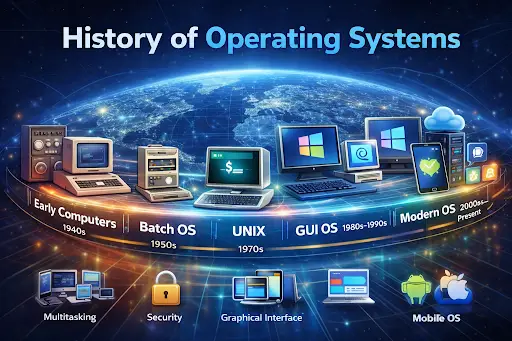
The Early Days: Computers Without Operating Systems (1940s–1950s)
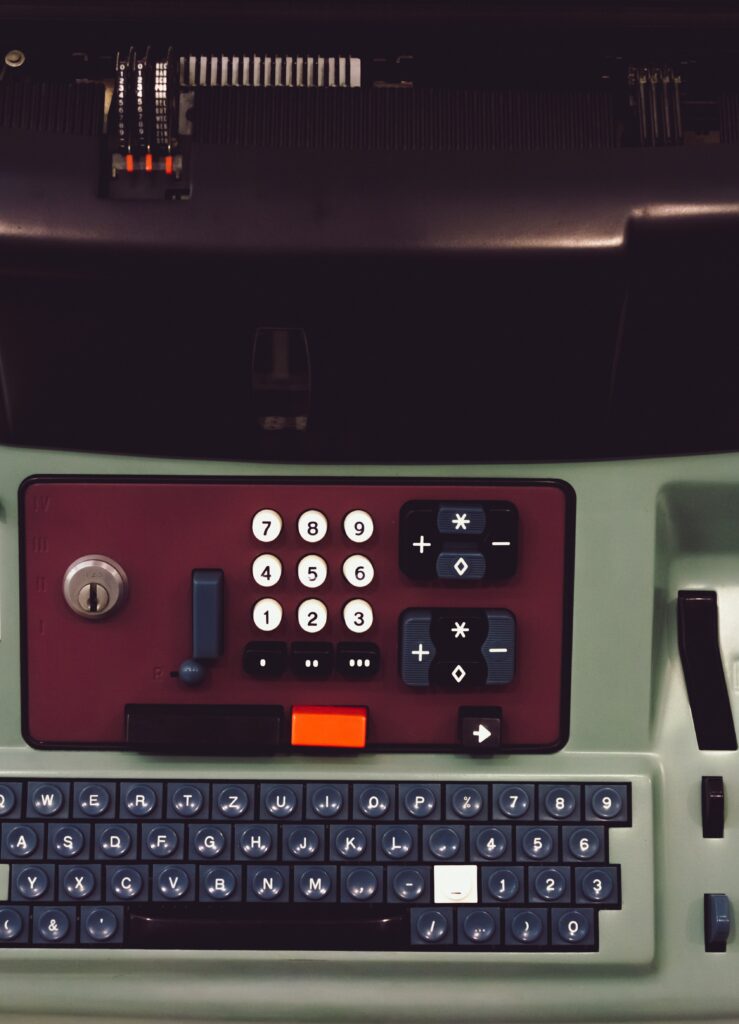
In the early days of computing, there were no operating systems. Computers were massive machines that filled entire rooms. They were expensive and used mainly by scientists and government organizations.
To run a program, users had to enter instructions manually using punch cards or switches. Every task required full attention and control.
This created several problems:
- The process was slow
- Only one task could run at a time
- Users needed special training
There was no automation, and computers were not easy to use.
These challenges led developers to create software that could manage computer operations automatically.
The Birth of Batch Operating Systems (1950s)
The first step in operating system evolution came with batch systems.
Batch operating systems allowed computers to process multiple jobs automatically. Instead of entering instructions one by one, users submitted jobs, and the system processed them in order.
This improved efficiency and saved time.
However, batch systems had limitations:
- Users could not interact with programs
- Errors could only be fixed after the job finished
Even with these limitations, batch systems were a major improvement.
They marked the true beginning of operating system history.
The 1960s: Multiprogramming and Better Resource Management
In the 1960s, operating systems became more advanced.
Developers introduced multiprogramming, which allowed multiple programs to stay in memory at the same time.
The operating system could switch between programs, making better use of computer resources.
This made computers:
- Faster
- More efficient
- More productive
Multiprogramming helped reduce waiting time and improved overall performance.
This was an important milestone in the evolution of operating systems.
The 1970s: The Creation of UNIX
One of the biggest breakthroughs happened in the 1970s with the development of UNIX.
UNIX was designed to support multiple users and tasks at the same time.
It introduced features that are still used today, such as:
- File management systems
- User permissions
- Multitasking
UNIX became very popular in universities and businesses.
Many modern operating systems are based on UNIX concepts.
This period helped shape the future of computing.
The 1980s: Personal Computer Operating Systems
In the 1980s, computers became smaller and more affordable. People started using personal computers at home and in offices.
This created demand for operating systems designed for personal use.
Early personal operating systems used command-line interfaces. Users had to type commands to perform tasks.
Although these systems worked well, they were not easy for beginners.
This led to the next major improvement.
The GUI Revolution: Making Computers Easy to Use
The introduction of graphical user interfaces (GUI) changed everything.
Instead of typing commands, users could now click icons and open programs using a mouse.
This made computers much easier to use.
People no longer needed advanced technical skills.
Computers became accessible to everyone.
This helped increase computer use around the world and supported the growth of the history of the Internet, as more people connected online.
The 1990s: Faster and More Reliable Systems
In the 1990s, operating systems improved rapidly.
They became faster, more reliable, and more secure.
They supported new features such as:
- Multimedia
- Internet access
- Advanced software
Users could run multiple programs at the same time.
This improved productivity and convenience.
Operating systems became an essential part of daily life.
The Rise of Linux and Open-Source Operating Systems
Linux was one of the most important developments in operating system history.
It introduced the idea of open-source software.
This means anyone can view and improve the code.
Linux became popular because it is:
- Free
- Secure
- Powerful
Today, Linux is used in:
- Servers
- Websites
- Smartphones
It plays a major role in modern technology.
The Mobile Operating System Revolution (2000s)
The 2000s introduced smartphones, which required new types of operating systems.
Mobile operating systems were designed for touchscreens and portable devices.
They allowed users to:
- Install apps
- Browse the internet
- Watch videos
These systems made computers more portable.
Now, powerful computing is available in our pockets.
Modern mobile systems also work closely with a brief history of artificial intelligence, allowing smart assistants and automation.
Modern Operating Systems Today
Today’s operating systems are highly advanced.
They support advance technologies such as:
- Cloud computing
- Artificial intelligence
- Smart devices
They are designed to be fast, secure, and easy to use.
Modern operating systems connect people around the world.
They are the foundation of digital life.
Why Operating Systems Are Important
Operating systems make computers usable.
They help manage:
- Hardware
- Software
- Files
- Applications
Without operating systems, computers would not function properly.
They make modern technology possible.
The Future of Operating Systems
Operating systems will continue to improve.
Future systems may include:
- Better security
- Faster performance
- Smarter automation
They will support future technologies and innovations.
Operating systems will remain essential.
Frequently Asked Questions (FAQs)
What is an operating system?
An operating system is software that manages computer hardware and allows users to run programs.
What was the first operating system?
One of the earliest operating systems was GM-NAA I/O, developed in the 1950s.
Why were operating systems created?
Operating systems were created to make computers easier and more efficient to use.
What are examples of operating systems?
Examples include Windows, Linux, Android, and macOS.
How have operating systems changed over time?
They evolved from simple batch systems to modern systems that support advanced technologies.
Why are operating systems important today?
They allow computers and smartphones to function properly and run applications.
Are mobile operating systems different?
Yes, mobile operating systems are designed for smartphones and touch devices.
Conclusion
The history of operating systems is a journey of continuous improvement.
From the early days without operating systems to modern smart platforms, each stage made computers more useful and accessible.
Operating systems helped turn computers into essential tools for everyday life.
They continue to evolve and will play a key role in the future of technology.