Introduction
The question who invented the first computer hardware is one of the most fascinating topics in the history of technology. Computer hardware forms the physical foundation of every digital system. Without hardware there would be no processors, memory, storage devices, or modern computing platforms. Understanding who invented the first computer hardware helps explain how modern computing began and why it continues to evolve rapidly.
In the earliest days of computing machines were mechanical devices designed to perform calculations. These early machines gradually evolved into electronic computers that used vacuum tubes, logic gates, and later microprocessors. The story of who invented the first computer hardware is deeply connected with the pioneers of computer engineering who built machines capable of performing complex tasks.
Modern computers rely on hardware components such as the Central Processing Unit, Arithmetic Logic Unit, and memory systems. These components work together to process information and execute instructions. Early engineers also developed hardware interfaces that allowed software to communicate with machines effectively.
Advances in the evolution of transistors made it possible to replace bulky vacuum tubes with smaller and more reliable electronic switches. This breakthrough dramatically increased computing power and reduced the size of machines.
Another major development was the rise of storage technology, which allowed computers to store large amounts of data. Early systems used punch cards and magnetic storage devices before modern storage systems were introduced.
The story of who invented the first computer hardware reveals how visionary scientists and engineers created the foundation for the digital world we rely on today.
Who Invented It
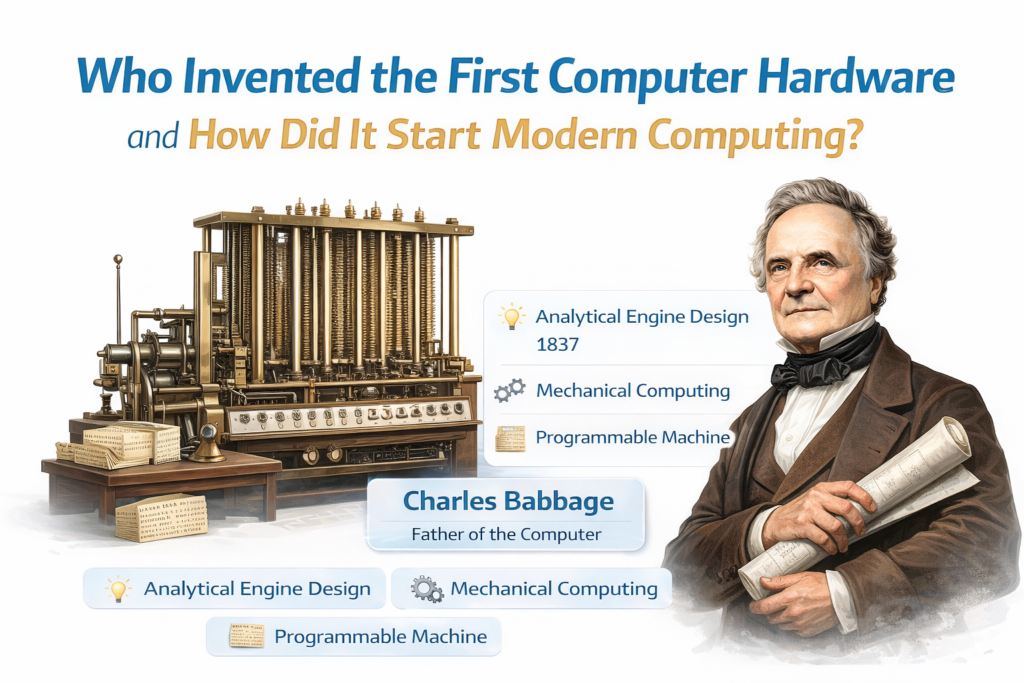
When historians discuss who invented the first computer hardware, the name Charles Babbage appears prominently. Charles Babbage was a mathematician and engineer who designed the first mechanical computing machines during the nineteenth century.
Babbage developed a concept known as the Analytical Engine. This machine was designed to perform automated calculations using mechanical components. Although it was never fully completed during his lifetime, the Analytical Engine contained many ideas that later became part of modern computers.
The Analytical Engine included features similar to modern hardware components. It had a processing unit capable of performing calculations, a memory system for storing numbers, and an input system that used punch cards.
Because of these innovations Charles Babbage is often considered the father of computer hardware. His designs laid the conceptual foundation for programmable computing machines.
Later pioneers such as John von Neumann expanded these ideas and developed the architecture that modern computers still use today. This architecture defined how memory, processors, and instructions interact within a computing system.
The contributions of these innovators are also documented in the history of computers, which explains how early machines evolved into advanced computing systems.
Their work answers the historic question who invented the first computer hardware and highlights the beginning of modern hardware engineering.
When It Was Invented
The first concept of computer hardware appeared in 1837 when Charles Babbage introduced the design of the Analytical Engine.
The year 1837 is often considered a key milestone in the story of who invented the first computer hardware because it marked the first time a machine was designed to perform programmable computations.
During the twentieth century computer hardware evolved rapidly. One of the most important milestones was the development of ENIAC in 1945. ENIAC was one of the first electronic general purpose computers and used thousands of vacuum tubes to perform calculations.
The historical significance of ENIAC demonstrated how electronic components could dramatically increase computing speed. These early vacuum tube computers laid the groundwork for later systems that used transistors and silicon chips.
The invention of the transistor in 1947 revolutionized hardware engineering by replacing vacuum tubes with smaller electronic switches. This breakthrough enabled computers to become smaller, faster, and more reliable.
The rapid improvement of processors driven by the evolution of transistors allowed engineers to design microprocessors and integrated circuits.
These innovations represent key moments in the timeline of who invented the first computer hardware and shaped the development of modern computing.
How It Worked
Understanding who invented the first computer hardware requires understanding how early computer machines operated.
Early mechanical computers relied on gears and rotating components to perform calculations. Numbers were represented through mechanical positions and calculations were executed through physical movement.
Electronic computers later replaced mechanical parts with electrical circuits. These circuits used logic gates to perform operations such as addition and subtraction.
The Central Processing Unit became the core component responsible for executing instructions. Within the processor the Arithmetic Logic Unit handled mathematical calculations while control units directed operations.
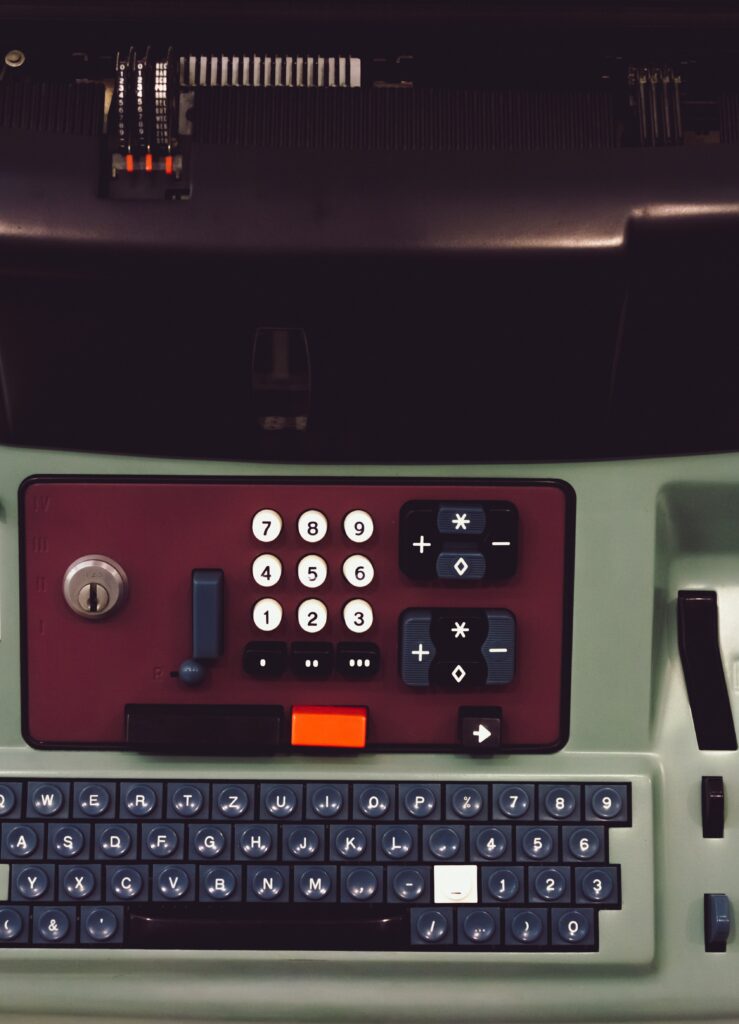
Memory systems such as ferrite core memory stored instructions and data. Input devices such as punch cards allowed programs to be loaded into the machine.
Printed Circuit Boards connected components together and allowed signals to travel between processors, memory modules, and peripheral devices.
Hardware and software communication was handled through interfaces that allowed programs to interact with the machine.
Advances in the rise of storage technology enabled computers to store increasingly large datasets and manage complex applications.
These innovations show how the ideas behind who invented the first computer hardware evolved into sophisticated computing systems.
Why It Was Important
The invention of computer hardware fundamentally changed the world.
Before computing machines existed complex calculations had to be performed manually. Scientific research, engineering projects, and financial analysis required enormous amounts of time.
The creation of programmable hardware systems solved this problem by automating calculations.
Understanding who invented the first computer hardware reveals how computing machines accelerated innovation across many industries including science, medicine, and engineering.
Hardware development also enabled the creation of programming languages, operating systems, and software platforms.
Modern computing relies on processors capable of executing billions of instructions per second. These processors follow principles established by early computer hardware pioneers.
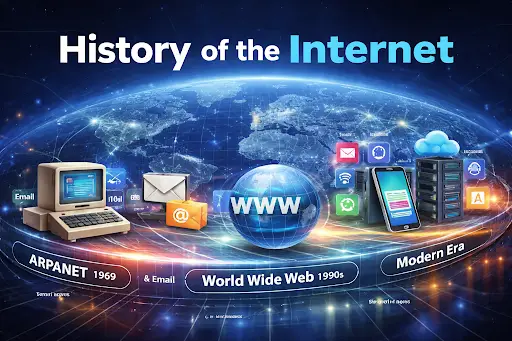
The expansion of computing infrastructure also influenced the development of networks, servers, and cloud systems. These systems are closely connected with the history of computer networking and global communication technologies.
As computers became more powerful they transformed industries such as education, business, entertainment, and scientific research.
The revolutionary impact of computing machines demonstrates why the question who invented the first computer hardware remains an important topic in technology history.
How It Evolved Today
Modern computer hardware has evolved dramatically since the early days of mechanical computing machines.
Today computers rely on advanced microprocessors built using silicon wafers and billions of transistors. These processors execute complex instructions at extremely high clock speeds.
Modern systems also include graphics processors that accelerate visual computing and machine learning tasks.
The development of these processors is closely related to the Evolution of GPUs, which expanded computing capabilities for graphics and artificial intelligence applications.
Hardware engineering continues to evolve through innovations in chip design, memory technology, and storage systems.
High performance computing platforms now power artificial intelligence research, data analysis, and scientific simulations.
Modern computing systems also rely on large scale infrastructure such as server clusters and cloud platforms. These facilities are part of the History of Data Centers, which support global digital services.
As computing technology advances researchers continue exploring new architectures such as quantum processors and specialized AI hardware.
The long journey that began with the ideas behind who invented the first computer hardware continues to drive innovation in modern technology.
Frequently Asked Questions (FAQs)
Who invented the first computer hardware?
The first concept of computer hardware was created by Charles Babbage, who designed the Analytical Engine in the nineteenth century.
What was the first electronic computer?
ENIAC was one of the earliest electronic computers and demonstrated the power of vacuum tube computing systems.
Why are transistors important in computer hardware?
Transistors replaced vacuum tubes and allowed computers to become smaller, faster, and more reliable.
What is the role of the CPU in a computer?
The CPU processes instructions and controls the operation of the entire computer system.
How has computer hardware evolved?
Computer hardware evolved from mechanical machines to electronic systems using microprocessors, integrated circuits, and advanced silicon technology.
The Hardware Revolution That Built Modern Computing 1837 to Present
The story of who invented the first computer hardware represents one of the most remarkable achievements in technological history. From the mechanical designs of Charles Babbage to the powerful microprocessors used today computer hardware has evolved dramatically.
Early pioneers laid the foundation for modern computing by developing machines capable of performing automated calculations. Their work led to the development of electronic computers, microprocessors, and advanced computing architectures.
Today computer hardware powers every digital system in the world including smartphones, servers, and artificial intelligence platforms.
The innovations introduced by early computer engineers continue to influence modern technology and inspire new breakthroughs.
The legacy of those who answered the historic question who invented the first computer hardware reminds us that the digital age began with visionary ideas and groundbreaking engineering.