Introduction to Edge Computing and Its Growing Importance
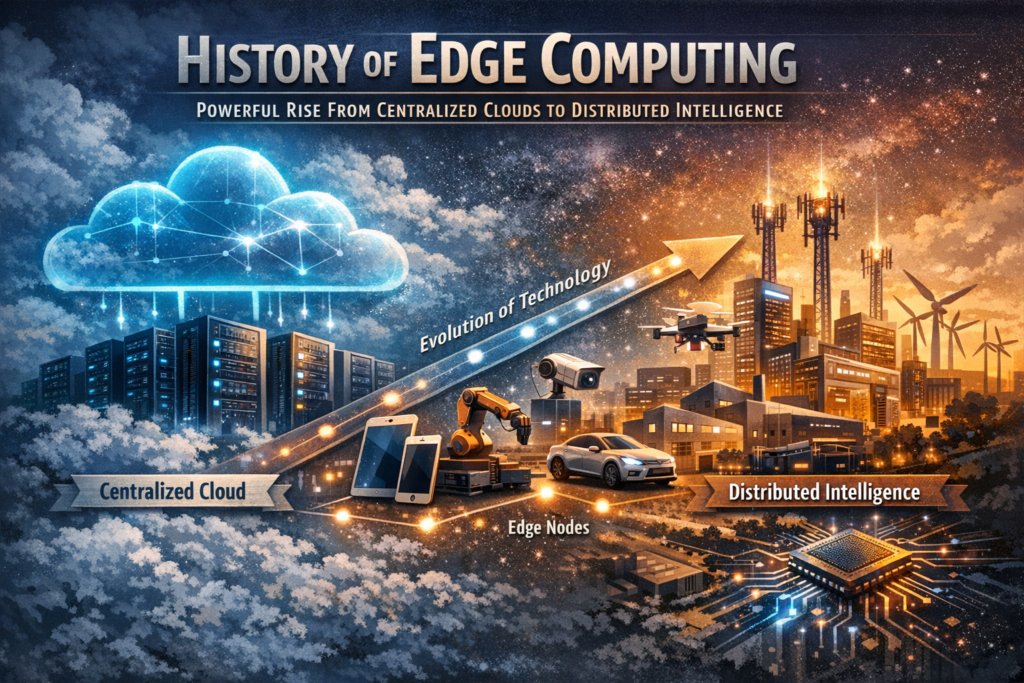
The history of edge computing reflects one of the most transformative journeys in modern technology. From centralized systems to intelligent distributed networks, computing has evolved dramatically. Today, businesses demand faster processing, real time data handling, and reduced latency. That is where edge computing plays a critical role.
What is Edge Computing and Why It Matters Today
Edge computing refers to processing data closer to the source instead of relying on distant cloud servers. This concept is essential for applications requiring immediate responses, such as autonomous vehicles, smart cities, and industrial automation.
Unlike traditional cloud systems, edge computing operates at the network periphery, enabling proximity computing and on device processing. This reduces delays and enhances efficiency.
For deeper foundational understanding, explore Computer History and how computing paradigms evolved over time.
Key Concepts: Distributed Infrastructure and Latency Reduction
The core strength of edge computing lies in distributed infrastructure. Instead of a centralized model, it uses decentralized nodes that process data locally. This leads to:
- Latency reduction
- Faster response times
- Improved user experience
- Data localized processing
These benefits are crucial for low latency applications like video streaming and IoT systems.
Early Computing Era 1960s 1980s: Centralized Systems Dominate
Mainframes and the Birth of Centralized Processing
In the early days, computing relied heavily on centralized mainframes. Large organizations owned powerful systems that processed all data in one location. Users accessed these systems through terminals.
This era marked the beginning of digital transformation but lacked flexibility.
Limitations in Bandwidth and Data Accessibility
Centralized computing faced several challenges:
- Limited bandwidth
- High latency
- Restricted accessibility
- No real time processing
These limitations laid the groundwork for future innovations
Rise of Personal Computing 1980s 1990s
Shift Toward Localized Computing Power
With the rise of personal computers, computing power moved closer to users. This was a significant step toward decentralization.
You can learn more about this shift through Personal Computers Rise, which changed the entire computing landscape.
Role of evolution of the first digital computer
The evolution of the first digital computer played a vital role in shaping modern systems. It introduced concepts that later influenced distributed computing and edge architectures.
Internet Boom 1990s 2005: Beginning of Distributed Systems
Emergence of Networking Evolution and CDNs
The internet revolution changed everything. Systems became interconnected, leading to the rise of Content Delivery Networks CDN. These networks stored data closer to users, improving speed and performance.
To understand this transition, explore Networking Evolution and its impact on global connectivity.
Akamai history and Early Edge Concepts
Akamai Technologies pioneered CDN technology. Its model reduced latency by delivering content from nearby servers. This was one of the earliest forms of edge computing.
Cloud Computing Era 2006 2015: Centralization Returns
Growth of Cloud Computing History
Cloud computing brought centralized power back into focus. Companies began storing and processing data in massive data centers.
For more insights, check Cloud Computing History and its rapid adoption worldwide.
Challenges of Latency and Bandwidth Optimization
Despite its advantages, cloud computing faced issues:
- Increased latency
- High bandwidth usage
- Delayed real time responses
These challenges highlighted the need for edge solutions.
Emergence of Edge Computing 2015 2020
Rise of IoT Internet of Things and Real time Data Processing
The explosion of IoT (Internet of Things) devices created massive data streams. Processing this data centrally became inefficient.
Edge computing enabled real time data processing at the source, reducing delays and improving performance.
Mobile Edge Computing MEC and Fog Computing
Technologies like Mobile Edge Computing MEC and Fog Computing extended cloud capabilities closer to users. These models improved scalability and supported decentralized nodes.
Modern Edge Computing 2020 Present: Distributed Intelligence
Integration with 5G Network and Smart Cities
The integration of edge computing with 5G network integration has unlocked new possibilities. Ultra fast connectivity enables real time applications such as:
- Smart cities
- Autonomous vehicles
- Remote healthcare
Role in Autonomous Vehicles and Industrial IoT
Edge computing plays a vital role in Industrial IoT IIoT. Machines can process data locally, ensuring faster decisions and improved efficiency.
Key Technologies Powering Edge Computing Today
Edge to Cloud Architecture Explained
Edge to Cloud architecture combines local processing with centralized systems. This hybrid approach ensures optimal performance and scalability.
Role of AI Evolution and Machine Learning
Artificial intelligence enhances edge systems by enabling predictive analytics and automation. Learn more through AI Evolution and its integration with edge computing.
Benefits of Edge Computing in the Digital World
Latency Reduction and Real Time Performance
Edge computing drastically reduces latency. Applications that require instant responses benefit the most.
Bandwidth Optimization and Cost Efficiency
By processing data locally, edge computing reduces bandwidth usage and lowers costs.
Challenges and Limitations of Edge Computing
Security Risks and Cybersecurity Evolution
Distributed systems increase security risks. Protecting decentralized nodes is a major challenge.
Infrastructure Complexity
Managing multiple edge devices requires advanced infrastructure and expertise.
Future of Edge Computing Beyond 2025
Integration with Quantum Computing and AI
Future systems will combine edge computing with quantum computing and AI for enhanced capabilities.
Growth in Smart Infrastructure
Edge computing will drive innovations in smart infrastructure, healthcare, and transportation.
FAQs About Edge Computing History
What is the history of edge computing in simple terms?
The history of edge computing shows how computing moved from centralized systems to distributed networks that process data closer to users.
Why is edge computing important today?
It enables real time data processing, reduces latency, and supports modern technologies like IoT and 5G.
How does edge computing differ from cloud computing?
Cloud computing processes data centrally, while edge computing processes it locally at the network edge.
What industries benefit most from edge computing?
Industries like healthcare, manufacturing, transportation, and smart cities benefit significantly.
What role does IoT play in edge computing?
IoT devices generate large amounts of data, making edge computing essential for real time processing.
Is edge computing secure?
While it offers advantages, it also introduces new security challenges that require advanced solutions.
Conclusion: The Transformative Journey of Edge Computing
The history of edge computing highlights a powerful transformation in how technology operates. From centralized mainframes to intelligent distributed systems, this evolution has reshaped industries and improved digital experiences.
As technology continues to advance, edge computing will remain at the forefront of innovation. Its ability to deliver low latency applications, optimize bandwidth, and support emerging technologies makes it indispensable for the future.