If you have ever tried to troubleshoot your Wi-Fi or set up a smart device, you have likely encountered the question what is an ip address. Every device connected to the internet, from your smartphone to your smart refrigerator, relies on this unique identifier to communicate properly. Understanding what is an ip address helps demystify one of the most fundamental building blocks of modern networking.
In simple terms, an IP address acts like a digital home address, allowing devices to send and receive information accurately across a network. This guide explains what is an ip address in clear, practical terms, covering how it works, its different types and why it matters for everyday internet use.
Breaking Down What Is an IP Address
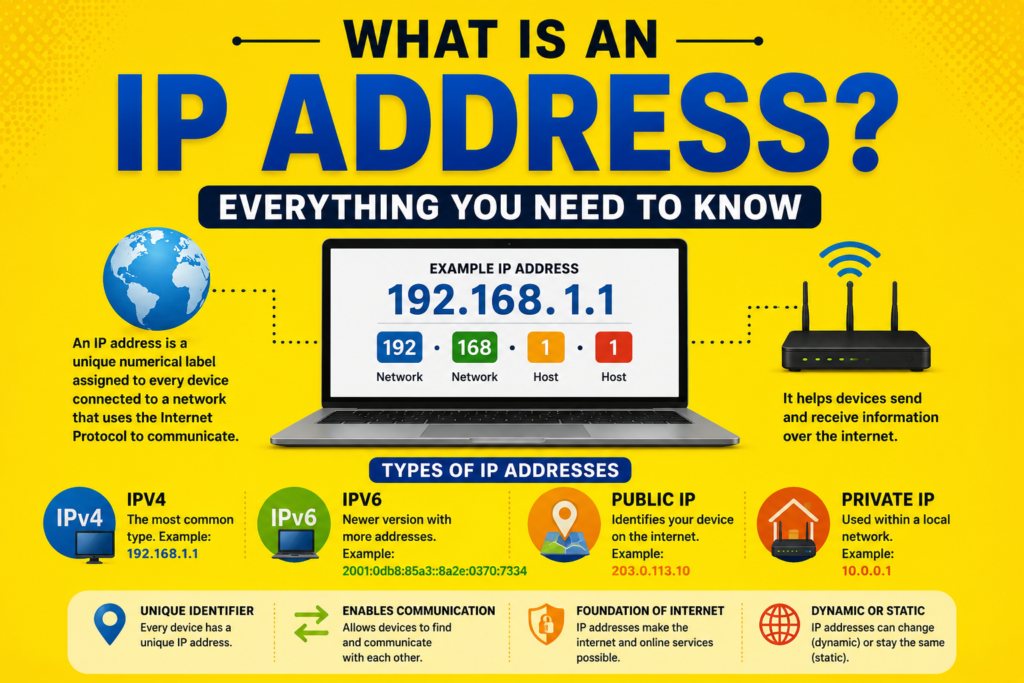
At its core, what is an ip address comes down to identification and location. An IP address, short for Internet Protocol address, is a unique string of numbers assigned to every device connected to a network. This numerical label allows devices to find and communicate with one another accurately, similar to how a postal address ensures mail reaches the correct destination.
Without a properly assigned IP address, devices would have no way of knowing where to send or receive data. This makes understanding what is an ip address essential for anyone trying to grasp the basics of what is a computer network and how digital communication actually functions.
How IP Addresses Are Structured
IP addresses typically appear as a series of numbers separated by periods, known as decimals and octets. For example, an address might look like 192.168.1.1, with each section representing a specific portion of the address. This structure includes both a network portion and a host portion, helping identify which network a device belongs to and which specific device it represents within that network.
Understanding this structure is key to answering what is an ip address in technical terms, since these numerical sections determine how data gets routed correctly across local networks and the wider internet.
IPv4 Versus IPv6: Understanding the Difference
When exploring what is an ip address, it becomes important to understand the two major versions currently in use. IPv4, the original format, uses a four part numerical system and supports a limited number of unique addresses. As the number of connected devices worldwide grew rapidly, available IPv4 addresses began running low.
This shortage led to the development of IPv6, a newer format designed to support a significantly larger pool of addresses using hexadecimal notation instead of simple decimals. Comparing IPv4 vs IPv6 differences, IPv6 offers improved security features and vastly expanded address space, making it better suited for the growing number of internet connected devices today.
Public Versus Private IP Addresses
Another important concept in understanding what is an ip address involves the distinction between public and private addresses. A public IP address is assigned by your Internet Service Provider and represents your network’s identity on the broader internet, allowing external devices to locate and communicate with you.
A private IP address, on the other hand, operates within your local network, such as your home Wi-Fi, and is not visible to the outside internet. Devices like your laptop, phone and smart TV often share the same public IP address while maintaining unique private addresses within your home network.
Dynamic Versus Static IP Addresses
IP addresses can also be classified as dynamic or static. A dynamic IP address changes periodically and is typically assigned automatically by a DHCP server whenever a device connects to a network. Most home networks use dynamic addresses since they simplify management and conserve available address space.
A static IP address, by contrast, remains fixed and does not change over time. Businesses often use static addresses for servers or critical infrastructure, ensuring consistent, reliable access without interruptions caused by address changes. Choosing between dynamic and static setups depends largely on specific networking needs and budget considerations.
The Role of DNS in Connecting to IP Addresses
While understanding what is an ip address is essential, most people never actually type numerical addresses to visit websites. Instead, they rely on the Domain Name System, commonly known as DNS, which translates human friendly web addresses into the correct IP address automatically.
DNS explained simply, it functions like a phonebook for the internet, matching familiar domain names with their corresponding numerical addresses behind the scenes. This system makes browsing the internet far more convenient, eliminating the need to memorize complex strings of numbers for every website you visit.
How Routers Manage IP Addresses
Within a home or office network, how a router works plays a critical role in managing IP addresses effectively. Your router typically assigns private IP addresses to each connected device while maintaining a single public IP address for the entire network.
This process allows multiple devices to share one internet connection efficiently, using network address translation to manage traffic between private devices and the broader internet. Understanding this relationship helps clarify how what is an ip address applies practically within everyday home networking setups.
Subnet Masks and Network Segmentation
Alongside IP addresses, subnet masks play an important supporting role in networking. A subnet mask helps determine which portion of an IP address represents the network and which portion identifies the specific device. This process, known as subnetting, allows large networks to be divided into smaller, more manageable segments.
Understanding subnet masks becomes particularly relevant for businesses managing complex networks, where proper segmentation improves both performance and security. This concept ties closely into broader internet infrastructure, since efficient address management supports smoother data flow across interconnected systems.
Finding and Understanding Your Own IP Address
Many people search for how to find my IP address when troubleshooting connectivity issues or setting up new devices. Your public IP address can typically be found through a simple online search, while your private IP address is usually visible within your device’s network settings.
Understanding the difference between these two addresses helps when configuring devices, setting up remote access or troubleshooting connection problems. This practical knowledge makes the concept of what is an ip address far more useful in everyday situations beyond simple definitions.
IP Addresses and Network Security
Security also plays a significant role in understanding what is an ip address. Since IP addresses can reveal general location information and network details, protecting this data has become increasingly important. Network security measures, including firewalls and encryption, help prevent unauthorized access and protect users from potential threats.
Tools like a virtual private network, often used through vpn explained technology, can mask a user’s actual IP address, adding an extra layer of privacy and security while browsing the internet.
The Connection Between IP Addresses and TCP/IP
IP addresses do not function in isolation. They work alongside broader networking protocols, most notably TCP/IP explained as the foundational suite governing how data travels across networks. This protocol suite ensures that data packets, each labeled with an IP address, travel efficiently and reassemble correctly at their destination.
Without properly functioning IP addressing, this entire process would break down, making it impossible for devices to communicate reliably across local networks or the broader internet.
Frequently Asked Questions (FAQs)
What is an IP address in simple terms?
An IP address is a unique numerical identifier assigned to every device connected to a network, allowing it to send and receive data accurately across the internet.
What is the difference between IPv4 and IPv6?
IPv4 uses a four part numerical format with a limited number of available addresses, while IPv6 uses hexadecimal notation to support a significantly larger pool of unique addresses.
What is the difference between public and private IP addresses?
A public IP address identifies your network on the broader internet, while a private IP address operates within your local network and remains hidden from external devices.
How can I find my IP address?
You can find your public IP address through a simple online search, while your private IP address is typically visible within your device’s network settings menu.
Conclusion
Understanding what is an ip address reveals just how essential this small string of numbers really is for everyday internet use. From IPv4 and IPv6 differences to public, private, dynamic and static classifications, IP addresses form a critical part of how devices communicate across networks.
As internet infrastructure continues expanding to support billions of connected devices, understanding what is an ip address remains a valuable skill for anyone navigating today’s increasingly connected digital world.