If networking terminology has ever left you confused, understanding osi model explained in simple words can completely change how you view digital communication. This framework breaks down the complicated process of data transmission into manageable, logical sections, making it easier for beginners and professionals alike to understand how networks actually function.
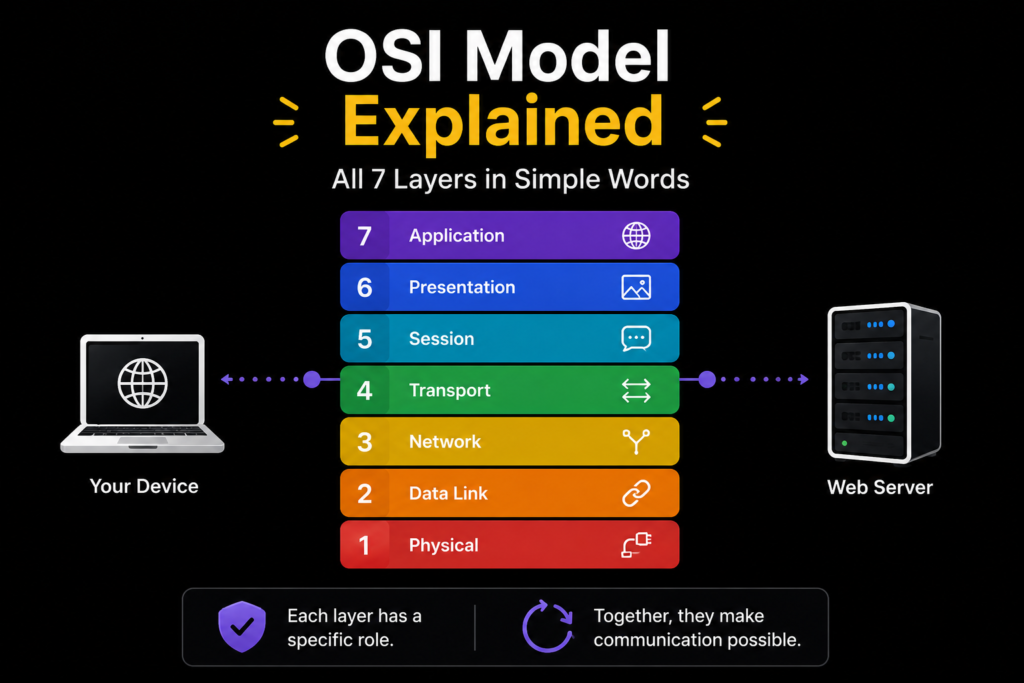
Standing for Open Systems Interconnection, the OSI model divides network communication into seven distinct layers, each serving a specific purpose. This article walks through osi model explained layer by layer, using simple language and practical examples to make this foundational networking concept easy to understand.
Why the OSI Model Was Created
Before diving into individual layers, it helps to understand why osi model explained frameworks became necessary in the first place. As computer networks began growing rapidly, different manufacturers used varying methods for data transmission, creating compatibility issues between systems.
The OSI reference model was developed to standardize this process, breaking communication into clearly defined layers that any system could follow regardless of manufacturer. This standardization made it significantly easier to design, troubleshoot and understand what is a computer network across different platforms and devices worldwide.
Layer One: The Physical Layer
The foundation of osi model explained begins with the physical layer, responsible for the actual transmission of raw data as electrical signals, light pulses or radio waves. This layer includes physical hardware components like cables, switches and network interface cards that enable bit transmission across a network.
Without a properly functioning physical layer, no higher level communication could take place, since this layer handles the fundamental task of moving raw data from one device to another through tangible transmission media.
Layer Two: The Data Link Layer
Moving up within osi model explained, the data link layer focuses on organizing raw data into structured units called frames. This layer also handles MAC address mapping, ensuring that data reaches the correct physical device within a local network.
Comparing data link layer vs physical layer responsibilities, the physical layer handles raw signal transmission, while the data link layer adds structure and addressing, helping prevent errors and ensuring frames reach their intended destination accurately within a local network segment.
Layer Three: The Network Layer
The network layer plays a particularly important role within osi model explained, since it handles logical addressing and routing decisions. This layer determines how data travels between different networks, relying heavily on IP address explained concepts to identify source and destination devices accurately.
Devices operating at this layer, such as routers, examine addressing information to determine the most efficient path for data packets, making the network layer essential for communication across larger, more complex network structures beyond a single local segment.
Layer Four: The Transport Layer
Understanding transport layer functions is essential when exploring osi model explained in greater depth. This layer ensures reliable, ordered delivery of data between devices, breaking information into smaller units called segments and reassembling them correctly at their destination.
TCP/IP explained protocols operate heavily within this layer, managing error checking, flow control and retransmission of lost data. This reliability makes the transport layer particularly important for applications requiring complete data accuracy, such as file transfers or website loading processes.
Layer Five: The Session Layer
The session layer manages and maintains communication sessions between two devices throughout an entire data exchange. This layer establishes, coordinates and eventually terminates connections, ensuring that ongoing communication remains organized and synchronized between both parties involved.
While often overlooked in basic osi model explained discussions, the session layer plays an important role in maintaining stable connections during longer communication sessions, such as video calls or extended file transfers requiring consistent, uninterrupted data exchange.
Layer Six: The Presentation Layer
Within session presentation application discussions, the presentation layer handles data formatting, ensuring information appears correctly regardless of differences between sending and receiving systems. This layer manages tasks like encryption, compression and translation between different data formats.
This layer proves particularly important when devices using different operating systems or software need to communicate effectively. The presentation layer essentially acts as a translator, ensuring data remains readable and properly formatted throughout the communication process.
Layer Seven: The Application Layer
The final layer within osi model explained frameworks is the application layer, the closest layer to actual end users. This layer includes familiar protocols and services that power everyday internet activities, including web browsing, email and file sharing applications.
When comparing http vs https, both protocols operate within this application layer, directly interacting with software that users engage with daily. This top layer essentially represents the visible interface through which humans interact with underlying network infrastructure.
Understanding Data Encapsulation and Decapsulation
A critical concept within osi model explained involves data encapsulation, the process of wrapping data with additional information as it moves down through each layer during transmission. Each layer adds its own header information, creating a Protocol Data Unit specific to that particular layer.
Once data reaches its destination, the reverse process, decapsulation, removes these headers layer by layer, allowing the receiving device to properly interpret and process the original information accurately from the physical layer all the way up to the application layer.
OSI Model Versus TCP/IP Model
Many people studying networking encounter both the OSI model and the TCP/IP model, often causing confusion between the two frameworks. Comparing OSI model vs TCP/IP model structures, the OSI model divides communication into seven detailed layers, while the TCP/IP model condenses these concepts into four practical layers actually implemented across real world networks.
Despite these structural differences, both models describe similar underlying processes, with OSI model explained frameworks often serving as an educational tool, while TCP/IP remains the actual protocol suite powering modern internet infrastructure.
Practical Examples of the OSI Model in Action
Understanding osi model explained becomes much clearer through practical examples. When you send an email, the application layer handles the email client interface, while the transport layer ensures reliable delivery through TCP/IP explained protocols. The network layer routes the message using IP address explained logic, while lower layers handle actual signal transmission.
This layered approach ensures that complex communication tasks get broken into manageable, specialized functions, with each layer focusing exclusively on its specific responsibility without needing to understand the complete process happening at other layers throughout the network.
Why Understanding OSI Model Explained Still Matters
Even though modern networks primarily rely on the TCP/IP model in practice, osi model explained frameworks remain valuable for education and troubleshooting purposes. Network professionals often use OSI model with examples to isolate specific problems, determining whether an issue exists at the physical, network or application layer.
This structured approach to diagnosing connectivity problems makes osi model explained knowledge particularly valuable for anyone working with internet infrastructure, network security or general troubleshooting tasks across both small and large scale networking environments.
Frequently Asked Questions (FAQs)
What are the 7 layers of the OSI model?
The seven layers include physical, data link, network, transport, session, presentation and application, each handling a specific aspect of network communication from raw signals to user interaction.
Why is the OSI model important if TCP/IP is used instead?
The OSI model remains valuable for education and troubleshooting, helping professionals understand and isolate networking issues at specific layers, even though TCP/IP handles actual internet communication.
What is data encapsulation in the OSI model?
Data encapsulation involves wrapping data with additional header information as it moves through each layer during transmission, later removed through decapsulation at the receiving device.
Is there an easy way to remember the OSI model layers?
Many people use mnemonics, associating each letter with a memorable phrase, to help remember the correct order of physical, data link, network, transport, session, presentation and application layers.
Conclusion
Understanding osi model explained through its seven distinct layers reveals just how organized and structured modern network communication truly is. From the physical layer handling raw signals to the application layer supporting everyday user interactions, each layer plays a specific, essential role.
Whether used for education, troubleshooting or simply understanding how the internet works, osi model explained frameworks remain a foundational concept for anyone seeking a deeper understanding of modern internet infrastructure and networking principles.