In an age where online privacy feels increasingly harder to protect, vpn explained in simple terms reveals one of the most effective tools available for securing your internet activity. Whether you are browsing public Wi-Fi at a coffee shop or simply want more control over your online privacy, understanding vpn explained concepts can significantly improve how safely you use the internet.
A virtual private network creates a secure, encrypted connection between your device and the internet, protecting your data from prying eyes. This guide breaks down vpn explained clearly, covering how it works, its key benefits and why more people are choosing to use one every single day.
What Is a VPN in Simple Terms
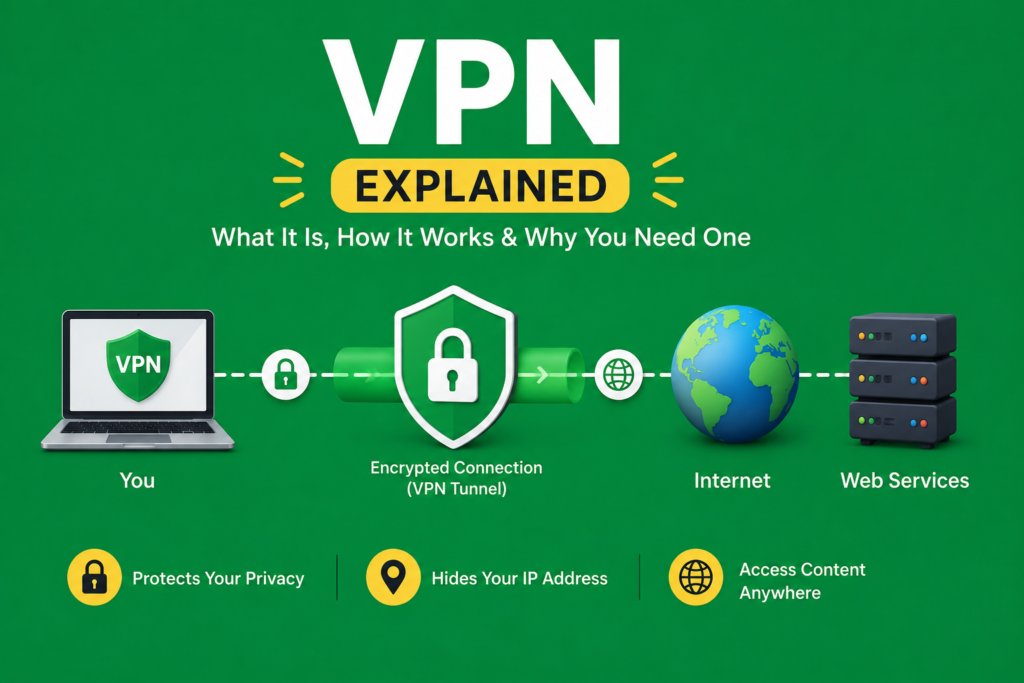
To fully understand vpn explained, it helps to start with a straightforward definition. A virtual private network creates a secure encryption tunnel between your device and a remote server, routing your internet traffic through this protected pathway instead of directly through your regular internet connection.
This process effectively hides your online activity from your Internet Service Provider, network administrators and potential eavesdroppers monitoring public networks. Understanding vpn explained becomes especially important when considering how much personal information travels across the internet daily without proper protection.
How Does a VPN Work Behind the Scenes
Exploring how does a VPN work reveals a fascinating process involving encryption and rerouting. When you connect to a VPN, your device establishes a secure connection with a VPN server, often located in a different city or even a different country entirely.
All your internet traffic then travels through this encrypted tunnel, making it extremely difficult for anyone intercepting the connection to read or access your data. This process also involves IP address masking, replacing your actual IP address with one belonging to the VPN server instead.
VPN Encryption Methods and Protocols
Understanding vpn explained thoroughly requires exploring the encryption methods that make this technology secure. Most modern VPN services rely on AES-256 encryption, an extremely strong encryption standard that would take even powerful computers an impractical amount of time to break through brute force methods.
Different VPN security protocols also play an important role in overall performance and security. OpenVPN protocol has long been a trusted standard, while newer options like WireGuard offer faster speeds while maintaining strong encryption, giving users more flexibility depending on their specific needs.
Why Use a VPN for Everyday Browsing
Many people wonder why use a VPN when their internet connection already seems to work perfectly fine without one. The answer lies in the additional layer of protection a VPN provides, particularly when using public Wi-Fi networks at airports, cafes or hotels, where network security protections are often minimal or nonexistent.
Without a VPN, data traveling across public networks becomes vulnerable to interception. Vpn explained in this context highlights how encryption protects sensitive information like passwords, banking details and personal messages from potential attackers monitoring the same network.
Secure Public Wi-Fi With VPN Protection
One of the most practical benefits of vpn explained technology involves secure public Wi-Fi with VPN usage. Public networks often lack proper network security measures, making them prime targets for attackers attempting to intercept unprotected data.
By encrypting your connection before it ever reaches the public network, a VPN significantly reduces the risk of having sensitive information stolen while using shared Wi-Fi. This added protection makes VPN usage particularly valuable for frequent travelers or remote workers accessing public networks regularly.
Bypassing Geo Restrictions With a VPN
Beyond security benefits, many people use VPN services specifically for how to bypass geo-blocks preventing access to certain content based on geographic location. By connecting through virtual server locations in different countries, users can appear to be browsing from an entirely different region.
This capability allows users to browse internet anonymously while accessing content that might otherwise be restricted due to geo-restrictions imposed by streaming services or certain websites, though users should always follow applicable terms of service and regional regulations.
Free Versus Paid VPN Services
When exploring vpn explained options, understanding free vs paid VPN differences becomes important for making an informed choice. Free VPN services often come with limitations, including slower speeds, data caps or, in some cases, questionable privacy practices that may compromise the very security users are seeking.
Paid VPN services typically offer stronger encryption, faster connection speeds and a genuine no-logs policy, meaning they do not track or store user browsing activity. Investing in a reputable paid service often provides significantly better protection compared to free alternatives.
Understanding Kill Switch and DNS Leak Protection
Advanced vpn explained features include important safety mechanisms like a kill switch, which automatically disconnects your internet connection if the VPN connection drops unexpectedly. This prevents your unprotected data from being exposed accidentally during connection interruptions.
Similarly, DNS leak protection ensures that your DNS explained requests remain routed through the encrypted VPN tunnel rather than leaking through your regular internet connection, which could otherwise reveal your browsing activity despite using a VPN.
Split Tunneling and Double VPN Routing
More advanced users often explore split tunneling features, allowing certain applications to use the VPN connection while others access the internet directly through your regular connection. This flexibility proves useful for situations requiring both security and full connection speed simultaneously for specific tasks.
Some services also offer double VPN routing, sending traffic through two separate VPN servers for additional encryption layers. While this significantly enhances privacy, it often reduces connection speed, making it more suitable for users prioritizing maximum security over performance.
Setting Up a VPN on Your Home Router
For comprehensive protection across all devices, some users choose to setup VPN on home router configurations rather than installing individual apps on each device. This approach automatically routes all connected devices through the VPN, including smart home devices that typically cannot run VPN software directly.
This setup provides convenient, whole home protection, though it does require slightly more technical configuration compared to standard VPN applications. Understanding vpn explained at this level makes advanced setups considerably more approachable for tech savvy users.
Choosing the Best VPN Services Available
When searching for best VPN services, consider factors like encryption strength, server locations, connection speeds and privacy policies. Reputable providers typically offer transparent no-logs policy commitments, strong AES-256 encryption and reliable customer support.
Reading independent reviews and understanding a provider’s approach to internet infrastructure and data handling helps ensure you choose a service that genuinely protects your privacy rather than simply marketing itself as secure without proper safeguards in place.
Frequently Asked Questions (FAQs)
What does a VPN actually do?
A VPN creates an encrypted connection between your device and the internet, masking your IP address and protecting your data from interception, especially on public networks.
Is using a VPN legal?
Yes, using a VPN is legal in most countries, though some regions restrict or regulate VPN usage, so it is worth checking local laws before connecting.
Can a VPN completely hide my identity online?
A VPN significantly improves privacy by masking your IP address and encrypting traffic, but it cannot guarantee complete anonymity, especially if other identifying information is shared online.
Does using a VPN slow down my internet connection?
Using a VPN can slightly reduce connection speed due to encryption and rerouting, though quality paid services typically minimize this impact significantly compared to free alternatives.
Conclusion
Understanding vpn explained reveals just how valuable this technology has become for protecting online privacy and security. From encryption tunnels and IP address masking to kill switches and split tunneling, VPNs offer practical protection for everyday internet users.
As online threats continue evolving, vpn explained knowledge remains essential for anyone wanting greater control over their privacy while navigating today’s increasingly complex internet infrastructure.