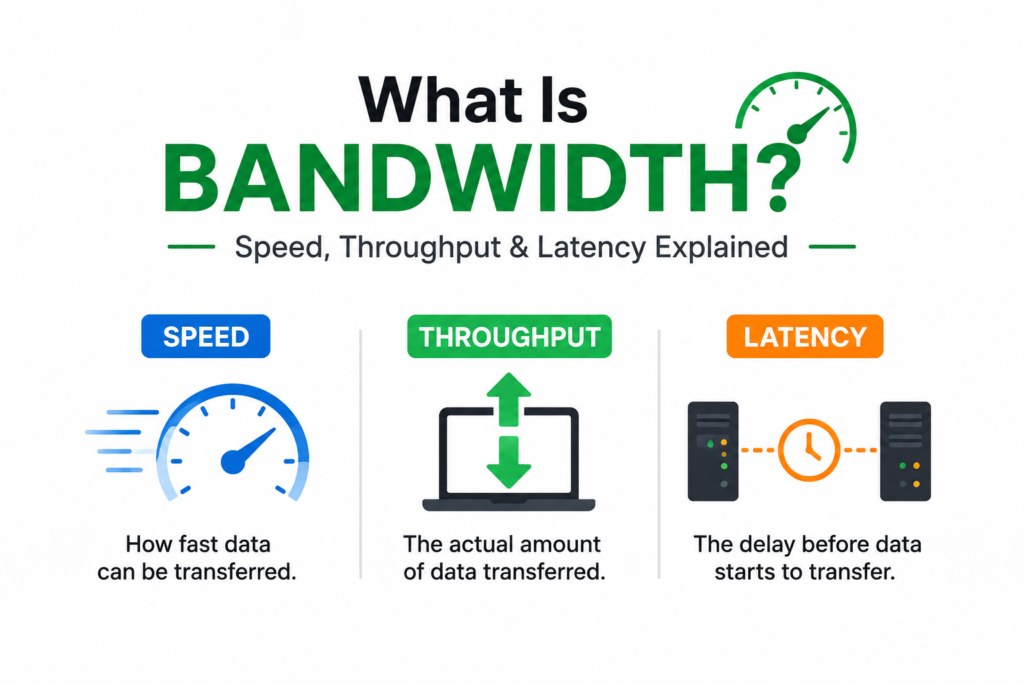
If your internet ever feels slow despite paying for a fast plan, understanding what is bandwidth can help explain exactly what is happening behind the scenes. Many people confuse bandwidth with overall internet speed, yet these terms actually describe different aspects of your connection. Understanding what is bandwidth helps clarify why some connections handle multiple devices smoothly while others struggle under similar conditions.
In simple terms, bandwidth refers to the maximum amount of data that can travel through your connection at any given time. This guide breaks down what is bandwidth clearly, covering its relationship to speed, throughput and latency, along with practical tips for improving your everyday internet experience.
Defining What Is Bandwidth Clearly
To properly understand what is bandwidth, imagine a highway with multiple lanes. Bandwidth represents the width of that highway, determining how much data can travel simultaneously at any given moment. It is typically measured in megabits per second or gigabits per second, depending on the overall capacity of your internet connection.
A higher bandwidth allows more data to flow through simultaneously, supporting multiple devices streaming, gaming or downloading files at the same time without significant slowdown. Understanding what is bandwidth becomes essential when troubleshooting connection issues within your what is a computer network setup at home or in the office.
Bandwidth Versus Speed: Clearing Up Confusion
One of the most common misunderstandings involves bandwidth vs speed differences. While bandwidth refers to network bandwidth capacity, or how much data can travel through a connection, speed refers to how quickly individual pieces of data actually travel from one point to another.
Think of bandwidth as the number of lanes on a highway, while speed represents how fast cars travel within those lanes. A connection can have high bandwidth but still experience slower speeds due to other factors like network congestion or hardware limitations affecting overall performance.
Understanding Throughput and Its Role
Closely related to what is bandwidth, throughput refers to the actual amount of data successfully transmitted over a connection within a specific timeframe. While bandwidth represents theoretical maximum capacity, throughput reflects real world performance, which is often lower due to various factors affecting the network.
Understanding the difference between throughput and bandwidth helps set realistic expectations, since actual data transfer rate often falls short of advertised bandwidth figures due to network congestion, packet loss or limitations within your internet infrastructure.
What Is Latency and Why It Matters
Beyond understanding what is bandwidth, latency plays an equally important role in overall internet performance. Latency, sometimes called network lag explained, refers to the delay between sending a request and receiving a response, typically measured in milliseconds.
Low latency for gaming and other real time applications is particularly important, since even small delays can significantly impact user experience during competitive online gaming or video calls. High bandwidth does not necessarily guarantee low latency, making this an entirely separate factor worth understanding.
How Network Ping Explains Latency
A common way to measure latency involves network ping explained as a test that sends a small data packet to a destination and measures how long it takes to receive a response. This ping rate, measured in milliseconds, provides a practical way to assess connection responsiveness beyond simple bandwidth numbers.
Lower ping response times generally indicate better performance for activities requiring real time interaction, while higher ping times can cause noticeable delays, particularly during online gaming or video conferencing sessions where instant communication matters significantly.
Upload Versus Download Speed Explained
Understanding what is bandwidth also requires recognizing the difference between upload vs download speed. Download speed measures how quickly data travels from the internet to your device, while upload speed measures how quickly data travels from your device back to the internet.
Most home internet connections prioritize download speed, since typical activities like streaming and browsing require significantly more incoming data. However, upload speed becomes increasingly important for activities like video calls, cloud backups or livestreaming, where sending data quickly matters just as much as receiving it.
Identifying an Internet Connection Bottleneck
Sometimes, despite having high bandwidth, users experience an internet connection bottleneck, a point within the network where data flow becomes restricted. This bottleneck can occur due to outdated hardware, an overloaded router, or too many devices simultaneously competing for limited available bandwidth.
Identifying the source of a bottleneck often requires examining multiple factors, including your modem, router capabilities and even the quality of cables or wired vs wireless networks connections throughout your home or office setup.
The Impact of Network Congestion
Network congestion occurs when too much data attempts to travel through a network simultaneously, similar to heavy traffic during rush hour. This congestion can significantly reduce actual throughput, even when your connection technically offers substantial bandwidth capacity.
During peak usage hours, when many users within a shared network access the internet simultaneously, network congestion often becomes more noticeable, resulting in slower loading times and reduced overall performance despite unchanged bandwidth allocations from your provider.
Understanding Packet Loss and Jitter
Packet loss in networks occurs when data packets fail to reach their destination, often due to network congestion, faulty hardware or signal interference. This loss forces devices to request retransmission, further slowing overall performance and negatively impacting the user experience.
Network jitter, or jitter variance, refers to inconsistent packet delivery time, causing uneven data flow that can particularly disrupt real time applications like video calls or online gaming, where consistent, predictable timing matters significantly more than simple bandwidth availability.
How to Measure Bandwidth Accurately
Learning how to measure bandwidth accurately typically involves using online speed testing tools that evaluate download speed, upload speed and latency simultaneously. These tests provide a practical snapshot of your current connection performance compared to your provider’s advertised bandwidth capacity.
Running these tests at different times throughout the day can help identify patterns related to network congestion, revealing whether performance issues stem from your internet plan itself or from temporary bottlenecks affecting your connection during peak usage periods.
Gigabit Internet and Modern Bandwidth Needs
As households increasingly rely on multiple connected devices, gigabit internet connection plans have become more popular, offering significantly higher bandwidth capacity compared to traditional broadband options. This increased capacity supports simultaneous streaming, gaming and remote work activities without significant performance degradation.
Understanding what is bandwidth becomes particularly relevant when choosing an internet plan, since households with numerous connected devices typically benefit from higher bandwidth allocations to prevent congestion and maintain smooth performance across all connected network security and computing devices.
Quality of Service and Bandwidth Management
Many modern routers include Quality of Service features, allowing users to prioritize bandwidth allocation for specific devices or applications. This capability proves particularly useful in households where certain activities, like video calls or online gaming, require consistent low latency performance.
By managing how available bandwidth gets distributed across different devices and applications, Quality of Service settings help ensure that critical activities receive adequate resources, even when multiple devices compete for the same limited internet infrastructure capacity simultaneously.
Frequently Asked Questions (FAQs)
What is bandwidth in simple terms?
Bandwidth refers to the maximum amount of data that can travel through an internet connection at any given time, typically measured in megabits or gigabits per second.
Is higher bandwidth always better for gaming?
Not necessarily. While higher bandwidth helps overall performance, low latency matters more for gaming, since even high bandwidth connections can experience noticeable lag with poor latency.
Why does my internet feel slow despite having high bandwidth?
Slow performance despite high bandwidth often results from network congestion, an internet connection bottleneck, or outdated hardware limiting actual throughput despite available capacity.
How can I test my actual bandwidth and speed?
You can test your bandwidth and speed using online speed testing tools that measure download speed, upload speed and latency, providing a clear snapshot of current performance.
Conclusion
Understanding what is bandwidth reveals why internet performance depends on much more than a single number advertised by your provider. From throughput and latency to network congestion and packet loss, multiple factors work together to determine your actual everyday internet experience.
As households continue adding more connected devices, understanding what is bandwidth remains essential for choosing the right internet plan and troubleshooting performance issues within modern internet infrastructure.