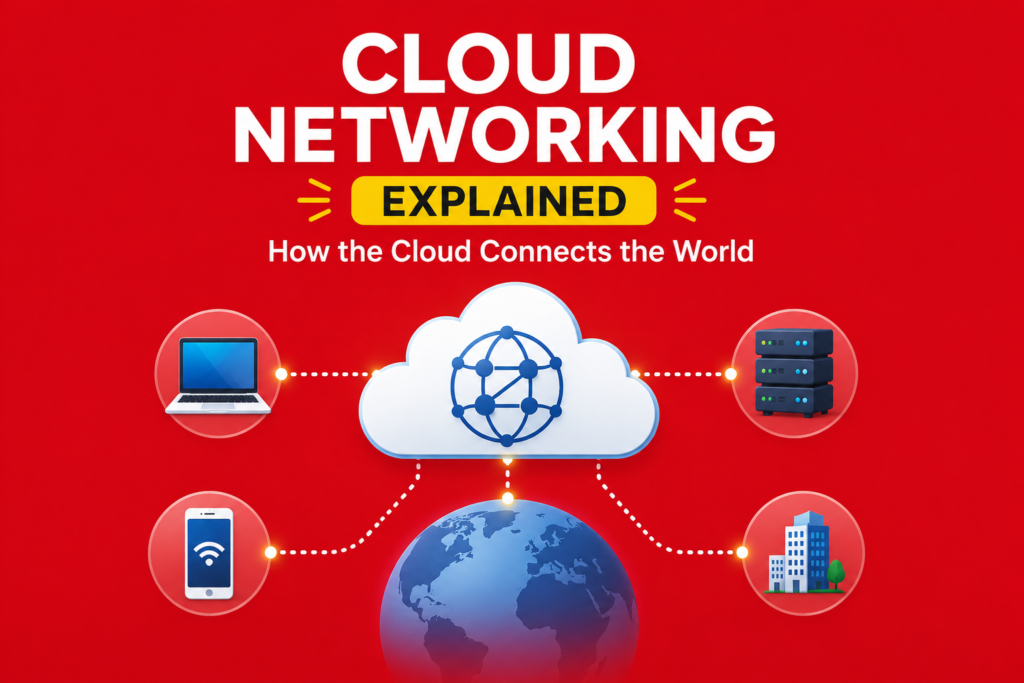
Behind every app you open and every file you save online, a complex system quietly works to keep everything connected, and cloud networking explained in simple terms reveals exactly how this happens. Whether you are streaming a movie, backing up photos or running a business application, cloud networking explained concepts help clarify how these services function seamlessly across the globe.
Cloud networking has transformed how businesses and individuals access computing resources, eliminating the need for physical hardware in many situations. This article breaks down cloud networking explained clearly, covering how it works, its key components and why it has become essential to modern connectivity.
What Is Cloud Networking in Simple Terms
To fully understand cloud networking explained, it helps to start with a straightforward definition. Cloud networking refers to the infrastructure and services that allow computing resources, such as storage, applications and processing power, to be accessed remotely over the internet rather than through physical, on site hardware.
This approach eliminates the need for individuals and businesses to maintain expensive physical servers, instead relying on remote data centers to handle storage and processing needs. Understanding what is cloud networking helps clarify how modern digital services function within today’s broader internet infrastructure.
Cloud Network Versus Local Network
Understanding cloud network vs local network differences is essential when exploring cloud networking explained concepts. A local network, such as your home Wi-Fi, connects devices within a limited physical space, relying on local hardware like routers and switches to manage traffic.
A cloud network, by contrast, extends far beyond physical boundaries, connecting users to remote data centers located anywhere in the world. This distinction becomes particularly important when comparing performance, since cloud networks depend heavily on internet bandwidth and network latency rather than local hardware capabilities alone.
How Cloud Connections Actually Work
Exploring how cloud connections work reveals a fascinating process involving multiple interconnected systems. When you access a cloud based service, your request travels through your local network, across the internet, and eventually reaches a remote data center where the actual computing occurs.
This process relies heavily on TCP/IP explained protocols to ensure data travels accurately between your device and distant servers. Once processed, the response follows a similar path back to your device, often happening within milliseconds despite potentially traveling thousands of miles through fiber optic connections.
Understanding Virtual Private Cloud Systems
A virtual private cloud explained simply represents an isolated section within a larger public cloud infrastructure, dedicated exclusively to a specific user or organization. This setup provides enhanced security and control, allowing businesses to configure their own private network settings within a shared cloud environment.
Virtual Private Cloud systems offer many of the security benefits associated with traditional private networks, while still leveraging the scalability and flexibility advantages that make cloud networking explained solutions so appealing to businesses of all sizes.
AWS and Azure Networking Basics
Two of the largest players offering cloud networking explained solutions include Amazon and Microsoft, through their respective platforms. AWS networking basics involve services like Virtual Private Cloud configurations, allowing businesses to build customized network environments within Amazon’s extensive global infrastructure.
Similarly, Azure networking basics provide comparable capabilities through Microsoft’s cloud platform, offering businesses flexible options for connecting resources, managing security and scaling operations based on changing demands without requiring physical hardware investments.
Cloud Network Architecture Explained
Understanding cloud network architecture requires recognizing how multiple components work together to deliver reliable service. Data centers house the physical servers, while software-defined networking technology allows administrators to manage and configure network resources through software rather than physical hardware adjustments.
This flexibility represents a significant advantage of cloud networking explained systems, since administrators can quickly adjust network configurations, add resources or redirect traffic without needing to physically rewire equipment or install additional hardware components.
Service Models Within Cloud Networking
Cloud networking explained discussions often reference three primary service models. Infrastructure as a Service provides virtualized computing resources, allowing businesses to rent servers and storage without owning physical hardware. Platform as a Service offers a complete development environment, while Software as a Service delivers fully functional applications accessible directly through a web browser.
Understanding these distinctions helps businesses choose the appropriate cloud networking explained solution based on their specific technical requirements and available internal resources for managing infrastructure.
Hybrid Cloud Networks and Multi-Cloud Strategies
Many organizations implement hybrid cloud networks, combining private on site infrastructure with public cloud resources to balance security, cost and flexibility. This approach allows sensitive data to remain on private servers while less critical operations run through public cloud services.
Similarly, multi-cloud networking strategies involve using multiple cloud providers simultaneously, reducing dependency on a single vendor while potentially improving reliability. This approach has become increasingly popular as businesses seek to avoid vendor lock in while maximizing the benefits of cloud networking explained flexibility.
Cloud Network Security Considerations
Protecting data within cloud environments requires robust cloud network security measures. Since data travels across public internet infrastructure to reach remote servers, encryption and proper network security explained protocols become essential for protecting sensitive information from unauthorized access.
Cloud providers typically implement multiple security layers, including firewalls, access controls and monitoring systems, though businesses using cloud networking explained services must also configure their own security settings properly to avoid leaving vulnerabilities within their specific cloud environment.
The Role of Load Balancers in Cloud Systems
Within larger cloud infrastructure systems, load balancers play an essential role in distributing incoming traffic across multiple servers, preventing any single server from becoming overwhelmed. This distribution helps maintain consistent performance, even during periods of high demand or unexpected traffic spikes.
Understanding this component of cloud networking explained architecture helps clarify how large scale services manage millions of simultaneous users without experiencing significant slowdowns or service interruptions during peak usage periods throughout the day.
Edge Computing and Reduced Latency
As demand for faster response times grows, edge computing has emerged as an important complement to traditional cloud networking explained approaches. Rather than sending all data to distant centralized data centers, edge computing processes information closer to the user, significantly reducing network latency for time sensitive applications.
This approach proves particularly valuable for applications like video streaming, gaming and Internet of Things devices, where even small delays can noticeably impact user experience across increasingly demanding digital services.
Direct Connect and Cloud Gateway Solutions
For businesses requiring more reliable, high performance connections, direct connect cloud services provide a dedicated network connection between an organization and their cloud provider, bypassing the public internet entirely for improved speed and security.
A cloud gateway serves as the entry point managing traffic between local networks and cloud resources, ensuring proper routing and security protocols remain in place. These solutions represent more advanced cloud networking explained implementations typically used by larger enterprises with substantial data transfer needs.
Frequently Asked Questions (FAQs)
What is cloud networking in simple terms?
Cloud networking refers to accessing computing resources like storage and applications remotely over the internet, rather than relying on physical, on site hardware infrastructure.
What is the difference between cloud networking and traditional networking?
Traditional networking relies on local, physical hardware within a limited space, while cloud networking connects users to remote data centers, offering greater scalability and flexibility.
Is cloud networking secure for businesses?
Yes, cloud networking can be secure when properly configured, using encryption, firewalls and access controls, though businesses must actively manage their own security settings appropriately.
What is the difference between AWS and Azure networking?
Both AWS and Azure offer similar cloud networking capabilities, including Virtual Private Cloud configurations, though they differ in specific tools, pricing and platform integration options available.
Conclusion
Understanding cloud networking explained reveals just how much complex infrastructure works behind the scenes to deliver seamless digital services. From Virtual Private Cloud systems to load balancers and edge computing, these technologies work together to support modern connectivity.
As businesses continue adopting cloud solutions, cloud networking explained knowledge remains essential for understanding how today’s interconnected digital world relies on remote data centers and evolving internet infrastructure to function smoothly.