The concept of what is typescript has become one of the most important questions in modern web development. Developers across the world are adopting TypeScript because it solves real problems in JavaScript and brings a powerful new level of structure to coding. Understanding what is typescript is not just about learning a language, it is about understanding how software engineering has evolved to handle complex applications.
TypeScript is a superset of JavaScript that adds optional static typing and advanced features. It allows developers to write cleaner, safer, and more maintainable code. The journey behind what is typescript is deeply connected with Microsoft’s mission to improve developer productivity and reduce technical debt in large scale software projects.
The Problem with JavaScript (1995 – 2010)
Before understanding what is typescript, it is important to look at the challenges that JavaScript faced. JavaScript was originally designed as a lightweight scripting language for small web tasks. Over time, it became the backbone of web development.
However, as applications grew larger, developers encountered serious issues. These included lack of type safety, difficulty in refactoring, and runtime errors that were hard to debug. These problems made enterprise scale JavaScript difficult to manage.
The need for better tooling support, compile time errors, and improved developer experience became clear. This is where the foundation of what is typescript started to take shape.
Microsoft’s Vision and the Birth of TypeScript (2010 – 2012)
Microsoft recognized the limitations of JavaScript and decided to create a solution. Under the leadership of Anders Hejlsberg, the team developed TypeScript as a way to bring structure and scalability to JavaScript.
The idea behind what is typescript was simple yet powerful. It would remain compatible with JavaScript while adding features like static typing, classes, and interfaces. This approach ensured backward compatibility and easy adoption.
TypeScript was officially released in 2012. It quickly gained attention for its ability to improve code maintainability and reduce errors. The typescript history shows how it evolved from a small project into a global standard.
What Is TypeScript? Core Concept Explained
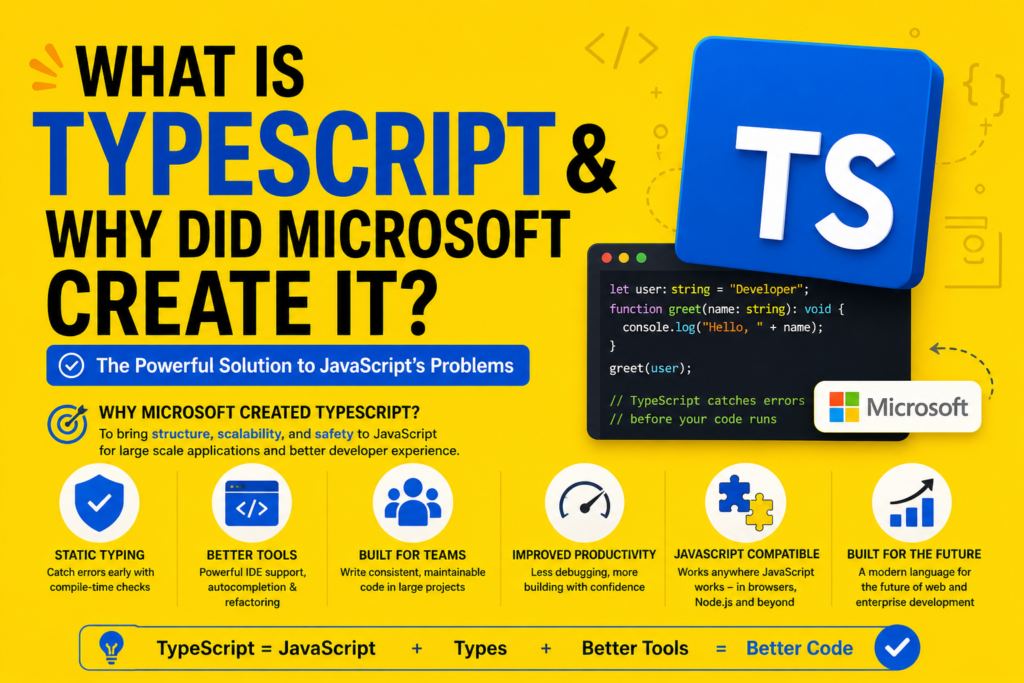
At its core, TypeScript is JavaScript with syntax for types. This means developers can define the types of variables, functions, and objects. This feature helps catch errors during development instead of at runtime.
When asking what is typescript, think of it as a tool that enhances JavaScript rather than replacing it. It compiles into plain JavaScript, making it compatible with all browsers.
This design improves refactoring safety and allows developers to build large scale software with confidence. The language design focuses on productivity and simplicity, making it accessible for both beginners and professionals.
Key Features That Make TypeScript Powerful
TypeScript introduces several features that transform how developers write code. One of the most important is static typing, which ensures that variables and functions behave as expected.
Another key feature is strong IDE integration. Tools like Visual Studio provide advanced autocomplete, error detection, and debugging capabilities. This improves developer experience and reduces development time.
TypeScript also supports modern programming concepts like classes, generics, and modules. These features make it easier to build scalable applications and maintain clean codebases.
Why Microsoft Created TypeScript
The question of what is typescript naturally leads to why it was created. Microsoft wanted to solve the growing complexity of JavaScript applications. As web development evolved, the need for better tools became essential.
TypeScript was designed to address issues like technical debt reduction and code maintainability. It provides a structured approach to programming, making it ideal for large teams.
Microsoft developer tools were enhanced with TypeScript support, allowing seamless integration into existing workflows. This made it easier for developers to adopt the language without major changes.
Benefits of Using TypeScript in Modern Development
One of the biggest advantages of TypeScript is its ability to catch errors early. Compile time errors help developers fix issues before the code runs, saving time and effort.
Another benefit is improved collaboration. TypeScript for large teams ensures that everyone follows the same structure, reducing confusion and mistakes.
The language also supports application scale development, making it suitable for complex projects. These benefits explain why what is typescript has become such a popular topic in the tech community.
TypeScript vs JavaScript: A Clear Comparison
Understanding what is typescript becomes easier when compared with JavaScript. While JavaScript is flexible, it can lead to unpredictable behavior in large projects.
TypeScript, on the other hand, provides structure and safety. This makes it a better choice for enterprise applications. Developers often explore typescript vs javascript to understand the differences and advantages.
The comparison highlights how TypeScript improves code quality and developer productivity.
Adoption and Growth of TypeScript (2012 – Present)
Since its release, TypeScript has seen rapid growth. It is now widely used by companies and developers around the world.
Frameworks like React and Node.js have embraced TypeScript, making it a standard choice for modern development. Many developers start their journey with typescript for beginners, learning the basics before moving to advanced topics.
The growing popularity of what is typescript reflects its importance in today’s tech landscape.
Role in Modern Software Engineering
TypeScript plays a crucial role in modern software engineering. It helps developers build reliable and scalable applications.
The language reduces technical debt and improves code quality. Its focus on productivity and maintainability makes it a valuable tool for developers.
The influence of TypeScript extends beyond coding. It shapes how teams collaborate and how projects are managed.
Advanced Features and Capabilities
As developers gain experience, they explore advanced features like generics, interfaces, and complex types. These features allow for greater flexibility and control.
Understanding advanced typescript concepts helps developers build sophisticated applications. It also enhances their ability to solve complex problems.
TypeScript continues to evolve, adding new features and improving existing ones.
The Future of TypeScript
The future of typescript looks incredibly promising. With continuous updates and strong community support, it is expected to remain a key part of web development.
TypeScript will play a significant role in the future of software engineering, especially as applications become more complex. Its focus on scalability and productivity ensures its relevance for years to come.
FAQs About TypeScript
What is TypeScript in simple terms?
TypeScript is a programming language that builds on JavaScript by adding static typing and advanced features.
Why should developers use TypeScript?
It improves code quality, reduces errors, and makes large projects easier to manage.
Is TypeScript difficult to learn?
No, developers familiar with JavaScript can quickly learn TypeScript and start using it.
Can TypeScript replace JavaScript?
TypeScript does not replace JavaScript. It enhances it and compiles into JavaScript.
Is TypeScript used in real world projects?
Yes, many companies use TypeScript for building modern web applications.
Conclusion
The journey of what is typescript reveals how a simple idea can transform an entire industry. Microsoft created TypeScript to solve real problems in JavaScript, and it has succeeded beyond expectations.
From improving developer experience to enabling large scale software development, TypeScript has become an essential tool for modern programming. Its impact continues to grow, shaping the future of web development and software engineering.
Understanding what is typescript is not just about learning a language. It is about embracing a smarter and more efficient way to build software.