The captivating history of apple face id represents an unparalleled leap forward in consumer biometric authentication. Before this massive milestone, unlocking a premium smartphone required physical contact, relying heavily on numeric passcodes or standard fingerprint sensors. When Apple decided to completely discard its beloved fingerprint scanning setup, it took a historic gamble on advanced mathematical depth sensing. By introducing an intricate combination of custom lasers, specialized infrared cameras, and local machine learning processors, they effectively changed how millions of people securely interact with personal technology. Understanding the history of apple face id requires exploring a fascinating engineering saga that forever altered the global smartphone landscape, proving how a single corporate decision could transform a niche enterprise biometrics methodology into a universal daily habit.
The Hidden Roots of Structured Light (2010 – 2013)
To fully comprehend the deep foundation beneath the history of apple face id, we must look much further back into the hardware archives than the launch of the iconic iPhone X. The core technology that eventually powered Apple’s secure face unlock system actually originated within the interactive gaming space. In 2010, Microsoft captivated the tech world with the Xbox Kinect sensor, a revolutionary depth-sensing accessory that tracked player movements without requiring a physical controller. The complex hardware engine driving the Kinect was engineered by a pioneering Israeli 3D sensing company named PrimeSense. This crucial milestone remains an invaluable chapter in the grand computer vision timeline.
Recognizing the massive, transformative potential of miniaturized 3D hardware, Apple quietly executed a definitive PrimeSense acquisition history move in late 2013. This crucial corporate acquisition laid the groundwork for the history of structured light biometrics Apple would spend years aggressively developing behind closed doors. Apple’s primary engineering objective was clear yet incredibly daunting: they had to shrink an entire array of bulky desktop sensors, lenses, and heavy laser emitters so they could fit seamlessly inside a microscopic notch at the top of a standard smartphone screen.
The Revolutionary Hardware Breakthrough (2013 – 2017)
For over four years, top hardware teams quietly executed an incredible array of Apple Face ID engineering breakthroughs. While competitor mobile brands attempted to shortcut facial verification using basic, flat 2D front-facing cameras, Apple recognized that standard 2D photos were incredibly insecure and hilariously easy to fool with a simple printed picture. The complex evolution of Apple Face ID technology required moving completely into the third dimension to establish a new, uncompromised baseline for global user safety.
The resulting innovation was the development of Apple TrueDepth camera hardware, which debuted during the highly anticipated iPhone X Face ID release history in September 2017. This tiny module packed a collection of state-of-the-art sensory components that worked in perfect harmony within a fraction of a second:
- The Flood Illuminator: Discharges an invisible layer of infrared light across the user’s face, ensuring the biometric system works flawlessly in absolute darkness.
- The Dot Projector Matrix: Blasts a dense network of more than 30,000 invisible dots directly onto the human face, instantly conforming to its unique contours.
- The Infrared Camera Sensor: Captures the warped pattern of reflected infrared dots to read the distinct spatial depths of the face.
This highly complex hardware array successfully delivered the very first 3D facial authentication on smartphones, triggering an entirely new chapter in the history of facial recognition globally.
Algorithms and The Enclave Security Model (2017 – 2018)
Once the infrared camera captures the grid of light, the structural data is instantly passed to a localized mathematical processing matrix. The software quickly translates the distorted dot pattern into a highly complex, personalized mathematical model mapping the unique geometric layout of the user’s facial structures. The depth calculation maps the exact distance between the user’s eyes, the precise curve of their nose ridge, and the specific shape of their jawline.
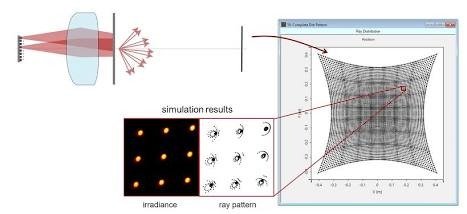
The Mathematical Principle of Structured Light Projection Mapping. Source: LightTrans
To ensure this computational mapping happened instantly without draining the smartphone’s battery, Apple integrated dedicated Neural Engine hardware directly into its primary A-series mobile chips. This custom silicone layer was expressly optimized for heavy matrix mathematics and deep convolutional layers. This architectural evolution proved how deep learning transformed computer vision by moving heavy server-side AI tasks onto a highly localized consumer microchip.
| Authentication Method | Primary Sensor Type | Security Risk Margin | False Acceptance Rate |
| Traditional Passcode | Touchscreen Matrix | High (Visual Snooping) | Variable (User Dependent) |
| Apple Touch ID | Capacitive Fingerprint | Low (Physical Spoofs) | 1 in 50,000 |
| Apple Face ID | 3D Structured Light Infrared | Exceptionally Low | 1 in 1,000,000 |
To guarantee absolute privacy, the generated mathematical representation is never sent to remote corporate servers or backed up to cloud networks. Instead, it is saved directly inside a hardware-isolated Biometric data enclave burned into the local processor. Advanced spoofing prevention algorithms constantly run alongside the Neural Engine, analyzing micro-movements and skin reflectance to confirm the presence of a living human being. This completely neutralized malicious attempts to bypass the security lock using high-end Hollywood style silicone masks. The deep narrative of the history of apple face id is fundamentally defined by this uncompromising obsession with localized cryptographic safety.
Shifting Paradigms: Discarding the Fingerprint (2017 – 2019)
The bold public decision regarding how Face ID replaced Touch ID initially sent massive shockwaves through the consumer technology market. Many loyal users were initially highly skeptical of the new design, deeply wondering if facial recognition could ever match the sheer speed and muscle memory convenience of the classic capacitive home button. This specific era marked a dramatic turning point in the modern history of Apple biometric security.
Apple proved its absolute confidence in the new system by highlighting a staggering, undeniable security metric: while Touch ID possessed a statistical false acceptance rate of 1 in 50,000, the new 3D structured light system pushed that error threshold down to a stunning 1 in 1,000,000. The market adapted rapidly, and within a single product cycle, competing Android manufacturers quickly scrambled to implement their own versions of face tracking, completely altering the historical timeline of the global history of pattern recognition.
Crisis and Adaptation: The Mask Update Era (2020 – 2022)
The ultimate operational test for the technology arrived during the unexpected onset of a global health crisis in early 2020. Suddenly, millions of active smartphone users worldwide began wearing protective medical face masks every single day. Because a mask effectively blocks the entire lower half of a human face, it completely obscured the unique geometric structures that the mathematical model mapping relied on for identity verification. Users were suddenly forced to repeatedly type in their manual passcodes, creating massive usability friction.
This severe behavioral roadblock triggered the rapid development of the highly anticipated history of Face ID mask update. Rather than forcing consumers to abandon facial security entirely, Apple’s software engineers successfully retrained their localized machine learning models to adjust to this unique global reality.
By pushing out the critical iOS 15.4 software update in early 2022, the system learned to focus its intense algorithmic verification attention exclusively on the unique, unmasked regions surrounding the human eye area. This crucial update maintained exceptional cryptographic protection standards while restoring seamless, hands-free convenience during a highly challenging era, marking one of the most flexible adaptive milestones in the history of apple face id.
Unlocking a Global Standardization (2022 – 2026)
As the platform continued to mature, the steady evolution of Face ID across iPhone models saw the hardware become significantly faster, much more secure, and noticeably more compact. With the high-profile launch of the iPhone 14 Pro series, Apple elegantly transformed the physical notch into an interactive software element known as the Dynamic Island, shrinking the underlying physical TrueDepth sensors by more than thirty percent.
Today, this incredible 3D tracking engine is standard across almost the entire Apple portfolio, providing robust security for everything from mobile payments to secure password managers. The fascinating history of apple face id conclusively demonstrates that true innovation does not simply mean building advanced tech for laboratory environments; it means scaling highly sophisticated computational concepts so seamlessly that they dissolve effortlessly into the fabric of everyday human life.
FAQs:
How does Apple Face ID differ from basic face unlock features on standard Android phones?
The vast majority of standard mobile face unlock systems utilize a basic, flat 2D front-facing camera to capture a standard digital photo, which can easily be fooled by a high-resolution printed picture of the owner. Apple Face ID uses a highly specialized TrueDepth camera system that projects and reads over 30,000 invisible infrared dots to generate a highly secure, three-dimensional mathematical model of the user’s unique facial topography.
Does Face ID transmit my personal facial photographs or biometric data to Apple’s corporate servers?
No, it never uploads your personal data. The raw infrared images are processed entirely on your local device via the Neural Engine hardware. The data is instantly converted into an abstract mathematical representation and saved securely within an isolated Biometric data enclave on the device’s chip, meaning your actual facial geometry never leaves your physical phone.
Can Apple Face ID successfully distinguish between identical twins?
While the system is exceptionally accurate with a 1 in 1,000,000 false acceptance rate, the statistical probability of a false match increases slightly when dealing with identical twins who share nearly identical genetic facial structures. In cases where the geometric mapping is too close to reliably distinguish, Apple recommends utilizing a standard alphanumeric passcode for absolute safety.
How does the system handle the natural aging process, facial hair, or heavy makeup?
The localized machine learning models continuously update your saved mathematical facial profile over time. Every single time you successfully unlock your device using your face or manually input your passcode following a partial match, the network carefully integrates the subtle new visual variations—such as a growing beard, new glasses, or natural aging changes—directly into your secure profile.
Conclusion
The remarkable history of apple face id stands as a definitive, monumental milestone in the ongoing story of human-machine interaction. By combining highly sophisticated structured light depth hardware with incredibly rapid localized artificial intelligence processing, Apple successfully transformed a complex biometric methodology into an invisible, effortless everyday utility. This incredible engineering journey permanently reshaped consumer expectations, forcing the entire global mobile tech industry to rapidly pivot toward advanced spatial awareness. As we look toward the next great era of ambient computing, spatial interfaces, and wearable artificial intelligence, the foundational breakthroughs achieved during this intense phase of hardware refinement will undoubtedly remain at the absolute core of computer vision technology, continuing to secure our digital lives with a single, effortless glance.