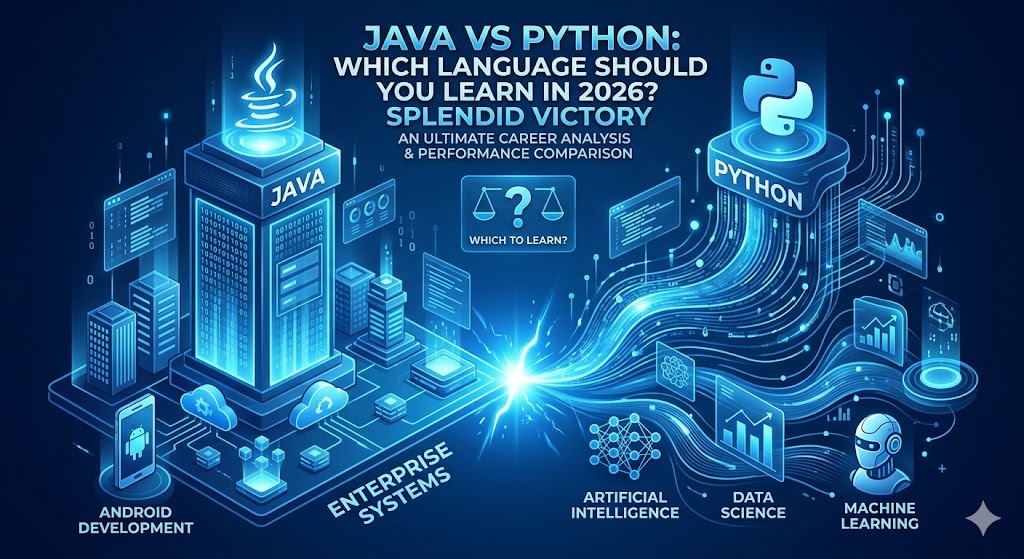
Choosing a primary programming language is one of the most critical decisions an aspiring developer or seasoned professional can make. The tech ecosystem moves fast, and what worked a decade ago might not guarantee career dominance today. As we navigate the complexities of modern engineering, two titans continue to battle for absolute supremacy in enterprise backend development, machine learning, and automation. This comprehensive evaluation of java vs python: which to learn will unravel the core architectural mechanics, performance metrics, and shifting market demands to give you unparalleled clarity for your professional trajectory.
Deciding between these platforms requires a deep look into how software is built, maintained, and scaled across global tech infrastructures. Whether your objective is constructing microservices for multinational banks or deploying neural networks for generative AI, making the correct software engineering language selection defines your day to day coding experience and long term trajectory. This decision shapes your entire relationship with the future of software engineering.
Architectural History and Language Evolution (1991 – 2026)
To understand why these platforms diverge so heavily, we must look at their foundational philosophies. Python was released by Guido van Rossum in 1991 with a primary emphasis on source code readability and simplicity. Its underlying design principle argues that code is read far more often than it is written. Python relies on strict indentation rules rather than curly braces or semicolons to define code blocks. This elimination of syntactic noise makes it a highly appealing coding language comparison 2026 baseline for engineers who want to move from conceptual design to executable script interpreter deployment in minutes.
Conversely, Java arrived on the scene in 1995 via Sun Microsystems, built around a strict statically typed environment and the object-oriented paradigm. Java introduced the groundbreaking Write Once, Run Anywhere principle, achieved by compiling code into intermediate bytecode executed via the Java Virtual Machine. This separation of source code from raw hardware allowed enterprise systems to scale reliably across fragmented hardware infrastructures.
Over the years, both ecosystems have evolved aggressively. While Python has expanded its machine learning ecosystem to control modern automation pipelines, Java has undergone massive upgrades focused on boilerplate code reduction and runtime efficiency, ensuring it remains the undisputed foundational layer of corporate computing networks.
Direct Syntax Comparison and Code Readability
The syntax difference Java and Python exhibit is the first major point of friction for modern programmers. Python abstracts away lower level computer components, allowing engineers to write highly expressive code with minimal overhead. Java demands explicit structural declarations, meaning developers must outline classes, methods, and explicit types before executing a single line of logic.
Let us look at a practical demonstration by building a simple program that reads data, filters a list, and prints a success message. If you want to dive deeper into the core mechanics of Java structure, check out our comprehensive java syntax & data types guide.
The Python Approach
Python uses dynamic typing and intuitive structures, omitting the need for boilerplate system declarations.
Python
# Processing text entries with Python's dynamic syntax
def filter_system_logs():
    log_messages = ["System Alert: Unauthorized Access", "Metrics Log: CPU Stable", "System Alert: Timeout Exception"]

    # Filter using clear list comprehensions
    alerts = [log for log in log_messages if "Alert" in log]

    for alert in alerts:
        print(f"Processed: {alert}")

filter_system_logs()
The Java Approach
Java requires strict structural definitions, explicit type declarations, and systematic error management frameworks. To see how these definitions scale into real-world applications, you can explore the advanced java concepts guide.
Java
import java.util.ArrayList;
import java.util.List;

public class LogProcessor {
    public static void main(String[] args) {
        // Enforcing a strict statically typed environment
        List<String> logMessages = new ArrayList<>();
        logMessages.add("System Alert: Unauthorized Access");
        logMessages.add("Metrics Log: CPU Stable");
        logMessages.add("System Alert: Timeout Exception");

        List<String> alerts = new ArrayList<>();

        // Explicit looping configuration matching classic indentation rules logic
        for (String log : logMessages) {
            if (log.contains("Alert")) {
                alerts.add(log);
            }
        }

        for (String alert : alerts) {
            System.out.println("Processed: " + alert);
        }
    }
}
As illustrated, Java demands more initial code layout, but this explicit configuration prevents hidden runtime type errors, making it highly valuable for complex enterprise software development where structural layout errors can cost millions.
Performance, Runtime Efficiency, and Execution Speed
When looking closely at a performance comparison Java vs Python, the differences in execution speed Java Python systems deliver become immediately apparent. Java is a compiled, statically typed language. Before an application runs, the source code passes through a compiler optimization phase that transforms it into optimized bytecode. At runtime, the Just-In-Time compiler translates this bytecode directly into native machine instructions, maximizing raw processing velocity and memory management efficiency.
+-------------------------------------------------------------------------+
|                          COMPILER OPTIMIZATION                          |
|                                                                         |
|  [Java Source Code] ------> [Bytecode] ------> [JIT Compiler] ------>  |
|                                                     |                   |
|                                                     v                   |
|                                            [Native Machine Code]        |
+-------------------------------------------------------------------------+
Python, on the other hand, operates as a traditional script interpreter system. Code is executed line by line at runtime, which introduces significant computational overhead. While Python’s core processing layers are written in C to boost runtime efficiency, it simply cannot match Java when it comes to raw processing math, concurrent thread scaling, or massive data stream processing. For applications requiring multi threaded computing architectures, high speed algorithmic transactions, or minimal latency, Java remains the far more reliable best backend language 2026 choice.
Ecosystems, Frameworks, and Core Use Cases
The battle of java vs python: which to learn often comes down to the industry segment you intend to enter. Each platform dominates a completely different set of tech spaces.
Python: The King of Data and Automation
Python has become the absolute undisputed standard for programming for data science. Its explosive growth over the last several years is tied directly to artificial intelligence integration and machine learning ecosystem developments. Instead of writing complex matrix calculations by hand, engineers utilize mature data science libraries to run massive data models instantly. If your career path points toward predictive analytics, deep learning neural networks, or automated system scripting, Python is your ideal environment.
Java: The Enterprise and Mobile Powerhouse
Java remains the undisputed structural foundation of enterprise software development. Large scale banking systems, cloud based transaction microservices, and high volume web applications rely on Java due to its unmatched stability, sandboxed security, and predictability. Furthermore, it remains highly foundational for global mobile systems, serving as a core pillar for java for android development. Companies that cannot afford application downtime look to Java because its compiler catches issues long before software reaches deployment.
Web Development Ecosystems Compared
When looking at web development Java vs Python, both ecosystems offer powerful web tools, but they approach the development cycle from completely opposite perspectives.
| Feature / Metric | Java Web Ecosystem | Python Web Ecosystem |
|---|---|---|
| Primary Frameworks | Spring Boot, Jakarta EE, Quarkus | Django, FastAPI, Flask |
| Architecture Style | Highly structured, dependency injection | Rapid prototyping, explicit configurations |
| Development Speed | Slower initial configuration setup | Ultra fast MVP deployment capabilities |
| Scalability Potential | Massive multi threaded request capacity | Dependent on async workers / microservices |
Python uses frameworks like Django to emphasize quick development cycles, enabling developers to launch a fully secure web application in hours. Java uses frameworks like Spring Boot to isolate database interactions, security filters, and microservice communications into modular blocks. While Java requires more initial setup time, its completed systems can handle thousands of parallel requests per second without breaking a sweat.
Career Prospects, Global Salaries, and Job Market Realities
When evaluating java vs python: which to learn from an investment perspective, looking at career prospects Java vs Python metrics reveals distinct financial paths. Because both environments cater to different areas of technology, the job landscape varies considerably depending on your geographical location and sector choice.
+-------------------------------------------------------------------------+
|                         JOB MARKET LANDSCAPE 2026                       |
|                                                                         |
|  [Java Ecosystem]   ======> Enterprise Systems, Android, Cloud Backend  |
|  [Python Ecosystem] ======> Data Science, Artificial Intelligence, MVPs   |
+-------------------------------------------------------------------------+
When analyzing which pays more Java or Python, the data indicates that entry level positions are slightly more abundant in the Python space due to the surging demand for artificial intelligence integration specialists and rapid startup prototyping teams. However, senior enterprise Java positions frequently yield higher long term base salaries.
This premium exists because maintaining legacy financial pipelines, configuring multi threaded cloud infrastructure, and handling complex database stream connections requires specialized architectural expertise. If you want to explore how Java coordinates these data pipelines seamlessly, read our detailed guide on java arrays & collections guide.
Choosing Your Learning Path: Java vs Python for Beginners
If you are entering the tech space for the first time, evaluating java vs python: which to learn requires assessing your personal learning style and ultimate professional goals.
- Choose Python if: You favor instant visual rewards, want an accessible entry point into basic logic, or plan to pivot into data analytics, machine learning modeling, or automated DevOps pipelines. Python provides a highly supportive Java vs Python for beginners experience by letting you bypass deep computational layout steps early on.
- Choose Java if: You want to master the fundamental mechanics of computer science, memory management, and classic object-oriented structures from day one. Learning Java first makes mastering subsequent languages like C++, C#, or Go significantly easier because it forces you to understand explicit typing and safe compilation rules.
To kickstart your coding journey with a structured approach to program design and execution flows, follow our guide on java control flow explained.
Frequently Asked Questions (FAQs)
Is Java still relevant for modern development now that AI is taking over?
Absolutely. While AI systems are frequently prototyped using Python, the massive production infrastructures, server networks, data lakes, and security frameworks that support these applications are built using Java due to its superior execution speed and thread management capabilities.
Can I build web scrapers and automation scripts using Java?
Yes, you can build automation tools in Java using libraries like Selenium or Apache HttpClient. However, Python is generally preferred for quick scripting and web scraping because its syntax requires far fewer lines of code and includes dedicated, lightweight scraping utilities like BeautifulSoup.
Which language handles file systems and disk access better?
Java provides an exceptionally robust, enterprise-ready NIO library that allows developers to manage complex system permissions and map memory blocks for high performance file transfers. For step-by-step code samples showing how to manipulate files securely, check out our java file handling explained resource.
Is Python or Java better for building cloud native microservices?
Both excel in cloud environments, but they serve different architectural needs. Java frameworks like Spring Boot and Quarkus are engineered to optimize memory buffers and runtime scaling for massive enterprise cloud grids, whereas Python’s FastAPI is ideal for small, highly responsive, independent containerized microservices.
Conclusion
The debate surrounding java vs python: which to learn does not have a single, universal answer. It represents a choice between two entirely different programming paradigms. Python provides an incredibly efficient, flexible, and human-readable framework that dominates data science labs and rapid software testing fields worldwide. Java stands as a highly structured, lightning-fast, secure powerhouse that forms the backend foundation for almost every major global enterprise network and mobile operating platform.
Align your language choice with your immediate career objectives. If you seek to build large scale, ultra stable corporate platforms, choose Java. If you want to ride the wave of modern intelligence modeling and automation, start with Python. Whichever path you choose, committing deeply to mastering the underlying software patterns is what will guarantee your long term professional success.