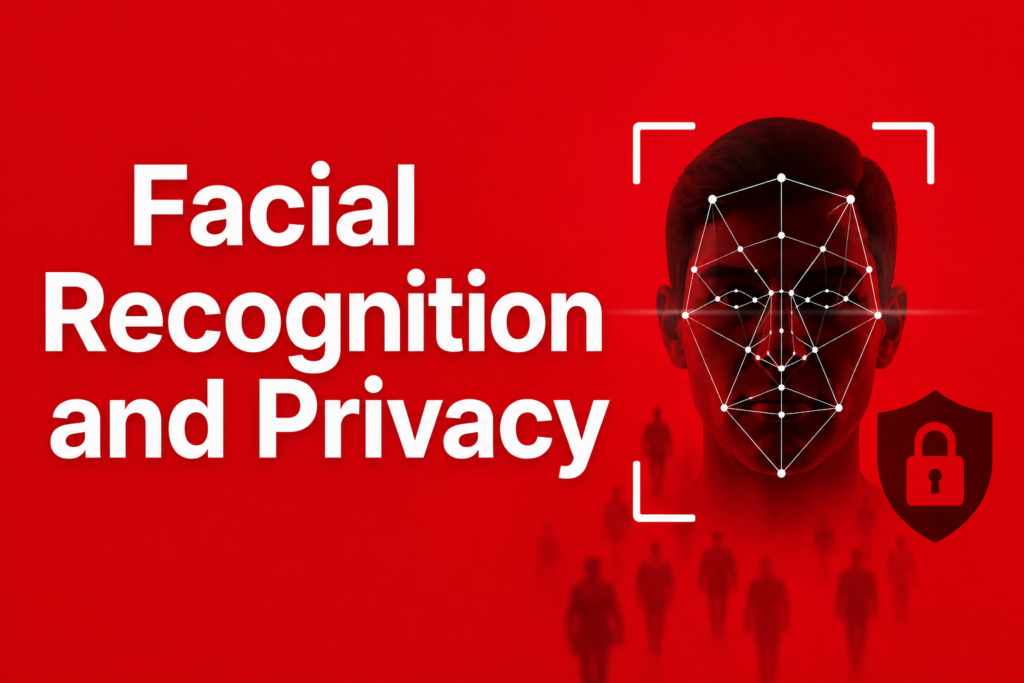
Few technologies have advanced as quickly, or generated as much debate, as facial recognition. The relationship between facial recognition and privacy has become one of the defining technology policy issues of the twenty-first century, touching on civil liberties, corporate responsibility, government surveillance, and basic questions about what it means to move through the world anonymously. This article traces the history of that relationship, from the early days when facial recognition was a research curiosity to today, when the technology is woven into law enforcement, retail, social media, and smartphones, and when the privacy questions it raises have become impossible to ignore.
Why Facial Recognition Raises Unique Privacy Questions
Ethical issues of facial recognition technology differ in important ways from privacy concerns surrounding other types of data. A password can be changed. A credit card number can be replaced. A face cannot. Once a person’s facial data has been captured and stored, there is no straightforward way to revoke or reset it, raising the stakes considerably compared to other forms of personal information.
Biometric data tracking through facial recognition is also uniquely passive compared to many other forms of identification. Fingerprints generally require physical contact, and many forms of identification require active participation, showing a document, entering a password, or swiping a card. Facial recognition, by contrast, can potentially identify someone from a distance, without their knowledge, action, or consent, simply by capturing an image of their face.
This combination, permanence and passivity, is what makes facial recognition and privacy such a uniquely sensitive intersection compared to other applications of computer vision technology.
The Early Years: Privacy Concerns Before Mass Deployment (1990 – 2010)
In the early years following the history of facial recognition breakthroughs like Eigenfaces in 1991, privacy concerns existed but remained relatively muted, largely because the technology was not yet accurate, fast, or widely deployed enough to raise pressing concerns for most people. Facial recognition during this period was primarily a research topic and, to a limited extent, a tool for specific security applications.
The introduction of the viola-jones algorithm in 2001 brought face detection, though not full facial recognition, into consumer products like digital cameras. This raised relatively few privacy concerns at the time, since detecting that a face was present in a photo, for purposes like autofocus, is quite different from identifying who that person is.
Mass public surveillance applications of facial recognition began to emerge during the 2000s, particularly in some countries with extensive camera networks, but the accuracy limitations of pre-deep-learning facial recognition systems meant that large-scale, automated identification of individuals from surveillance footage remained more aspirational than practical for most of this period.
Deep Learning Changes the Stakes (2014 – 2018)
The deep learning transformed computer vision revolution that began around 2012 fundamentally changed the facial recognition and privacy landscape. The history of deepface, introduced by Facebook in 2014, demonstrated that deep learning based facial recognition could achieve near-human accuracy, a dramatic leap from previous approaches.
This jump in accuracy meant that facial recognition shifted from a technology that worked reasonably well under controlled conditions to one that could potentially identify individuals reliably from ordinary photographs and video footage, including images captured in public spaces, social media posts, and surveillance camera feeds.
Algorithmic bias and discrimination became an increasingly visible concern during this period as well. Multiple studies found that facial recognition systems often performed less accurately for certain demographic groups, particularly people with darker skin tones and women, raising concerns about how errors in these systems might disproportionately affect already marginalized communities, particularly in contexts like law enforcement where False positive matches could have serious real-world consequences.
Facial Recognition Goes Mainstream (2017)
The history of apple face id, introduced in 2017, brought facial recognition directly into the hands of hundreds of millions of consumers almost overnight. This represented a significant shift in the public’s relationship with facial recognition and privacy, since for the first time, a huge portion of the population was using facial recognition technology personally, multiple times per day, to unlock their own devices.
Apple’s approach to Face ID included several privacy-protective design choices that became important reference points in subsequent debates: facial data was processed and stored locally on the device rather than being transmitted to remote servers, and the underlying mathematical representation of a face was designed so that it could not easily be reverse-engineered into an actual image of the person’s face.
These design choices reflected an emerging understanding within the industry that facial recognition and privacy concerns could be at least partially addressed through careful technical design, even as broader policy questions about other uses of the technology, particularly by governments and third-party companies, remained largely unresolved.
Regulation Begins to Catch Up (2016 – 2020)
Regulating facial recognition software history during this period reflects governments around the world beginning to grapple seriously with the implications of widely deployed facial recognition technology. The General Data Protection Regulation (GDPR), which came into effect in the European Union in 2018, was not specifically designed around facial recognition, but its broad framework for regulating biometric data as a special category of personal information had significant implications for how facial recognition systems could be deployed and what consent requirements applied.
Facial recognition consent policies timeline developments during this period varied significantly by jurisdiction. Some regions moved toward requiring explicit consent before facial recognition could be used to identify individuals, while others focused on restricting specific use cases, particularly by government and law enforcement agencies, without necessarily addressing private sector use comprehensively.
Fourth Amendment rights, in jurisdictions where this concept applies, became a significant point of legal debate regarding government use of facial recognition for surveillance purposes, with courts and legislatures grappling with how existing legal frameworks designed around physical searches and seizures should apply to technology capable of identifying individuals from a distance, without their knowledge.
The Clearview AI Controversy (2020)
Clearview AI controversy represents one of the most significant flashpoints in the history of facial recognition and privacy. Clearview AI, a company that built a facial recognition system by collecting billions of images from publicly available sources across the internet, including social media platforms, became the subject of significant media attention, legal challenges, and regulatory action beginning around 2020.
The controversy centered on several distinct privacy concerns. Mass public surveillance capabilities were created by building a searchable database covering a huge portion of the population, without the knowledge or consent of the individuals whose images were included. This raised fundamental questions about whether publicly posted photographs should be treated as fair game for inclusion in commercial facial recognition databases, regardless of the original context in which those photographs were shared.
The Clearview AI situation also highlighted Data retention policies as a significant concern. Once images and corresponding facial data had been collected and incorporated into such a system, questions arose about how long this data would be retained, who could access it, and what recourse, if any, individuals had to have their information removed.
Privacy Risks of Public Facial Scanning Today (2020 – 2026)
Privacy risks of public facial scanning have continued to evolve as facial recognition technology has become more accurate, more affordable, and more widely deployed across both government and private sector applications. Corporate use of facial recognition privacy issues now spans retail stores using the technology for loss prevention and customer analytics, venues using it for entry and ticketing, and social media platforms using it for photo tagging and content moderation.
Civil liberties protection advocates have raised concerns across all of these contexts, often focusing on questions of consent, the lack of meaningful Opt-out mechanisms in many real-world deployments, and the broader normalization of biometric tracking as a routine part of everyday life. The history of surveillance technology more broadly intersects heavily with these concerns, as facial recognition represents one of the most powerful tools available for large-scale, automated identification of individuals.
Facial recognition data security breaches have also become a significant concern, since databases containing biometric information represent particularly sensitive targets. Unlike a breached password, which can be changed, a breach involving facial recognition data potentially exposes information that cannot be meaningfully reset, raising the stakes of any security failure involving such systems considerably higher than breaches involving more traditional forms of personal data.
How to Protect Privacy From Facial Recognition
How to protect privacy from facial recognition has become an increasingly common question as awareness of these issues has grown. At an individual level, options remain somewhat limited given how facial recognition can operate passively and at a distance, though some approaches include being mindful of how and where photographs are shared publicly, understanding the privacy settings and policies of platforms that use facial recognition for features like photo tagging, and supporting policy efforts aimed at establishing clearer consent requirements and use restrictions.
At a policy level, ongoing debates continue around questions including whether facial recognition should require opt-in consent before being used to identify someone, what limits should apply to government use of facial recognition for surveillance, how long facial recognition data should be retained and under what security standards, and what recourse individuals should have if they are misidentified by a facial recognition system, particularly in contexts like law enforcement where misidentification can have serious consequences.
Frequently Asked Questions
Why is facial recognition considered a privacy risk?
Facial recognition is considered a privacy risk because facial data is permanent and cannot be changed like a password, and because facial recognition can often identify individuals passively, from a distance, without their knowledge or consent. This combination of permanence and passive identification distinguishes it from many other forms of personal data.
What was the Clearview AI controversy?
The Clearview AI controversy involved a company that built a facial recognition database by collecting billions of images from publicly available sources across the internet without the consent of the people pictured. This raised significant privacy concerns regarding mass surveillance capabilities, data retention, and whether publicly shared photos should be usable for commercial facial recognition systems.
How does GDPR relate to facial recognition?
The General Data Protection Regulation, which took effect in the European Union in 2018, treats biometric data, including facial recognition data, as a special category of personal information requiring stronger protections and, in many cases, explicit consent before processing. While not written specifically for facial recognition, GDPR has significant implications for how such systems can be deployed within its jurisdiction.
Is facial recognition equally accurate for everyone?
Research has shown that many facial recognition systems have historically performed less accurately for certain demographic groups, particularly people with darker skin tones and women, often due to imbalances in the data used to train these systems. This algorithmic bias has been a significant focus of both research and policy discussions around facial recognition and privacy.
Can I opt out of facial recognition?
Opt-out options vary significantly depending on the specific system and jurisdiction. Some platforms and services offer settings to disable facial recognition features like photo tagging. However, for systems like public surveillance cameras or third-party databases built from publicly available images, meaningful opt-out mechanisms are often limited or nonexistent, which is part of why this remains an active area of policy debate.
Conclusion
The history of facial recognition and privacy is a story of technology advancing faster than the policies and norms needed to govern it responsibly. From the relatively muted concerns of the 1990s and 2000s, through the dramatic accuracy improvements brought by deep learning, to flashpoints like the Clearview AI controversy and the widespread adoption of consumer facial recognition through Apple Face ID, each step forward in capability has been accompanied by new and often unresolved questions about consent, accuracy, and appropriate use.
As computer vision technology continues to advance, the relationship between facial recognition and privacy will likely remain one of the most actively debated topics in technology policy. Understanding this history is essential not just for technologists, but for anyone navigating a world where the technology to identify a face from a distance has become, for better or worse, a routine part of modern life.