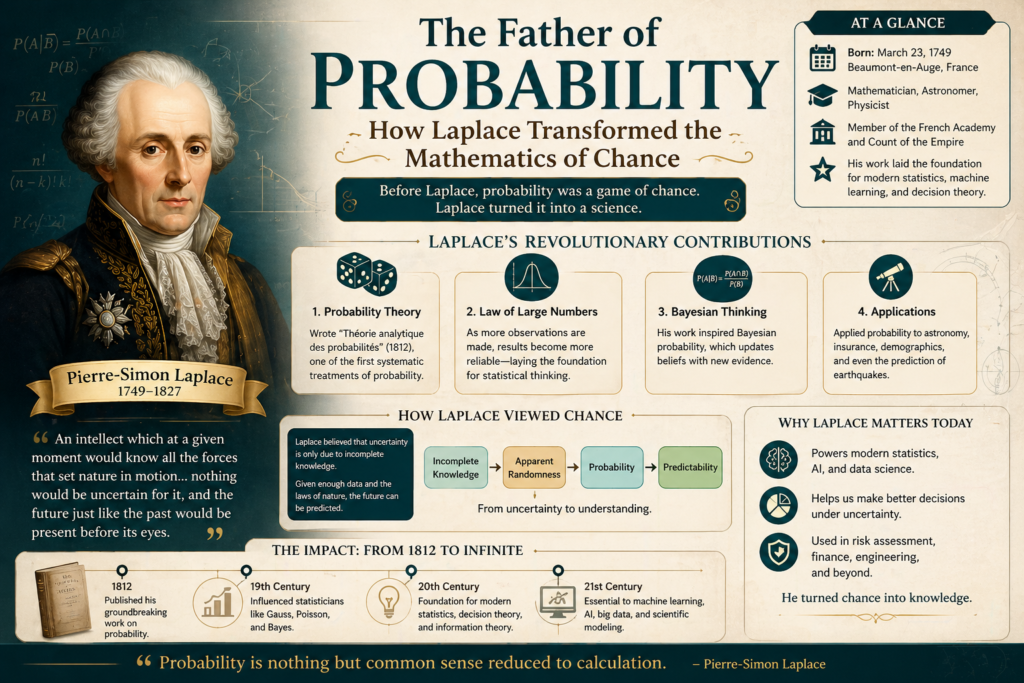
laplace probability theory stands as one of the most powerful breakthroughs in the history of mathematics. When we talk about understanding uncertainty, predicting outcomes, and managing risk, we are essentially building on the revolutionary ideas of Pierre-Simon Laplace. His work transformed the mathematics of chance from a simple study of games into a deep and complex scientific discipline.
Before Laplace, probability was mostly limited to gambling math and games of chance. But with his genius insights, the field evolved into a cornerstone of modern data science, predictive modeling, and statistical foundations. In this article, we explore how laplace probability theory reshaped the world and why it still matters today.
Early Foundations of laplace probability theory (1770 – 1780)
The roots of laplace probability theory began in the late 18th century when mathematics was undergoing a transformation. Laplace was inspired by earlier thinkers, but he went far beyond their work.
He studied problems related to combinatorics and mathematical chance, focusing on how outcomes could be predicted using logical reasoning. Unlike earlier scholars, he applied inductive reasoning and combinatorial analysis to create a structured approach to probability.
His early work laid the groundwork for what we now call the classical definition of probability. This approach calculates the likelihood of an event by comparing favorable outcomes to total possible outcomes. It may sound simple, but at the time, it was revolutionary.
Who Was Pierre Simon Laplace and His Role
To fully understand laplace probability theory, we must recognize the man behind it. Pierre-Simon Laplace was not just a mathematician but a true intellectual giant.
He contributed to many fields, including astronomy and physics. His work in celestial mechanics showed his ability to apply mathematics to real-world problems. But his contribution to probability theory is what truly set him apart.
Laplace believed that uncertainty could be measured and analyzed. This belief led him to develop a system that could quantify randomness and predict outcomes with remarkable accuracy.
The Birth of Modern Probability (1780 – 1810)
Between 1780 and 1810, laplace probability theory reached new heights. During this period, Laplace introduced concepts that form the backbone of modern probability.
He developed methods to calculate expected value, which helps determine the average outcome of random events. This concept is widely used today in risk assessment and decision-making.
Laplace also worked on random variables and probability distributions. His ideas contributed to the development of the normal distribution and the Central Limit Theorem, which are essential in statistics.
Another major contribution was his work on error analysis. He showed how probability could be used to measure uncertainty in scientific observations, making experiments more reliable.
Bayesian Thinking and Analytical Power
One of the most important aspects of laplace probability theory is its connection to Bayesian thinking. Laplace expanded on earlier ideas and developed what we now call bayesian foundations.
This approach focuses on updating probabilities based on new information. It is widely used in data science, machine learning, and predictive modeling.
Laplace’s analytic theory of probability provided a framework for understanding how beliefs can change with evidence. This idea bridges the gap between frequency vs belief interpretations of probability.
His work demonstrated that probability is not just about numbers but also about reasoning and logic.
Key Concepts Introduced by Laplace
Laplace introduced several concepts that remain essential today. While we will not go into deep detail, it is important to highlight their significance.
- Expected value for evaluating outcomes
- Random variables for representing uncertain quantities
- Combinatorial analysis for counting possibilities
- Error analysis for improving accuracy
- Statistical foundations for modern science
These ideas transformed probability into a powerful tool for understanding the world.
Connection with Other Scientific Contributions
Laplace was not limited to probability. His work connects with many other scientific achievements.
For example, his ideas about determinism are reflected in laplace’s demon, a thought experiment about predicting the future. He also contributed to physics through laplace’s equation, which describes how physical quantities behave.
His interdisciplinary approach made him a true polymath. His ability to connect different fields is one reason why laplace probability theory is so influential.
Applications of laplace probability theory in Modern World
Today, laplace probability theory is everywhere. It plays a crucial role in modern technology and science.
In data science, it helps analyze large datasets and make predictions. In finance, it is used for risk assessment and investment strategies. In healthcare, it supports decision-making and diagnostics.
Even everyday technologies rely on probability. From search engines to recommendation systems, the principles developed by Laplace are at work.
From Gambling to Scientific Discipline
Before Laplace, probability was mainly associated with gambling math. His work changed that perception completely.
He showed that probability could be applied to real-world problems, such as astronomy, physics, and social sciences. This transformation turned probability into a respected scientific discipline.
Laplace’s contributions helped establish probability as a key part of the scientific method. Today, it is used in everything from research to policy-making.
Laplace Transform and Mathematical Innovation
Another important contribution is the laplace transform, a mathematical tool used to simplify complex equations. While it is more commonly associated with engineering, it reflects Laplace’s broader impact on mathematics.
The Laplace Transform is widely used in solving differential equations, signal processing, and control systems. It shows how laplace probability theory is connected to other areas of mathematical innovation.
Influence on Statistics and Data Science
Laplace’s work laid the foundation for modern statistics. His ideas about probability distributions and error analysis are essential in statistical methods.
In data science, these concepts are used for predictive modeling and analysis. They help organizations make informed decisions based on data.
Laplace’s influence can also be seen in machine learning algorithms, where probability plays a central role.
Legacy of laplace probability theory
The legacy of laplace probability theory is immense. It has shaped the way we understand uncertainty and make decisions.
His work continues to influence fields like economics, engineering, and computer science. It also plays a key role in artificial intelligence and automation.
Laplace’s ideas remind us that even the most complex problems can be understood through logic and mathematics.
FAQs About laplace probability theory
What is laplace probability theory?
Laplace probability theory is a mathematical framework for analyzing uncertainty and predicting outcomes based on logical reasoning and probability calculations.
Why is Laplace called the Father of Probability?
He is called the Father of Probability because he developed many of the foundational concepts that transformed probability into a scientific discipline.
What is the classical definition of probability?
It is a method of calculating probability by dividing the number of favorable outcomes by the total number of possible outcomes.
How is laplace probability theory used today?
It is used in data science, finance, healthcare, and technology for predictive modeling, risk assessment, and decision-making.
What is the connection between Laplace and Bayesian thinking?
Laplace expanded on Bayesian ideas and created a framework for updating probabilities based on new evidence.
Conclusion
The story of laplace probability theory is a powerful example of how one individual can transform an entire field. From simple games of chance to advanced predictive modeling, Laplace’s work has changed the way we understand the world.
His contributions continue to influence modern science, technology, and decision-making. By turning uncertainty into a measurable concept, he gave humanity a tool that is both practical and profound.
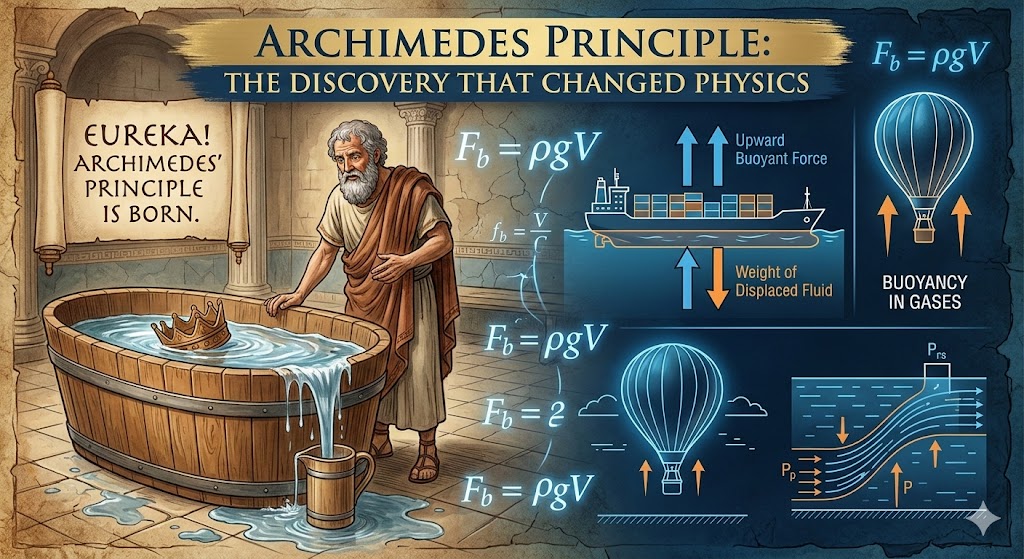
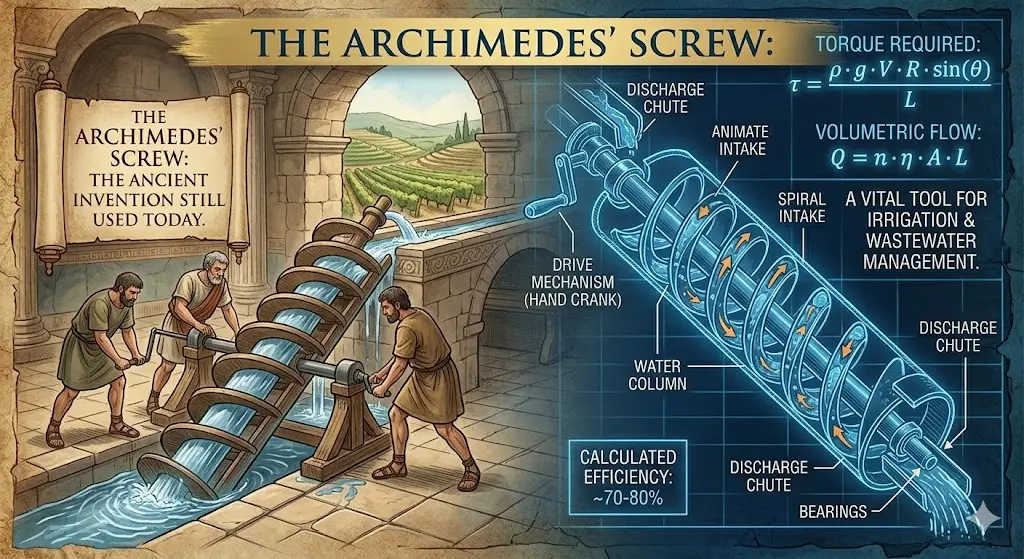
To truly appreciate his impact, it is also important to explore how ancient greek scientists changed modern science, as their early ideas paved the way for thinkers like Laplace. Together, they form a continuous journey of discovery that defines human progress.