The future of typescript is one of the most exciting topics in modern software development. Over the last decade, TypeScript has evolved from a simple JavaScript superset into one of the most important programming languages for large scale applications. Developers across frontend, backend, cloud systems, and enterprise software now rely heavily on TypeScript for better scalability, maintainability, and developer productivity.
As technology continues evolving rapidly, the future of typescript will play a major role in shaping next generation applications. Microsoft and the TypeScript community are actively working on new features, compiler optimizations, AI integration, and stronger language tooling. With TypeScript 6.0 expected to introduce major improvements, developers are eager to understand what is coming next.
In this guide, we will explore the future of typescript, including TypeScript 6.0 roadmap predictions, upcoming language features, AI assisted development, WebAssembly integration, and the growing influence of TypeScript in modern software engineering.
Evolution of TypeScript (2012 – 2026)
To understand the future of typescript, we first need to examine its evolution. TypeScript was introduced in 2012 by Anders Hejlsberg. At the time, JavaScript applications were becoming larger and harder to maintain, especially for enterprise systems.
The typescript history reveals how TypeScript gradually transformed into a dominant development tool. Features like static typing, utility types, generics, decorators, and advanced inference systems made it highly attractive for modern applications.
Today, TypeScript powers frameworks like React, Angular, and Node.js applications. This rapid adoption proves that the future of typescript will likely be even more influential in software engineering.
Why TypeScript Became So Popular
Before discussing the future of typescript, it is important to understand why developers embraced it so quickly.
If you are wondering what is typescript?, it is a strongly typed superset of JavaScript that compiles into standard JavaScript. It improves type safety, code reliability, and maintainability.
Major reasons behind its popularity include:
- Better developer productivity
- Strong type checking
- Advanced IDE support
- Improved debugging
- Scalability for enterprise applications
These advantages positioned TypeScript as one of the most important technologies in modern web development.
TypeScript 6.0 Roadmap Expectations
One of the most anticipated topics regarding the future of typescript is the TypeScript 6.0 roadmap.
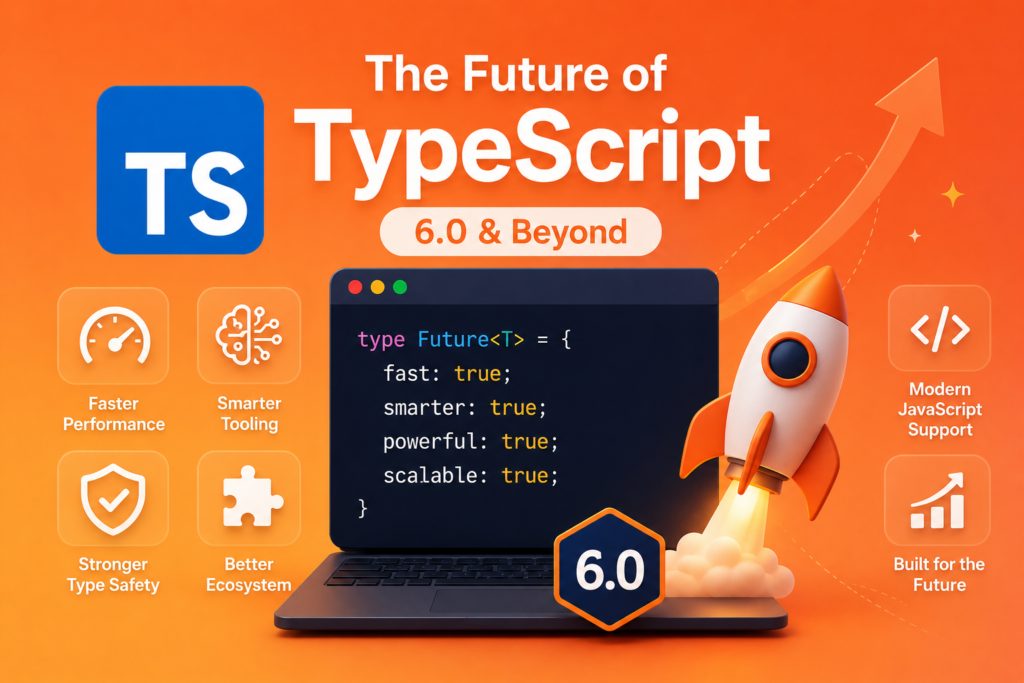
Although Microsoft has not revealed every official detail yet, the community expects major improvements in several areas:
- Faster compiler optimization
- Better AI assisted tooling
- Enhanced ECMAScript compatibility
- Smarter type inference
- Improved project performance
The TypeScript team continuously focuses on balancing developer experience with performance improvements.
Smarter Compiler Optimization
Compiler optimization will likely be a major focus in the future of typescript. As projects become larger, compile times can become slower.
Future improvements may include:
type Optimized<T> = {
  readonly [K in keyof T]: T[K];
};
Advanced compiler optimizations will improve scalability and reduce build times for enterprise projects.
Faster compilation directly improves developer productivity and software quality.
Better Type Inference Systems
Type inference is already one of TypeScript’s strongest features, but the future of typescript will likely introduce smarter inference systems.
Example:
const user = {
  name: "Ali",
  age: 25,
};
TypeScript automatically infers property types without explicit annotations.
Future updates may provide deeper context aware inference and improved type narrowing for complex applications.
ECMAScript and TypeScript Collaboration
The future of typescript is closely tied to ECMAScript proposals and JavaScript evolution.
Microsoft actively collaborates with TC39, the organization responsible for JavaScript standards. This collaboration ensures TypeScript remains compatible with modern JavaScript features.
Future ECMAScript proposals may influence:
- Decorators
- Pattern matching
- Pipeline operators
- Enhanced modules
This cooperation keeps TypeScript aligned with industry standards and language specification changes.
AI Integration in TypeScript Development
AI assisted development is expected to shape the future of typescript significantly.
Modern AI coding tools already help developers generate code, detect bugs, and improve logic structures. Future TypeScript versions may integrate AI powered debugging and intelligent type suggestions directly into IDEs.
Example of typed AI helper structure:
type AIResponse = {
  success: boolean;
  message: string;
};
AI integration could dramatically improve developer productivity and reduce repetitive coding tasks.
WebAssembly and TypeScript
Another exciting aspect of the future of typescript is WebAssembly integration.
WebAssembly allows applications to run near native performance inside browsers. TypeScript may eventually improve interoperability with WebAssembly for high performance applications.
Possible use cases include:
- Gaming engines
- AI processing
- Video editing tools
- Scientific simulations
This integration could push TypeScript beyond traditional web development.
Improved Decorators and Metadata Systems
Decorators are still evolving in TypeScript. The future of typescript will likely introduce more stable and standardized decorator implementations.
Example:
function Logger(target: Function) {
  console.log("Class initialized");
}

@Logger
class AppService {}
Decorators improve metaprogramming and software architecture patterns.
Future versions may also improve metadata reflection and introspection capabilities.
Advanced Type Programming
The future of typescript will likely expand advanced type programming features.
Developers already use advanced typescript types for utility types, recursive structures, and conditional logic.
Example:
type Nullable<T> = {
  [K in keyof T]: T[K] | null;
};
Future improvements may include:
- Better recursive type performance
- More efficient utility types
- Improved generic constraints
- Smarter conditional type evaluation
These upgrades will help developers build even more scalable systems.
TypeScript with React and Frontend Evolution
Frontend frameworks are a major reason behind the future of typescript growth.
Developers using typescript with react benefit from type safe hooks, typed props, and scalable component systems.
Example:
type ButtonProps = {
  label: string;
};

function Button({ label }: ButtonProps) {
  return <button>{label}</button>;
}
Future frontend frameworks may rely even more heavily on TypeScript for predictable UI development.
TypeScript in Backend Development
Backend development is another major area influencing the future of typescript.
Developers working with typescript with nodejs already use TypeScript for APIs, authentication systems, and microservices.
Example backend structure:
class UserService {
  getUser(id: number) {
    return { id, name: "Ali" };
  }
}
Future backend frameworks will likely continue embracing TypeScript because of its scalability and maintainability.
Advanced Error Handling Improvements
Error handling will also evolve in the future of typescript.
Developers currently rely on typescript error handling practices like type guards and runtime validation.
Example:
try {
  throw new Error("Server failed");
} catch (error: unknown) {
  console.log(error);
}
Future versions may introduce safer exception handling and improved runtime validation support.
Enterprise Adoption and Industry Standards
Enterprise adoption is one of the strongest indicators of the future of typescript.
Major companies now use TypeScript because it improves:
- Code reliability
- Team collaboration
- Maintainability
- Large scale architecture
- Developer tooling
As software systems grow more complex, TypeScript will likely become an even stronger industry standard.
Community Proposals and Open Source Growth
The TypeScript community plays a major role in shaping the future of typescript.
Thousands of developers contribute ideas, proposals, and tooling improvements through open source collaboration.
This ecosystem shift ensures TypeScript continues evolving according to real developer needs.
Community driven innovation is one of TypeScript’s greatest strengths.
TypeScript vs JavaScript in the Future
When comparing typescript vs javascript, JavaScript will always remain important because TypeScript compiles into JavaScript.
However, the future of typescript suggests that typed JavaScript development will continue growing, especially for enterprise applications.
TypeScript offers advantages in:
- Type safety
- Software quality
- Large project maintainability
- Tooling support
- Advanced type systems
These benefits make TypeScript increasingly valuable for professional development.
Future of Software Engineering with TypeScript
The future of software engineering will likely involve stronger type systems, AI assisted tooling, and scalable development practices.
TypeScript is perfectly positioned for this future because it combines JavaScript flexibility with advanced type safety.
As cloud computing, AI, and enterprise applications continue growing, TypeScript’s role will become even more important in modern development ecosystems.
FAQs About the Future of TypeScript
What is the future of TypeScript?
The future of TypeScript involves smarter tooling, AI integration, and stronger type systems.
Will TypeScript 6.0 improve performance?
Most likely yes, especially with compiler optimization and inference upgrades.
Is TypeScript replacing JavaScript?
No, TypeScript works alongside JavaScript and compiles into JavaScript.
Will AI affect TypeScript development?
Yes, AI assisted coding tools are expected to improve developer productivity significantly.
Should beginners learn TypeScript in 2026?
Absolutely. TypeScript is becoming one of the most important programming technologies.
Conclusion
The future of typescript looks incredibly strong as the language continues evolving into one of the most important tools in modern software engineering. With improvements in compiler optimization, AI integration, advanced typing systems, and framework support, TypeScript will likely dominate scalable application development for years to come.
From frontend frameworks to backend APIs and enterprise systems, the future of typescript is deeply connected to the future of modern development itself. Developers who invest time learning TypeScript today will be better prepared for next generation technologies and evolving industry standards.
Now is the perfect time to master TypeScript and prepare for the exciting innovations coming in TypeScript 6.0 and beyond.