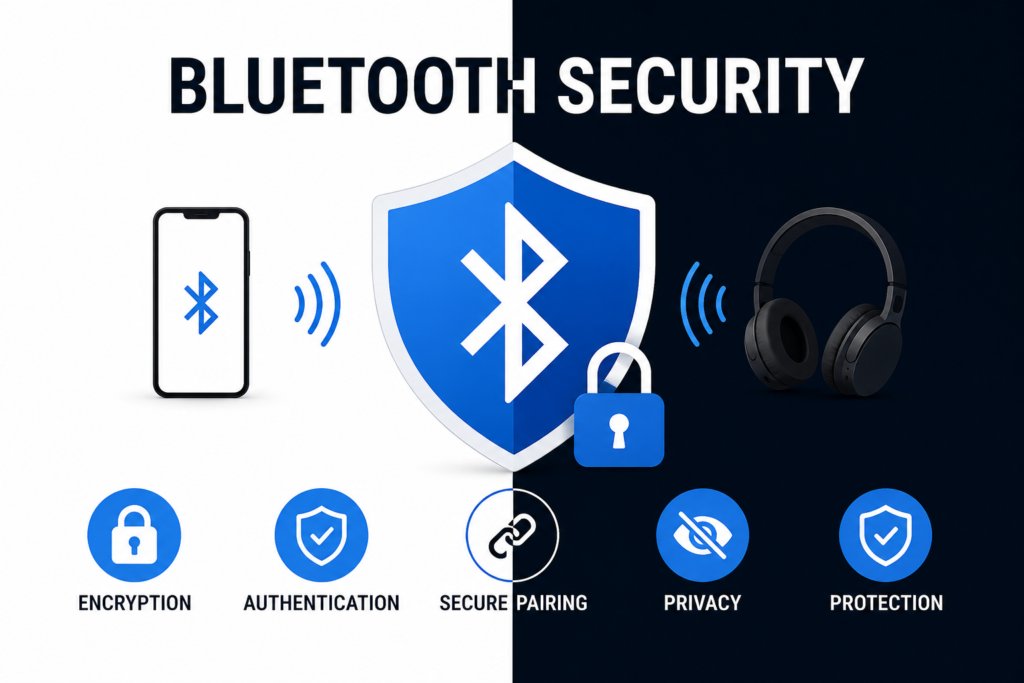
Understanding bluetooth security is more important today than ever before. Billions of devices worldwide use Bluetooth technology daily, including smartphones, wireless headphones, smartwatches, gaming accessories, cars, laptops, and smart home systems. While Bluetooth provides incredible convenience, it also introduces cybersecurity risks that many users never think about.
Hackers and cybercriminals sometimes target Bluetooth devices through wireless attacks such as Bluesnarfing, Bluejacking, man-in-the-middle attacks (MITM), and malware vulnerabilities. Poorly secured Bluetooth connections can expose personal data, conversations, passwords, and device access.
The good news is that modern bluetooth security systems have improved dramatically over the years. Newer Bluetooth versions use advanced encryption keys, authentication systems, and secure pairing protocols to protect wireless communication.
This complete guide explains bluetooth security, wireless threats, Bluetooth encryption, Blueborne vulnerability risks, privacy settings, secure simple pairing (SSP), device hardening techniques, and how safe modern Bluetooth technology really is.
The Evolution of Bluetooth Security (1999 – Today)
To understand modern bluetooth security, it is important to understand how Bluetooth evolved.
Early Bluetooth systems focused mainly on wireless convenience instead of cybersecurity. During the late 1990s and early 2000s, many devices had weak security protections and limited encryption systems.
Hackers quickly discovered vulnerabilities involving:
- Weak pairing methods
- Poor authentication systems
- Predictable encryption keys
- Limited user awareness
As Bluetooth technology became more popular, security threats increased dramatically.
If you want historical background, exploring bluetooth history helps explain how Bluetooth evolved from a simple cable replacement technology into a massive global wireless standard.
Today, Bluetooth security systems are far more advanced than early versions.
What Is Bluetooth Security?
The simplest definition of bluetooth security is:
The collection of technologies and protocols designed to protect Bluetooth devices and wireless communication from unauthorized access.
Bluetooth security focuses on:
- Authentication
- Encryption
- Pairing protection
- Data privacy
- Device authorization
- Cybersecurity defenses
Modern Bluetooth devices use secure communication systems to protect wireless data transmission.
Security systems continue improving as Bluetooth technology evolves.
How Bluetooth Connections Work
Before discussing threats, it helps to understand how Bluetooth communication works.
Bluetooth devices communicate using radio signals in the 2.4 GHz frequency range.
The process usually involves:
- Device discovery
- Pairing request
- Authentication
- Encryption setup
- Wireless communication
Once paired, devices exchange encrypted data wirelessly.
If you want technical details about communication systems, learning how bluetooth works explains the complete wireless process.
Security mainly depends on how safely devices handle pairing and encryption.
Bluetooth Pairing Security
Pairing security is one of the most important parts of bluetooth security.
Bluetooth pairing creates a trusted relationship between devices.
Modern secure simple pairing (SSP) systems improved pairing safety significantly by using:
- Authentication methods
- Encryption systems
- Passkeys
- Numeric verification
Earlier Bluetooth systems used weak PIN-based authentication that hackers could sometimes exploit.
Modern SSP protocols greatly reduced many traditional Bluetooth attacks.
If you need setup guidance, learning how to pair bluetooth devices safely can reduce security risks.
Bluetooth Encryption Explained
Bluetooth encryption protects wireless data while devices communicate.
Encryption converts information into unreadable code that only authorized devices can understand.
Modern Bluetooth encryption systems use:
- Encryption keys
- Secure authentication
- Randomized communication methods
- Protected wireless sessions
Bluetooth encryption helps prevent:
- Eavesdropping
- Data theft
- Wireless spying
- Unauthorized interception
Newer Bluetooth versions use much stronger encryption than earlier generations.
Common Bluetooth Security Threats
Several cybersecurity threats target Bluetooth systems.
Understanding these attacks helps users improve bluetooth security practices.
Bluejacking
Bluejacking involves sending unwanted messages to nearby Bluetooth devices.
Although usually harmless, it demonstrates how attackers can interact with discoverable devices.
Bluesnarfing
Bluesnarfing is more serious.
Hackers may attempt unauthorized access to:
- Contacts
- Messages
- Files
- Device information
Poorly secured Bluetooth devices are most vulnerable to Bluesnarfing attacks.
Man in the Middle Attacks (MITM)
Man-in-the-middle attacks (MITM) occur when attackers secretly intercept communication between two Bluetooth devices.
Hackers may attempt to:
- Steal information
- Monitor communication
- Modify transmitted data
Secure authentication systems help reduce MITM risks significantly.
Blueborne Vulnerability Explained
One of the most famous Bluetooth security threats was the Blueborne vulnerability discovered in 2017.
Blueborne allowed attackers to target Bluetooth-enabled devices without pairing.
The vulnerability affected:
- Smartphones
- Computers
- IoT devices
- Smart TVs
Attackers could potentially execute remote code or access sensitive systems.
The Blueborne vulnerability highlighted the importance of:
- Firmware updates
- Device hardening
- Security patches
- Updated operating systems
Manufacturers quickly released fixes after the vulnerability became public.
Bluetooth Security in Modern Devices
Modern bluetooth security systems are far stronger than older versions.
Newer Bluetooth technologies include:
- Stronger encryption
- Better authentication
- Improved privacy settings
- Secure pairing systems
- Safer wireless communication protocols
Most modern Bluetooth devices are reasonably safe when properly configured.
However, user behavior still matters greatly.
Bluetooth Privacy Settings
Privacy settings are extremely important for Bluetooth safety.
Many devices allow users to control:
- Device visibility
- Discoverable mode
- Pairing permissions
- Access requests
Leaving Bluetooth permanently discoverable increases security risks.
For better protection:
- Disable discoverable mode when unused
- Pair only trusted devices
- Remove unknown connections
Privacy settings help reduce wireless exposure significantly.
Bluetooth Security and Public Places
Public spaces create additional Bluetooth security risks.
Busy locations may contain:
- Many nearby devices
- Increased wireless interference
- Potential attackers
- Untrusted networks
Cybersecurity experts recommend avoiding unnecessary Bluetooth use in crowded environments unless needed.
Safe browsing habits also apply to wireless communication.
Turning Bluetooth off when unused reduces attack opportunities.
Bluetooth Versions and Security Improvements
Modern bluetooth versions introduced major security improvements.
Older Bluetooth Versions
Older systems often had:
- Weak encryption
- Limited authentication
- Easier attack opportunities
Bluetooth 4.x and 5.x
Newer versions improved:
- Encryption protocols
- Pairing security
- Authentication systems
- Privacy protections
Bluetooth 5.x especially improved wireless safety and connection management significantly.
Modern Bluetooth systems are much safer than early generations.
Bluetooth Classic vs BLE Security
The comparison between bluetooth classic vs ble also affects security systems.
Bluetooth Classic
- Continuous communication
- Traditional wireless architecture
- Older audio-focused systems
Bluetooth Low Energy (BLE)
- Low-power communication
- Advanced privacy improvements
- Better IoT security features
BLE introduced randomized addressing systems to improve user privacy and reduce device tracking risks.
Modern BLE systems are generally very secure when updated properly.
Bluetooth Range and Security Risks
Wireless distance affects bluetooth security.
Longer communication ranges may slightly increase exposure to unauthorized access attempts.
If you want technical distance details, learning about bluetooth range explains how wireless coverage works.
Fortunately, Bluetooth still operates over relatively short distances compared to many networking systems.
Physical proximity requirements naturally reduce some attack risks.
Bluetooth vs WiFi Security
Many users compare bluetooth vs wifi vs nfc regarding cybersecurity.
Bluetooth Security
- Short-range communication
- Pairing-based authentication
- Lower exposure range
WiFi Security
- Larger network exposure
- Internet-based threats
- Router vulnerabilities
NFC Security
- Extremely short-range communication
- Strong physical proximity protection
Each wireless technology has different security strengths and weaknesses.
Bluetooth remains relatively safe when used correctly.
How to Improve Bluetooth Security
Improving bluetooth security is usually simple.
Best Bluetooth Security Tips
- Keep software updated
- Turn Bluetooth off when unused
- Avoid public discoverable mode
- Pair only trusted devices
- Remove unused paired devices
- Install firmware updates
- Avoid suspicious devices
Good cybersecurity habits dramatically reduce wireless attack risks.
Modern devices provide much stronger protections when users maintain proper security practices.
Bluetooth Firewalls and Device Hardening
Some advanced devices use Bluetooth firewall systems and device hardening methods.
These systems help protect against:
- Unauthorized access
- Malware attacks
- Wireless scanning
- Remote exploitation
Device hardening includes:
- Updated operating systems
- Security patches
- Restricted permissions
- Disabled unnecessary services
Security-focused configurations improve wireless safety significantly.
Are Bluetooth Headphones Safe?
Many users worry about Bluetooth headphone safety.
Modern wireless headphones generally use strong security systems.
However, older or cheap devices may use weaker protections.
If you want safer wireless audio experiences, exploring best bluetooth headphones can help identify reputable products with better security support.
Trusted manufacturers usually release security updates more consistently.
Bluetooth Security in Smart Homes
Smart homes increasingly rely on Bluetooth communication.
Examples include:
- Smart locks
- Security cameras
- Smart lights
- Sensors
- Automation systems
Because smart homes control important systems, Bluetooth security becomes extremely important.
IoT ecosystems require strong authentication and updated security protocols.
The Future of Bluetooth Security
The future of bluetooth security looks extremely advanced.
Future wireless systems will likely include:
- AI-driven threat detection
- Smarter authentication
- Better encryption
- Stronger privacy protections
- Improved cybersecurity automation
The rapid growth of connected ecosystems also connects closely with the future of software engineering, where cybersecurity and intelligent wireless communication are becoming increasingly important.
Bluetooth security systems will continue evolving rapidly.
Why Bluetooth Security Matters Today
Wireless communication now controls many aspects of modern life.
Bluetooth connects:
- Phones
- Cars
- Medical devices
- Wearables
- Smart homes
- Personal accessories
A compromised Bluetooth connection could expose sensitive information or create cybersecurity risks.
Fortunately, modern Bluetooth technology is far safer than many people assume.
Most security problems occur because of outdated devices or unsafe user practices.
Frequently Asked Questions (FAQs)
Is Bluetooth safe to use?
Yes. Modern Bluetooth systems use strong encryption and authentication methods that make wireless communication relatively safe.
Can Bluetooth be hacked?
Yes. Poorly secured or outdated devices may be vulnerable to hacking attempts such as Bluesnarfing or MITM attacks.
What is Blueborne vulnerability?
Blueborne was a serious Bluetooth vulnerability discovered in 2017 that allowed attackers to target devices remotely without pairing.
Should I keep Bluetooth on all the time?
For better security and battery life, it is generally safer to turn Bluetooth off when not in use.
What is secure simple pairing?
Secure simple pairing (SSP) is a modern Bluetooth authentication system that improves pairing security and encryption protection.
How do I make Bluetooth more secure?
Keep software updated, disable discoverable mode, pair only trusted devices, and remove unused Bluetooth connections.
Conclusion
Understanding bluetooth security is essential in today’s connected digital world.
Bluetooth technology offers incredible convenience, but wireless communication always introduces cybersecurity considerations. Threats such as Bluesnarfing, Bluejacking, MITM attacks, and the Blueborne vulnerability demonstrated why strong encryption, authentication, and secure pairing systems matter.
Fortunately, modern Bluetooth systems are significantly safer than earlier generations. Advanced Bluetooth encryption, privacy settings, secure simple pairing, firmware updates, and stronger authentication protocols greatly improved wireless safety.
When users follow good cybersecurity habits and keep devices updated, Bluetooth remains one of the safest and most practical wireless communication technologies available today.