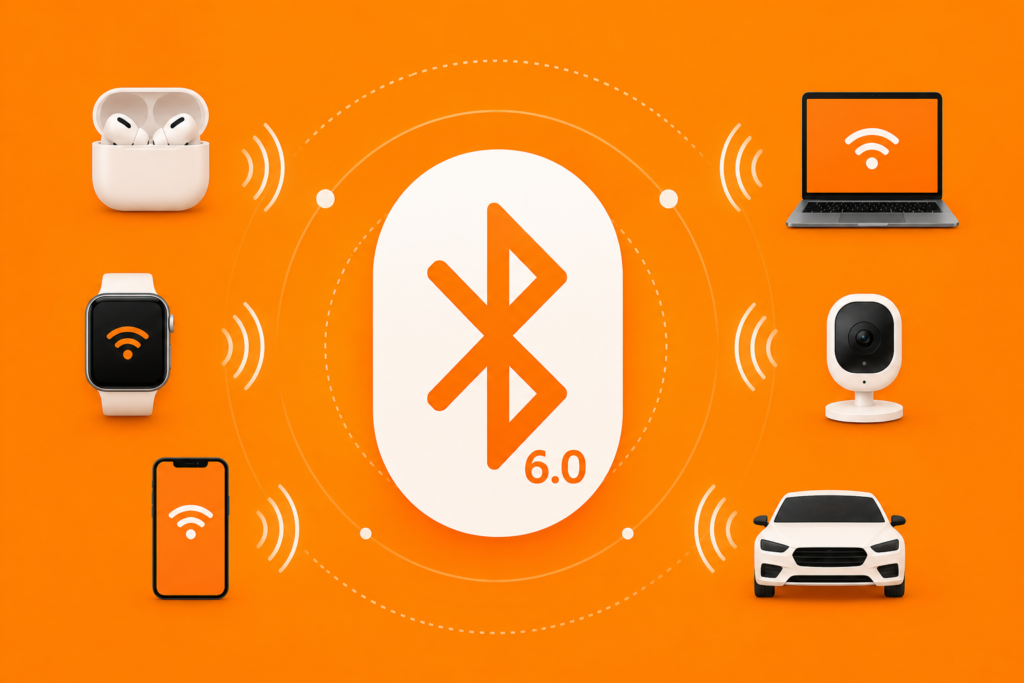
The future of bluetooth looks more exciting than ever as wireless technology enters a completely new era of smart connectivity, precision tracking, ultra-low latency communication, and intelligent device ecosystems. Bluetooth already powers billions of devices worldwide, but Bluetooth 6.0 may transform wireless communication even further.
For decades, Bluetooth technology focused mainly on replacing cables for headphones, keyboards, smartphones, and wireless accessories. However, the next generation of Bluetooth is expanding into advanced industrial systems, centimeter-level location tracking, automation networks, smart homes, wearable technology, and AI-powered communication systems.
The most exciting development in the future of bluetooth is Bluetooth 6.0 and its revolutionary features like Channel Sounding, high-precision distance measurement, ultra-low latency, and smarter wireless coordination.
This complete guide explains the future of bluetooth, Bluetooth 6.0 features, next-gen wireless innovation, Bluetooth SIG future plans, proximity services, asset tracking, and how wireless evolution will shape technology in the coming years.
The Evolution of Bluetooth Technology (1994 – 2026)
To understand the future of bluetooth, it helps to understand how Bluetooth evolved.
Bluetooth began in 1994 as a short-range wireless communication project created by engineers at Ericsson.
The original goal was simple:
Replace cables between nearby electronic devices.
Over time, Bluetooth evolved dramatically through multiple generations.
Major improvements included:
- Better wireless range
- Faster communication
- Lower power usage
- Stronger security
- Improved wireless audio
- Smarter device connectivity
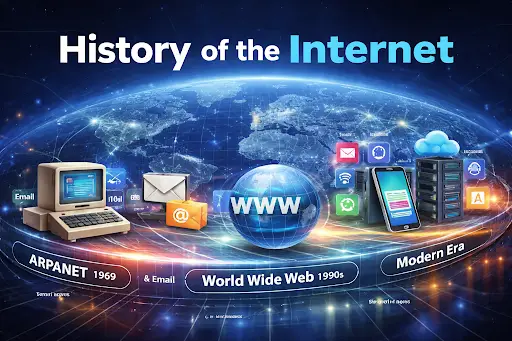
If you want historical background, exploring bluetooth history explains how Bluetooth evolved from a simple cable replacement system into one of the world’s most important wireless technologies.
Today, Bluetooth powers:
- Smartphones
- Smartwatches
- Wireless audio
- Gaming devices
- Smart homes
- Medical systems
- Industrial automation
The next stage of Bluetooth evolution looks even more advanced.
Why Bluetooth Continues Growing
The future of bluetooth remains strong because Bluetooth offers several major advantages:
- Low power consumption
- Global compatibility
- Affordable hardware
- Reliable short-range communication
- Massive ecosystem support
Modern devices increasingly depend on wireless communication systems.
Bluetooth remains especially valuable for:
- Portable devices
- IoT systems
- Wearable technology
- Smart sensors
- Asset tracking
The Bluetooth SIG future roadmap focuses heavily on expanding these capabilities.
Bluetooth technology continues adapting to modern connectivity demands.
What Is Bluetooth 6.0?
Bluetooth 6.0 is expected to become the next major generation of Bluetooth wireless communication technology.
Bluetooth 6.0 focuses on:
- Smarter wireless communication
- Better location tracking
- Improved wireless precision
- Enhanced connectivity
- Lower latency
- Future automation systems
Unlike earlier Bluetooth upgrades focused mainly on speed and range, Bluetooth 6.0 strongly emphasizes intelligent wireless awareness.
This could dramatically change how devices communicate with one another.
Channel Sounding Explained
One of the most important Bluetooth 6.0 features is Channel Sounding.
Channel Sounding enables highly accurate distance measurement between devices.
Instead of simply detecting whether devices are nearby, Bluetooth 6.0 may determine:
- Exact positioning
- Relative movement
- Precise proximity
- Spatial relationships
This could improve wireless systems dramatically.
Channel Sounding may allow Bluetooth devices to achieve centimeter-level accuracy for positioning and tracking.
This is one of the biggest breakthroughs in the future of bluetooth.
High Precision Distance Measurement
Traditional Bluetooth systems estimate distance imperfectly using signal strength.
Bluetooth 6.0 aims to improve this through advanced signal analysis.
High-precision distance measurement may transform:
- Smart home automation
- Indoor navigation
- Digital keys
- Security systems
- Industrial robotics
Future Bluetooth devices may understand exactly where nearby devices are located in real time.
This would greatly improve wireless interaction quality.
Improved Find My Network Systems
One exciting area in the future of bluetooth involves Find My network improvements.
Modern tracking systems already use Bluetooth for locating devices like:
- Phones
- Wallet trackers
- Headphones
- Smart tags
Bluetooth 6.0 may dramatically improve:
- Tracking precision
- Location speed
- Object detection
- Indoor navigation
Future tracking systems may become far more accurate and reliable.
This could benefit both consumers and businesses.
Ultra Low Latency Communication
Bluetooth 6.0 is also expected to improve ultra-low latency communication.
Latency refers to communication delay between devices.
Reducing latency improves:
- Gaming performance
- Wireless audio synchronization
- Real-time control systems
- AR and VR experiences
Modern wireless communication increasingly requires near-instant response times.
Bluetooth 6.0 may help wireless systems become much faster and more responsive.
Smarter Wireless Ecosystems
The future of bluetooth focuses heavily on smart ecosystems.
Future Bluetooth systems may intelligently coordinate:
- Smart homes
- Vehicles
- Wearables
- Industrial systems
- Smart cities
Devices may communicate more efficiently without constant manual pairing or configuration.
This smarter wireless coordination could greatly improve automation and convenience.
Bluetooth 6.0 and Asset Tracking
Asset tracking is becoming one of Bluetooth’s most important industrial applications.
Bluetooth 6.0 may improve:
- Warehouse tracking
- Inventory systems
- Logistics management
- Smart manufacturing
More precise tracking systems can reduce errors and improve efficiency dramatically.
Industrial applications may become one of the biggest drivers of future Bluetooth innovation.
Bluetooth Range Improvements
Wireless distance will likely continue improving in the future of bluetooth.
If you want technical distance information, learning about bluetooth range explains how Bluetooth communication distance evolved over time.
Future Bluetooth systems may offer:
- Better signal stability
- Smarter interference handling
- More reliable long-distance communication
Improved wireless range benefits both consumers and industrial systems.
Bluetooth Audio Future
Wireless audio will continue evolving rapidly.
Modern bluetooth audio codecs already provide impressive wireless sound quality.
Bluetooth 6.0 may further improve:
- Lossless wireless audio
- Lower audio latency
- Better synchronization
- Smarter audio optimization
Future wireless headphones may rival or even surpass many wired systems.
The wireless audio industry continues growing rapidly worldwide.
Bluetooth Security in the Future
The future of bluetooth also depends heavily on stronger cybersecurity.
Future Bluetooth systems will likely improve:
- Encryption methods
- Authentication systems
- Privacy protection
- Secure communication protocols
Modern bluetooth security already improved dramatically compared to earlier generations.
However, future connected ecosystems will require even stronger wireless protection.
Security remains a major priority for Bluetooth SIG future development plans.
Bluetooth Classic vs BLE Future
The comparison between bluetooth classic vs ble is becoming increasingly important.
Bluetooth Classic
- Audio streaming
- Continuous communication
- Traditional wireless connectivity
BLE
- Low power communication
- Smart devices
- IoT ecosystems
- Sensor communication
Bluetooth Low Energy will likely dominate future smart ecosystems because of its excellent efficiency.
BLE technology continues evolving rapidly.
Bluetooth 6.0 and Smart Homes
Smart homes may become one of the largest beneficiaries of Bluetooth 6.0.
Future smart homes could use Bluetooth for:
- Intelligent lighting
- Automated locks
- Occupancy awareness
- Device positioning
- Environmental control
Channel Sounding may allow homes to detect user locations with impressive precision.
This could create much smarter automation experiences.
Bluetooth vs WiFi in Future Connectivity
Many experts compare bluetooth vs wifi vs nfc when discussing future wireless communication.
Bluetooth
- Low power communication
- Smart accessories
- IoT systems
- Precision tracking
WiFi
- Internet networking
- High bandwidth communication
NFC
- Ultra-short-range secure interaction
Bluetooth remains uniquely positioned for intelligent low-power connectivity.
Each wireless technology will continue serving different purposes.
Bluetooth 6.0 and Wearable Technology
Wearable devices will likely benefit enormously from Bluetooth 6.0.
Future wearables may include:
- Smarter health monitoring
- Better battery efficiency
- More accurate positioning
- Real-time motion tracking
Bluetooth continues becoming central to wearable tech innovation.
Wireless efficiency remains extremely important for small portable devices.
Bluetooth 6.0 and Automotive Systems
Cars increasingly rely on Bluetooth communication systems.
Future Bluetooth systems may improve:
- Digital car keys
- In-car automation
- Passenger personalization
- Wireless diagnostics
High-precision distance measurement could make automotive systems much smarter and safer.
Bluetooth may become central to future mobility ecosystems.
Bluetooth Versions and Future Compatibility
Modern bluetooth versions already introduced major improvements involving:
- Wireless stability
- Battery efficiency
- Audio quality
- IoT communication
If you want recent technical comparisons, exploring bluetooth 5.0 vs 5.3 vs 5.4 explains how Bluetooth technology evolved before Bluetooth 6.0.
Bluetooth 6.0 will likely continue building upon these foundations.
Backward compatibility will remain important for global adoption.
AI and Intelligent Wireless Communication
Artificial intelligence may play a huge role in the future of bluetooth.
Future Bluetooth systems could use AI for:
- Signal optimization
- Interference reduction
- Device prediction
- Smarter automation
- Energy management
AI-powered wireless systems may create much smoother user experiences.
This is one of the most exciting future tech roadmap directions.
The Future of Software Engineering and Bluetooth
The growth of Bluetooth innovation strongly connects with the future of software engineering.
Future developers will increasingly build:
- Smart ecosystems
- Intelligent wireless automation
- Location-aware applications
- Real-time communication systems
Bluetooth will become even more important in connected digital infrastructure.
Software and wireless hardware will continue integrating more deeply.
Challenges Facing Bluetooth 6.0
Despite exciting innovations, Bluetooth 6.0 still faces challenges.
Potential concerns include:
- Hardware compatibility
- Power efficiency balance
- Security complexity
- Adoption speed
- Device costs
Emerging standards always require time for large-scale adoption.
However, Bluetooth’s massive ecosystem gives it a strong advantage.
Why Bluetooth Still Matters
Some people wonder whether Bluetooth will remain important in the future.
The answer is absolutely yes.
Bluetooth continues offering:
- Reliable short-range communication
- Low power operation
- Massive compatibility
- Affordable implementation
Its flexibility makes it valuable across many industries.
Bluetooth remains one of the world’s most practical wireless communication technologies.
Frequently Asked Questions (FAQs)
What is Bluetooth 6.0?
Bluetooth 6.0 is the upcoming next generation of Bluetooth technology focused on precision tracking, smarter connectivity, and lower latency.
What is Channel Sounding?
Channel Sounding is a Bluetooth 6.0 feature designed for highly accurate distance and location measurement between devices.
Will Bluetooth 6.0 improve wireless audio?
Yes. Bluetooth 6.0 may improve latency, synchronization, and wireless sound quality significantly.
How accurate will Bluetooth 6.0 tracking be?
Bluetooth 6.0 may support centimeter-level accuracy for positioning and proximity services.
Is Bluetooth replacing WiFi?
No. Bluetooth and WiFi serve different communication purposes and will likely continue working together.
Why is Bluetooth Low Energy important?
BLE provides efficient low-power communication essential for smart devices and IoT systems.
Conclusion
The future of bluetooth looks revolutionary as Bluetooth 6.0 introduces smarter wireless communication, Channel Sounding, high-precision distance measurement, lower latency, and advanced connected ecosystems.
Bluetooth technology already transformed wireless communication across billions of devices, but future developments may push Bluetooth far beyond simple cable replacement. Smart homes, industrial automation, wearable technology, automotive systems, asset tracking, and intelligent wireless ecosystems will all benefit from Bluetooth innovation.
As Bluetooth continues evolving, it will remain one of the most important wireless technologies shaping the connected digital future.