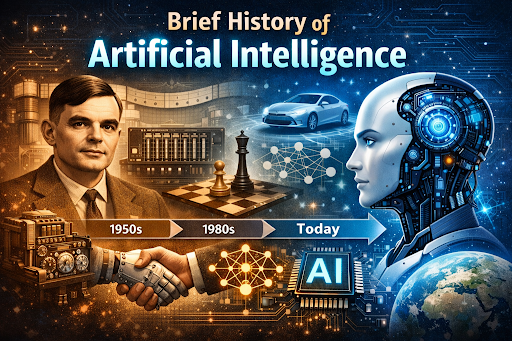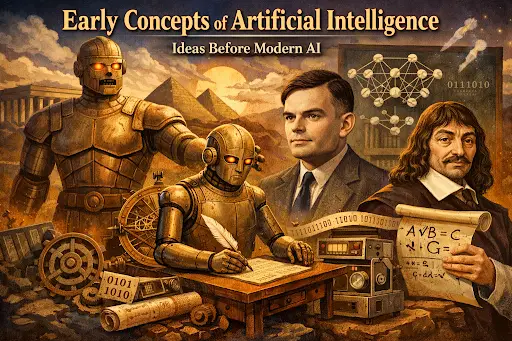
The question who invented cnn is one of the most important topics in artificial intelligence and computer vision history. Convolutional Neural Networks, commonly called CNNs, transformed machines from simple calculators into systems capable of recognizing images, reading handwriting, driving cars, and understanding visual information with incredible accuracy.
Today, CNNs power many modern AI applications, including:
- Facial recognition
- Medical imaging
- Self-driving cars
- Security systems
- Robotics
- Image generation
However, the story behind who invented cnn began decades before modern deep learning became popular.
The evolution of CNNs involved neuroscience, mathematics, computer engineering, and persistent researchers who believed machines could eventually “see” like humans.
Although several scientists contributed to CNN development, one researcher became especially important:
Yann LeCun.
His revolutionary LeNet architecture changed the future of artificial intelligence forever.
In this article, we will explore the complete story behind who invented cnn, the rise of Yann LeCun, the creation of LeNet, and how convolutional neural networks transformed modern computer vision.
Neural Networks Before CNNs (1943 – 1979)
To fully understand who invented cnn, we must first examine the early history of neural networks.
The first artificial neuron model appeared in 1943 through Warren McCulloch and Walter Pitts.
Their work became foundational to:
Later, Frank Rosenblatt introduced the perceptron during the 1950s.
This breakthrough became connected to:
Although perceptrons could solve simple classification tasks, they struggled badly with image recognition.
Researchers realized visual processing required more advanced neural architectures.
This challenge eventually shaped the future of who invented cnn.
The Brain Inspired Idea Behind CNNs
The answer to who invented cnn is closely connected to neuroscience.
Scientists discovered the human visual cortex processes images hierarchically.
Different neurons respond to:
- Edges
- Shapes
- Orientation
- Motion
- Complex visual objects
Researchers wanted artificial neural systems capable of imitating biological vision processing.
This idea strongly connected to:
The concept of local receptive fields and layered image understanding became critical to convolutional neural networks.
Kunihiko Fukushima and the Neocognitron (1980)
Before Yann LeCun, another important researcher contributed to the story of who invented cnn.
Kunihiko Fukushima introduced the Neocognitron in 1980.
The Neocognitron introduced many CNN concepts:
- Local receptive fields
- Layered visual processing
- Shift invariance
- Hierarchical features
Although it lacked modern backpropagation training, the Neocognitron became one of the earliest convolutional architectures.
Many historians consider Fukushima a major pioneer in the story of who invented cnn.
Yann LeCun’s Early Career (1980 – 1988)
The biggest breakthrough in who invented cnn came through Yann LeCun.
LeCun studied computer science and neural networks during a difficult period for AI research.
The field was still suffering from:
- Neural skepticism
- Funding problems
- The aftermath of the first ai winter
Despite these challenges, LeCun strongly believed neural systems could eventually solve complex vision problems.
His work later became deeply connected to:
LeCun focused heavily on gradient-based learning and image recognition.
The Birth of LeNet (1989 – 1998)
The defining breakthrough in who invented cnn came through LeNet.
LeNet became one of the earliest successful convolutional neural networks.
The system introduced several critical ideas:
- Convolution layers
- Pooling layers
- Shared weights
- Gradient-based learning
- Feature maps
LeNet processed images through hierarchical neural layers.
This architecture became revolutionary because it dramatically improved handwritten digit recognition.
The breakthrough later became central to:
How LeNet Worked
To understand who invented cnn, we must examine how LeNet functioned.
LeNet processed images layer by layer.
Convolution Layers
Image filters extracted patterns such as:
- Edges
- Shapes
- Curves
Pooling Layers
Pooling reduced image size while preserving important features.
Fully Connected Layers
These layers generated final predictions.
The system learned through backpropagation and gradient descent optimization.
This breakthrough strongly connected to:
LeNet proved neural systems could process images efficiently and accurately.
AT&T Bell Labs and Industrial Applications
One major reason Yann LeCun became central to who invented cnn involved real-world success.
At AT&T Bell Labs, LeCun developed practical CNN applications for banking systems.
LeNet successfully read handwritten digits on checks and postal mail.
Applications included:
- Post office automation
- Check reading technology
- Financial digit recognition
This achievement demonstrated CNNs were not just academic experiments.
They could solve real industrial problems.
Why CNNs Struggled in the 1990s
Even after LeNet’s success, the story of who invented cnn entered another difficult phase during the 1990s.
CNNs still faced major challenges:
- Slow hardware
- Limited datasets
- Expensive computation
- Weak GPU support
This period became connected to:
Alternative algorithms such as Support Vector Machines became more popular than neural networks.
Many researchers temporarily abandoned CNN research.
Geoffrey Hinton and the Deep Learning Revival
The survival of CNN research strongly connected to Geoffrey Hinton.
The geoffrey hinton biography became deeply tied to neural network revival.
Hinton helped advance:
- Backpropagation
- Deep learning
- Neural optimization
His work helped preserve neural network research until hardware improved.
Without pioneers like Hinton and LeCun, modern deep learning might never have succeeded.
AlexNet and the CNN Explosion (2012)
The greatest moment validating who invented cnn came in 2012.
Geoffrey Hinton and his students introduced AlexNet.
This breakthrough strongly connected to:
AlexNet dramatically outperformed traditional computer vision systems during the ImageNet competition.
The system used:
- Deep convolution layers
- GPUs
- ReLU activation
- Massive datasets
The success of AlexNet proved convolutional neural networks could dominate computer vision.
Yann LeCun’s earlier ideas suddenly became the foundation of modern AI.
CNNs and Modern AI
Today, the legacy behind who invented cnn can be seen everywhere.
CNNs power:
- Self-driving cars
- Medical diagnostics
- Facial recognition
- AI cameras
- Robotics
- Visual search systems
This progress strongly connects to:
Modern AI systems still rely heavily on convolutional neural architectures.
Yann LeCun’s Later Career
Yann LeCun later became one of the most influential figures in artificial intelligence.
He worked at:
- New York University
- Meta
LeCun continued advancing:
- Computer vision
- Self-supervised learning
- Neural architectures
- AI research leadership
He also helped shape the future direction of deep learning research worldwide.
Turing Award and Global Recognition (2018)
In 2018, Yann LeCun received the Turing Award alongside Geoffrey Hinton and Yoshua Bengio.
The trio became widely known as the:
The award recognized their groundbreaking work in neural networks and deep learning.
This achievement confirmed LeCun’s enormous importance in the history of CNNs.
CNNs and the Future of AI
The story behind who invented cnn continues influencing modern AI development today.
CNNs remain essential for:
- Image recognition
- Medical AI
- Robotics
- Surveillance
- Scientific imaging
Even modern best free ai tools often rely heavily on convolutional neural networks.
Although transformers and newer architectures emerged, CNNs still dominate many computer vision tasks.
Frequently Asked Questions (FAQs)
Who invented CNN?
Kunihiko Fukushima introduced early CNN ideas, while Yann LeCun popularized modern CNNs through LeNet.
Why is Yann LeCun famous?
He created LeNet and helped revolutionize computer vision using convolutional neural networks.
What was LeNet?
LeNet was one of the first successful convolutional neural networks for handwritten digit recognition.
Why are CNNs important?
CNNs allow machines to recognize images and visual patterns efficiently.
Are CNNs still used today?
Yes. CNNs remain essential for computer vision, medical imaging, robotics, and AI systems.
Conclusion
The story of who invented cnn represents one of the greatest breakthroughs in artificial intelligence history. From Kunihiko Fukushima’s Neocognitron to Yann LeCun’s revolutionary LeNet architecture, convolutional neural networks transformed how machines process visual information.
Yann LeCun’s work at AT&T Bell Labs proved CNNs could solve real-world image recognition problems, laying the foundation for modern computer vision. Later breakthroughs such as AlexNet and GPU-powered deep learning expanded CNN capabilities even further.
Today, the legacy behind who invented cnn continues shaping the future of AI, powering everything from self-driving cars and medical imaging to advanced visual intelligence systems worldwide.