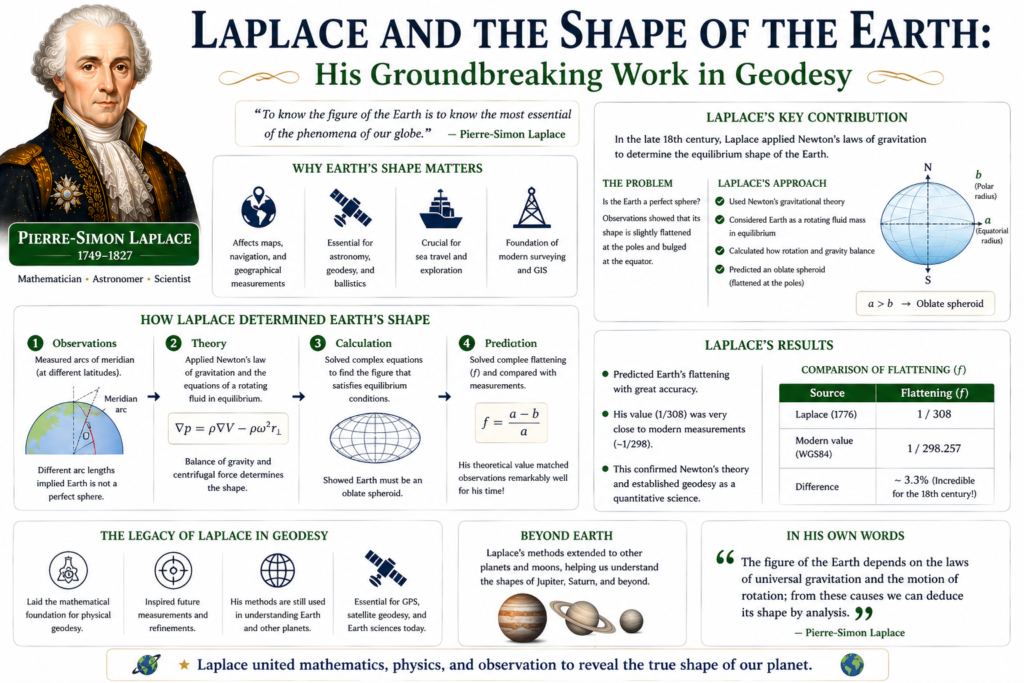
laplace shape of the earth represents one of the most fascinating and powerful achievements in the history of science. At a time when the true form of our planet was still debated, Pierre-Simon Laplace used advanced mathematics and physics to help define the figure of the Earth with remarkable precision.
His work in geodesy, the science of measuring Earth, transformed our understanding of Earth’s curvature, gravity, and structure. Through brilliant calculations and scientific reasoning, Laplace proved that Earth is not a perfect sphere but an oblate spheroid, slightly flattened at the poles.
The Historical Debate on Earth’s Shape (1600 – 1750)
Before laplace shape of the earth became widely accepted, scientists argued about the true figure of the Earth. Some believed Earth was elongated at the poles, while others argued it was flattened.
This debate was rooted in early surveying history and observations of latitude and longitude. Scientific expeditions were sent to measure meridian arcs in different regions of the world.
These meridian measurements played a crucial role in understanding Earth’s curvature. However, without a strong mathematical framework, the results were often conflicting.
Who Was Pierre Simon Laplace and His Role in Geodesy
To understand laplace shape of the earth, we must recognize the genius of Pierre-Simon Laplace. Known for his work in physics, astronomy, and mathematics, he applied his knowledge to geophysics and Earth sciences.
Laplace was deeply connected to mécanique céleste, where he explored gravitational forces and their effects on celestial bodies. His expertise in mathematical modeling allowed him to analyze Earth as a physical system governed by universal laws.
His work extended beyond theory, influencing geodetic surveying and scientific expeditions across Europe.
Mathematical Foundation of laplace shape of the earth
At the core of laplace shape of the earth lies the balance between gravitational force and centrifugal force due to Earth’s rotation.
This equation describes centrifugal force acting on a rotating body. Here, ω represents angular velocity and r is the distance from the axis.
Gravity pulls matter toward the center, while rotation causes outward force. The balance between these forces leads to an oblate spheroid shape.
Laplace also used gravitational potential theory:
This form of laplace’s equation helped him analyze geopotential and gravitational fields across Earth’s surface.
Oblate Spheroid and Earth’s True Shape
Laplace confirmed that Earth is an oblate spheroid, meaning it is slightly flattened at the poles and bulging at the equator.
This shape results from rotational forces and hydrostatic equilibrium. The concept of an ellipsoid became central to geodesy and mapping.
The flattening factor can be expressed mathematically as:
Where a is the equatorial radius and b is the polar radius.
Laplace’s work provided a theoretical explanation for these measurements, connecting observation with mathematical proofs.
Role of Gravity and Geopotential
Gravity is not uniform across Earth. Laplace studied gravity anomalies and how they affect measurements.
He introduced the concept of geopotential, which represents the potential energy of a mass in Earth’s gravitational field.
These ideas are essential in geophysics and modern geodetic surveying. They help explain variations in Earth’s interior and surface features.
Meridian Measurements and Scientific Accuracy (1750 – 1800)
Meridian measurements were critical in confirming laplace shape of the earth. Scientists measured arcs of longitude and latitude to determine Earth’s curvature.
Laplace refined these measurements using advanced mathematics. His calculations improved accuracy and resolved earlier discrepancies.
This work contributed to the development of the metric system, which relies on precise measurements of Earth’s dimensions.
Pendulum Experiments and Earth’s Gravity
Pendulum experiments played a key role in understanding Earth’s gravity. The period of a pendulum depends on gravitational acceleration:
By measuring variations in g, scientists could detect changes in Earth’s gravitational field.
Laplace used such data to support his theories about Earth’s shape and structure.
Connection to Celestial Mechanics and Broader Science
Laplace’s work on Earth is closely related to celestial mechanics. The same principles that govern planetary motion also apply to Earth’s structure.
His deterministic philosophy is reflected in laplace’s demon, which suggests that all physical systems can be predicted with enough information.
These connections show how laplace shape of the earth fits into a larger scientific framework.
Influence on Modern Geodesy and Geophysics
Today, laplace shape of the earth is fundamental to modern geodesy and geophysics.
- Satellite navigation systems rely on accurate Earth models
- GPS technology uses ellipsoid calculations
- Earth’s radius and curvature are essential for mapping
- Tides and ocean behavior are influenced by gravitational forces
Laplace’s work continues to guide scientific research and technological development.
Interdisciplinary Contributions
Laplace was not limited to geodesy. His contributions span multiple fields.
He is also known as the father of probability, shaping statistical thinking. His collaboration with chemists like laplace & lavoisier shows his influence in chemistry.
Some of his ideas even hinted at concepts like early black hole theory, demonstrating his forward thinking.
Legacy of laplace shape of the earth
The legacy of laplace shape of the earth is immense. He transformed geodesy into a precise science based on mathematical proofs and physical laws.
His work helped unify different fields, from astronomy to geophysics. It also strengthened the scientific method and evidence-based research.
Today, his ideas remain essential in understanding Earth and the universe.
FAQs About laplace shape of the earth
What is laplace shape of the earth?
It refers to Laplace’s mathematical and scientific work explaining Earth’s true shape as an oblate spheroid.
Why is Earth not a perfect sphere?
Because of rotational forces and gravity, Earth bulges at the equator and flattens at the poles.
What role did Laplace play in geodesy?
He provided mathematical models and theoretical explanations for Earth’s shape and gravitational behavior.
How are Laplace’s ideas used today?
They are used in GPS, satellite navigation, geophysics, and mapping technologies.
What is the significance of meridian measurements?
They help determine Earth’s curvature and validate its shape through precise observations.
Conclusion
The story of laplace shape of the earth is a powerful example of how mathematics can reveal the hidden truths of our planet. Laplace combined physics, calculus, and observation to solve one of the greatest scientific mysteries of his time.
His work not only defined Earth’s shape but also advanced geodesy, geophysics, and scientific reasoning. From meridian measurements to modern GPS systems, his influence is everywhere.
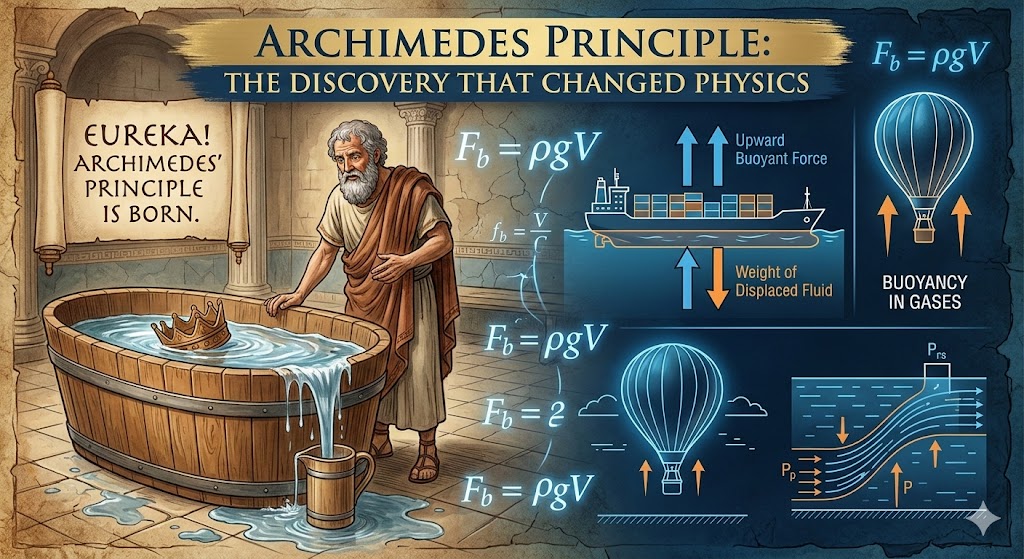
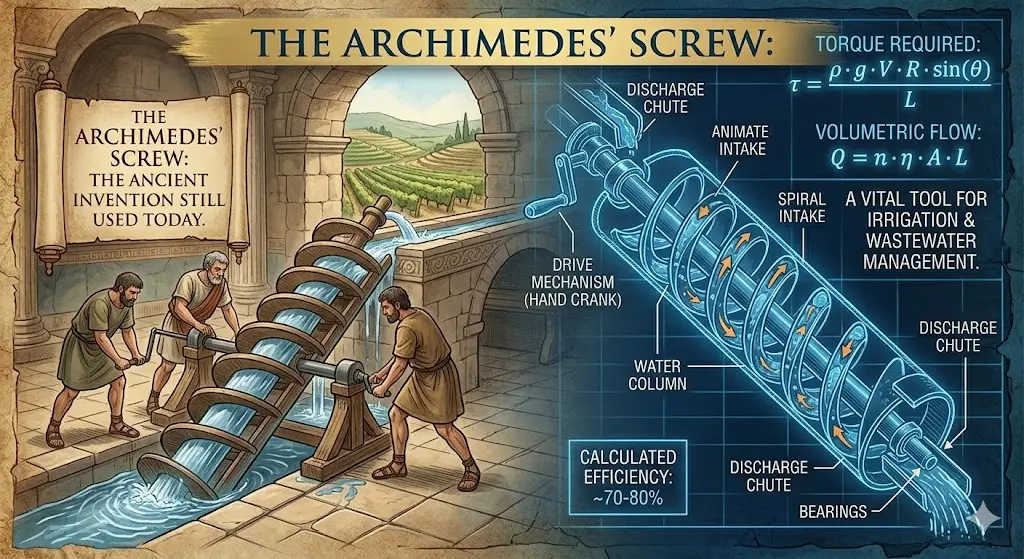
To fully understand this journey, we must also explore how ancient greek scientists changed modern science, as their early ideas laid the foundation for the revolutionary work of Laplace.
The Earth is not just a sphere floating in space. Thanks to laplace shape of the earth, we now understand it as a dynamic, mathematically defined system shaped by powerful natural forces.