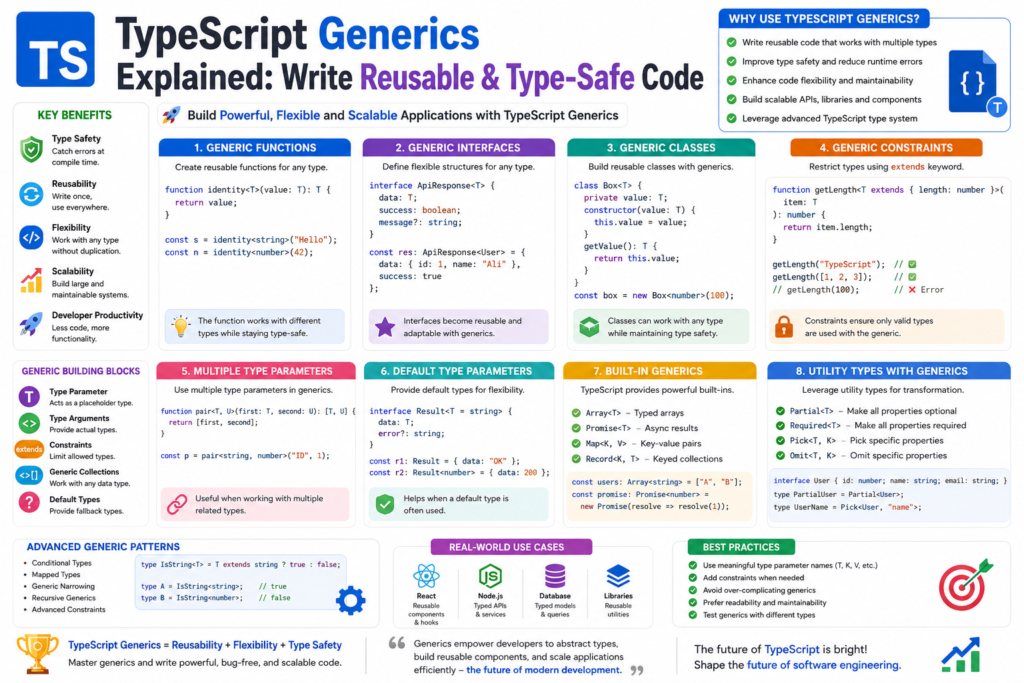
Learning typescript generics is one of the most important steps toward becoming an advanced TypeScript developer. As applications become larger and more complex, developers need a way to create reusable logic without sacrificing type safety. This is exactly where typescript generics become incredibly powerful.
In modern software development, reusable code and scalability are essential. typescript generics allow developers to write flexible functions, classes, and interfaces that work with multiple data types while maintaining strong type checking. Instead of duplicating logic for different data structures, developers can use generics to build efficient and reusable components.
This guide will explain everything about typescript generics, including generic functions, constraints, utility types, advanced patterns, and practical code examples. By the end of this article, you will understand how generics improve code flexibility and help build scalable applications.
Evolution of Generic Programming (1970 – 2026)
The concept of generic programming existed long before TypeScript. Languages like C++ and Java introduced templates and generics to improve reusability and reduce duplication. These ideas later influenced TypeScript’s design.
When Anders Hejlsberg introduced TypeScript in 2012, generics became one of its most valuable features. The typescript history shows how the language evolved from a simple JavaScript superset into a sophisticated tool for scalable applications.
Today, typescript generics are widely used in frontend and backend development because they provide both flexibility and type safety.
What Are TypeScript Generics?
At their core, typescript generics allow developers to create reusable code components that work with different types. Instead of hardcoding a specific type, generics use type variables.
If you are wondering what is typescript?, it is a strongly typed superset of JavaScript that adds compile time type checking and advanced programming features.
Without generics, developers often duplicate code for different data types. Generics solve this issue by abstracting types while maintaining strict type checking.
Here is a simple example:
function identity<T>(value: T): T {
  return value;
}

console.log(identity<string>("Hello"));
console.log(identity<number>(100));
In this example, <T> represents a type parameter. The function works with multiple data types while remaining type safe.
Why TypeScript Generics Matter
One major reason developers use typescript generics is code reusability. Instead of writing separate functions for strings, numbers, and objects, one generic function can handle all of them.
Generics also improve software scalability. Large applications often work with complex data structures, and generics ensure consistency across the project.
Another advantage is type safe APIs. Developers can create reusable components that enforce strict typing while remaining flexible.
This combination of flexibility and reliability makes typescript generics essential in modern development
Generic Functions Explained
Generic functions are the most common use of typescript generics. These functions use type parameters to support multiple data types.
Consider this example:
function getFirstElement<T>(arr: T[]): T {
  return arr[0];
}

const firstNumber = getFirstElement<number>([1, 2, 3]);
const firstString = getFirstElement<string>(["A", "B", "C"]);
This function works with arrays of any type. It demonstrates how generics improve reusable code while maintaining strong type checking.
Developers frequently combine generic functions with typescript functions to build scalable systems.
Generic Interfaces in TypeScript
Interfaces can also use generics. This allows developers to define flexible structures that adapt to different types.
interface ApiResponse<T> {
  data: T;
  success: boolean;
}

const response: ApiResponse<string> = {
  data: "Success",
  success: true
};
Generic interfaces are useful for APIs, reusable components, and data handling systems.
Understanding interfaces vs types becomes even more important when working with generic interfaces because both approaches can support generic structures.
Generic Classes and Reusable Components
Another powerful use of typescript generics is generic classes. These classes allow developers to create reusable object oriented components.
class StorageBox<T> {
  private item: T;

  constructor(item: T) {
    this.item = item;
  }

  getItem(): T {
    return this.item;
  }
}

const stringBox = new StorageBox<string>("TypeScript");
const numberBox = new StorageBox<number>(500);
This example demonstrates how generics improve class flexibility and support reusable components.
Generic classes are often combined with typescript classes to build scalable applications.
Generic Constraints and Type Safety
Sometimes developers need to restrict the types allowed in a generic function. This is where generic constraints become useful.
function printLength<T extends { length: number }>(item: T): void {
  console.log(item.length);
}

printLength("Hello");
printLength([1, 2, 3]);
In this example, the generic type must include a length property. Constraints improve type safety while preserving flexibility.
Generic constraints are an important part of typescript generics because they help avoid invalid operations.
Built In Generics in TypeScript
TypeScript provides several built in generics that simplify development. Arrays, Promises, and Maps all use generics internally.
Example with Promise:
const promise: Promise<string> = new Promise((resolve) => {
  resolve("Data loaded");
});
Built in generics are essential for asynchronous programming and modern applications.
Developers using typescript with nodejs frequently work with Promise based generics for backend operations.
Utility Types with Generics
Utility types are advanced features powered by typescript generics. They help developers transform and manipulate types efficiently.
Common utility types include:
- Partial
- Required
- Pick
- Record
- Omit
Example:
interface User {
  id: number;
  name: string;
  email: string;
}

type PartialUser = Partial<User>;
Utility types reduce boilerplate code and improve maintainability.
Advanced Generic Patterns
As developers progress, they explore advanced generic patterns such as conditional types, mapped types, and generic narrowing.
Example of conditional types:
type IsString<T> = T extends string ? "Yes" : "No";

type Result1 = IsString<string>;
type Result2 = IsString<number>;
These advanced techniques make advanced typescript types more powerful and flexible.
They are widely used in enterprise level applications and libraries.
TypeScript Generics vs JavaScript Flexibility
When comparing typescript vs javascript, generics highlight one of TypeScript’s biggest advantages.
JavaScript allows flexibility but lacks compile time type checking. TypeScript generics provide reusable logic while ensuring strict typing.
This makes TypeScript more suitable for large scale applications and professional development.
Real World Use Cases of Generics
In real projects, typescript generics are used everywhere. Frameworks like React heavily rely on generics for reusable UI components and state management.
Developers working with typescript with react often use generics in hooks and component props.
Backend developers also use generics for API responses, database models, and service layers.
These practical examples show how generics improve scalability and maintainability.
Common Mistakes and Best Practices
While learning typescript generics, developers often make mistakes like overcomplicating generic structures or using unnecessary type parameters.
Best practices include:
- Keep generics simple and readable
- Use meaningful type variable names
- Add constraints when necessary
- Avoid excessive abstraction
Following these practices ensures clean and maintainable code.
Future of TypeScript Generics
The future of typescript is closely connected to generics and advanced typing systems. As applications become more complex, reusable and scalable architectures will become even more important.
TypeScript will continue shaping the future of software engineering by improving developer productivity and software reliability.
Mastering typescript generics today prepares developers for the next generation of programming challenges.
FAQs About TypeScript Generics
What are TypeScript generics?
TypeScript generics allow developers to create reusable and type safe code components.
Why are generics important?
They improve flexibility, reusability, and type safety in applications.
What is a generic function?
A generic function works with multiple data types using type parameters.
What are generic constraints?
Constraints restrict the types allowed in a generic structure.
Are generics difficult to learn?
They can seem complex at first, but practice and examples make them easier to understand.
Conclusion
Learning typescript generics is essential for writing scalable and reusable applications. From generic functions to utility types and advanced patterns, generics provide powerful tools for modern development.
By mastering typescript generics, developers can reduce duplication, improve code quality, and create flexible architectures. As TypeScript continues to evolve, generics will remain one of its most valuable features.
Start practicing with generic functions, interfaces, and classes today to unlock the full power of TypeScript development.